Thursday, February 13, 2014

Publish or Perish: The Future of Scholarly Communications and Academic Careers #PublishPerish14

Meeting about to start and thought I would post announcement here too.  Follow on Twitter at #PublishPerish14 


Scholarly publishing is in a bit of turmoil.  This upheaval impacts not only the dissemination of knowledge but also the assessment of scholars (and thus their careers).  For two days in February 2014 at UC Davis we will cover some of the key changes in scholarly publishing with a focus on how they impact the careers of academics.  Some key details of the meeting are summarized below:
  • Sessions topics will focus on changes occurring in scholarly publishing (in journal publishing, other forms of digital publishing, peer review, and economics of publishing) and on changes in assessment (alt metrics, assessment by institutions, and new models for evaluating scholars).
  • Each session of the meeting will include a mix of a keynote talk, short talks, and a panel discussion by leading experts in the field.  Ample time will be provided for discussions and networking as well.
  • In addition, at the end of Day 1 there will be a special Keynote talk by Yochai Benkler from Harvard University on ”Open Access, Cooperation, and Commons: The (Uncertain) Retreat of Possessive Individualism in Networked Society“ followed by a reception.
  • This meeting is organized by the UC Davis Innovating Communication in Scholarship (ICIS) Project (icis.ucdavis.edu), which is a collaboration between Mario Biagioli (UC Davis School of Law), Mackenzie Smith (UC Davis University Library) and Jonathan Eisen (UC Davis Genome Center).

Session Topics and Confirmed Speakers/Panel Participants
DAY 1: Thursday, Feb 13th
  • 8 – 8:30 am | Registration
  • 8:30 – 9 am | Welcoming Remarks
  • 9 – 10:30 am | Session 1 | The Changing Nature of the Journal
    • Heather Joseph, Scholarly Publishing and Academic Resources Coalition
    • John Inglis, Cold Spring Harbor Laboratory & BioRxiv
    • Chris Kelty, UCLA
    • Gregg Gordon, Social Science Research Network
  • 10:30 – 11 am | Coffee
  • 11 am – 12:30 pm | Session 2 | Beyond Journals & New Forms of Digital Publishing
    • Carly Strasser, California Digital Library
    • Carl Boettiger, ROpenSci
    • Erik Kansa, Alexandria Archive Institute & Open Context
    • Kaitlin Thaney, Mozilla Science Lab
  • 12:30 – 2 pm | Lunch
  • 2 – 3:30 pm | Session 3 | Innovations in Peer Review
    • Victoria Stodden, Columbia University
    • Emily Ford, Portland State University
    • Ivan Oransky, Retraction Watch & New York University
    • Cesar A. Berrios-Otero, Faculty of 1000
    • Jonathan Dugan, Public Library Of Science
  • 3:30 – 4 pm | Venue Shift & Coffee
    • Note venue shift to Buehler Alumni Center, AGR Room for keynote address
  • 4 – 6 pm | Buehler Alumni Center, AGR Room | Keynote Address*
    • Yochai Benkler, Harvard University on “Open Access, Cooperation, and Commons: The (Uncertain) Retreat of Possessive Individualism in Networked Society”
  • 6 – 7 pm | Reception*
* Hosted jointly with the Mellon Initiative on Digital Cultures & the Provost’s Forums on the Future of the Public University and the Social Good

DAY 2: Friday, Feb 14th
  • 9 – 9:45 am | Opening Talk
    • Diane Harley, Center for Studies in Higher Education & UC Berkeley, “Predicting the future of scholarly communication: faculty values, disciplinary cultures, and advancing careers”
  • 9:45 – 11:15 am | Session 4 | Changing the Value Proposition of Publishing
    • Greg Tananbaum, ScholarNext
    • Peter Binfield, PeerJ
    • Allison Fish, UC Davis
    • Todd Vision, Dryad & UNC Chapel Hill
  • 11:15 – 11:30 am | Coffee
  • 11:30 – 1 pm | Session 5 | Altmetrics: Do They Measure Anything Useful?
    • Molly McCarthy, UC Davis
    • Nettie Lagace, National Information Standards Organization
    • Anurag Acharya, Google Scholar
    • Jennifer Lin, Public Library Of Science
  • 1:00 – 2:30 pm | Lunch
  • 2:30 – 4:00 pm | Session 6 | Assessment
    • Linda Katehi, Chancellor, UC Davis
    • Sarah Greene, Rapid Science
    • Margie Ferguson, Modern Language Association & UC Davis
    • Kerry Ann O’ Meara, University of Maryland
    • Josh Rosenbloom,  STAR METRICS
  • 4 – 4:15 pm | Coffee Break
  • 4:15 – 5 pm | Closing Discussion | What we have learned, where we are now, & what we need to do next
    • Discussants: Yochai Benkler (Harvard), Mario Biagioli (UC Davis), Jonathan Eisen (UC Davis), Josh Greenberg (Sloan Foundation), Heather Joseph (SPARC), and MacKenzie Smith (UC Davis).
  • 5 – 6 pm | Bonus Session | Lightning Talks

Wednesday, February 12, 2014

The Life Sciences Podcast on #OpenAccess

Quick post here.  There is a new podcast that may be of interest Episode 8: The open access debate | The Life Sciences Podcast.  From the Faculty of Life Science of the University of Manchester - they interviewed me, Alicia Wise from Elsevier, two librarians - Jan Wilkinson and Simon Bains and Andrea Baier from the British Ecological Survey and discuss multiple issues associated with open access publishing.

Tuesday, February 11, 2014

Nice collection in IJSEM on Integrating genomics into Microbial Systematics


Nice collection in IJSEM worth looking at.  The overview is particularly useful

Overview:
Other papers 

Monday, February 10, 2014

Are you a knitter? Interested in microbes? Well this is for you: knit a microbe for a Glasgow school

This is the first time in my life I wish I knew how to knit; Calling all knitters: we need germs! - The Glasgow South and Eastwood Extra.  Yup - there is an attempt to break a world record for the most hands washed in a single session - and the place doing this is calling for help in making knitted microbes.  They have even posted patterns for making knitted microbes including ones for Penicillium, Common cold, Swine Flu, TB, Cholera, and more.

From Pinterest.

And what could be better than this?  They have a Pinterest Board with pics of the ones they have received:


See below

Follow Glasgow CityOfScience's board Knitted Microbes on Pinterest.

Wednesday, February 05, 2014

Yes, it is a music video about missing bad germs after being sick (I'm cured by Aimee Mann)

Do you miss your bad germs after you were sick? If you do, this is for you ...


 Nice outfit too.  Found out about this from Laist.

Tuesday, February 04, 2014

"Phylogeny driven approaches to genomics and metagenomics": slides w/ audio from my talk at #UCDavis 1/29

Gave a talk here at UC Davis last week. Alas, not my best talk - too rushed. But, anyway, here is a video of the slideshow w/ audio. Title "Phylogeny driven approaches to genomics and metagenomics"


Monday, February 03, 2014

Simple but important paper on the personal microbiome

Figure 1.
Quick post.  Just saw this paper:

PLOS ONE: The Personal Human Oral Microbiome Obscures the Effects of Treatment on Periodontal Disease:

Schwarzberg K, Le R, Bharti B, Lindsay S, Casaburi G, et al. (2014) The Personal Human Oral Microbiome Obscures the Effects of Treatment on Periodontal Disease. PLoS ONE 9(1): e86708. doi:10.1371/journal.pone.0086708

It has multiple things of interest (certainly to me - as we are doing some work on the oral microbiome). But I do not have time right now to dig through all of it.  I want to just point out one very important line in it:
Our results highlight how understanding interpersonal variability among microbiomes is necessary for determining how polymicrobial diseases respond to treatment and disturbance
This is consistent with what has been a gut feeling of mine (and something I say in lots of interviews and talks) but for which I did not have any obvious citation in mind.  Now I do.

Sunday, February 02, 2014

A Torrents Site for Academics - Good idea - Wish We Had Thought of That (Oh wait ...)

Just saw a Tweet from Jeff Ross-Ibarra at UC Davis
It refers to this: Academics Launch Torrent Site to Share Papers and Datasets | TorrentFreak.  Nice idea.  And I hope it finds some uses.  Though I wish they had mentioned that Morgan Langille who was a post doc in my lab at the time launched a version of exactly such a site in 2010.  See for example
Now, Biotorrents has kind of wilted a bit over the years so I can see why they might not want to mention it.  But still, I think they should have.  In fact, perhaps they could have talked to Morgan Langille about some of his experiences with trying to run Biotorrents over the years ...

If anyone out there wants to track him down - Morgan is now an Assistant Professor at Dalhausie University.  See his Web site here.  Follow him on Twitter here.

UPDATE 1:15 PM 2/2/14

Just discovered that a few days ago Morgan Langille and others discussed this exact issue


Quick post - Outbreaker and the "Bayesian Reconstruction of Disease Outbreaks by Combining Epidemiologic and Genomic Data"

Interesting new paper out: PLOS Computational Biology: Bayesian Reconstruction of Disease Outbreaks by Combining Epidemiologic and Genomic Data.

Full Citation:  Jombart T, Cori A, Didelot X, Cauchemez S, Fraser C, et al. (2014) Bayesian Reconstruction of Disease Outbreaks by Combining Epidemiologic and Genomic Data. PLoS Comput Biol 10(1): e1003457. doi:10.1371/journal.pcbi.1003457

Abstract:
Recent years have seen progress in the development of statistically rigorous frameworks to infer outbreak transmission trees (“who infected whom”) from epidemiological and genetic data. Making use of pathogen genome sequences in such analyses remains a challenge, however, with a variety of heuristic approaches having been explored to date. We introduce a statistical method exploiting both pathogen sequences and collection dates to unravel the dynamics of densely sampled outbreaks. Our approach identifies likely transmission events and infers dates of infections, unobserved cases and separate introductions of the disease. It also proves useful for inferring numbers of secondary infections and identifying heterogeneous infectivity and super-spreaders. After testing our approach using simulations, we illustrate the method with the analysis of the beginning of the 2003 Singaporean outbreak of Severe Acute Respiratory Syndrome (SARS), providing new insights into the early stage of this epidemic. Our approach is the first tool for disease outbreak reconstruction from genetic data widely available as free software, the R package outbreaker. It is applicable to various densely sampled epidemics, and improves previous approaches by detecting unobserved and imported cases, as well as allowing multiple introductions of the pathogen. Because of its generality, we believe this method will become a tool of choice for the analysis of densely sampled disease outbreaks, and will form a rigorous framework for subsequent methodological developments.
Check out the nice figure on a SARS outbreak:

Figure 5. Results of the analysis of the SARS data using outbreaker. This figure summarizes the reconstruction of the outbreak, showing putative transmissions (arrows) amongst individuals (rows). Arrows represent ancestries with a least 5% of support in the posterior distributions, while boxes correspond to the posterior distributions of the infection dates. Arrows are annotated by number of mutations and posterior support of the ancestries, and colored by numbers of mutations, with lighter shades of grey for larger genetic distances. The actual sequence collection dates are plotted as plain black dots. Bubbles are used to represent the generation time distribution, with larger disks used for greater infectivity. Shades of blue indicate the degree of certainty for inferring the origin of different cases, as measured by the entropy of ancestries (see methods and equation 12): blue represents conclusive identification of the ancestor of the case (low entropy), while grey shades are uncertain (high entropy).

And then the consensus transmission tree

Figure 6. Consensus transmission tree reconstruction of the SARS outbreak. This figure indicates the most supported transmission tree reconstructed by outbreaker. Cases are represented by spheres colored according to their collection dates. Edges are colored according to the corresponding numbers of mutations, with lighter shades of grey for larger numbers. Edge annotations indicate numbers of mutations and frequencies of the ancestries in the posterior samples.
Outbreaker is available here: http://cran.r-project.org/web/packages/outbreaker/index.html

I also like the 1st line of their Acknowledgements:
We are thankful to Sourceforge (http://sourceforge.net/) and CRAN (http://cran.r-project.org/) for providing great resources for developing and hosting outbreaker.
Definitely worth checking out.

Saturday, February 01, 2014

The Quest for a Field Guide to the Microbes: talk at "Science in the River City"

I got invited a while back to give a talk at a "Science in the River City" workshop for 3rd - 12th grade science teachers.  I proposed (and they said yes) to the idea of talking about my "Quest for A Field Guide to the Microbes."  I recorded the screen (slides) and audio from my talk using Camtasia and have now posted the slideshow and slides.  Here they are:

Talk slideshow with Audio on Youtube:


 Slides on Slideshare


"Scientific Pride and Prejudice" in the @nytimes makes claims about sciences not using evidence correctly; alas no evidence presented

Well, I guess I can say I was not pleased to see this tweet from Carl Zimmer.
It is not that I have a problem with what Carl wrote. It is just that, then I went and read the article he referred to: Scientific Pride and Prejudice in the New York Times By Michael Suk-Young Chwe. And it just did not make me happy. I reread it. Again and again. And I was still unhappy.

What bugs me about this article? Well, alas, a lot. The general gist of the article is that "natural" scientists are not aware enough of how their own preconceptions might bias their work. And furthermore that literary criticism is the place to look for such self-awareness. Well, interesting idea I guess but alas, the irony is, this essay presents no evidence that literary criticism does better with evidence than natural science. Below are some of the lines / comments in the article that I am skeptical of:
  • "Scientists now worry that many published scientific results are simply not true."
  • "Scientists, eager to make striking new claims, focus only on evidence that supports their preconceptions. Psychologists call this “confirmation bias. We seek out information that confirms what we already believe. ”
    • This statement is misleading. Confirmation bias according to all definitions I could find is something more subtle. For example Oxford Dictionaries defines it as "the tendency to interpret new evidence as confirmation of one’s existing beliefs or theories." That is, it is a tendency - a leaning - a bias of sorts.
    • I would very much like to see evidence behind the much more extreme claim of this author that scientists focus "only on evidence that supports their preconceptions". 
    • In my readings of actual research on confirmation bias I can find no evidence to this claim. For example see the following paper Confirmation bias: a ubiquitous phenomenon in many guises. which states:


    • As the term is used in this article and, I believe, generally by psychologists, confirmation bias connotes a less explicit, less consciously one-sided case-building process. It refers usually to unwitting selectivity in the acquisition and use of evidence. The line between deliberate selectivity in the use of evidence and unwitting molding of facts to fit hypotheses or beliefs is a difficult one to draw in practice, but the distinction is meaningful conceptually, and confirmation bias has more to do with the latter than with the former.

  • "Despite the popular belief that anything goes in literary criticism, the field has real standards of scholarly validity"
    • This is a red herring to me. I can find no evidence that their there is a popular belief that "anything goes" in literary criticism. So the author here sets a very low bar and then basically any presentation of standards is supposed to impress us.
  • "Rather, “the important thing is to be aware of one’s own bias."
    • The author then goes on to discuss how those in the humanities are aware of the issues of confirmation bias and rather than trying to get rid of it, they just deal with it, as implied in the quote.
    • The author then writes "To deal with the problem of selective use of data, the scientific community must become self-aware and realize that it has a problem. In literary criticism, the question of how one’s arguments are influenced by one’s prejudgments has been a central methodological issue for decades."
    • Again, this implies that scientists have not been thinking about this at all which is just wrong.
  • And then the author uses the Arsenic-life story as an example of how scientists suffer from "confirmation bias."  If you do not know about the arsenic life story see here.  What is the evidence that this was "confirmation bias"?.  I think more likely this was a case of purposeful misleading, overhyping, and bad science.  
  • Then the author gives as an example of how science actually is prone to confirmation bias by presenting a discussion of Robert Millikan's notebooks in relation to a classic "oil drop" experiment.  Apparently, these notebooks show that the experiments got better and better over time and closer to the truth.  And in the notebooks Millikan annotated them with things like "Best yet - Beauty - Publish".  And then the author concludes this means "In other words, Millikan excluded the data that seemed erroneous and included data that he liked, embracing his own confirmation bias."  I don't see evidence that this is confirmation bias.  I think better examples of confirmation bias would be cases where we have now concluded the research conclusions were wrong.  But instead, Millikan was and still is as far as I know, considered to have been correct.  He won the Nobel Prize in 1923 for his work.  Yes, there has been some criticism of his work but as far as I can tell, there is no evidence that he had confirmation bias. 
  • I am going to skip commenting on the game theory claims in this article.
  • Then the author writes "Perhaps because of its self-awareness about what Austen would call the “whims and caprices” of human reasoning, the field of psychology has been most aggressive in dealing with doubts about the validity of its research."  Again - what is the evidence for this? Is there any evidence that the field of psychology is somehow different?
I could go on and on.  But I won't.  I will just say one thing.  I find it disappointing and incredibly ironic that an article that makes claims about how some fields deal better with evidence and conformation bias than other fields does not present any actual evidence to back up its claims.  And many of the claims pretty clearly run counter to available evidence.

UPDATE 9:20 AM 2/2/2014: Storify of discussions on Twitter


Thursday, January 30, 2014

Visualization of fecal transplants - well - thankfully - of the microbial community data not the actual transplant

I love things like this. A simple Youtube video from Antonio González Peña and Rob Knight's group. The video shows data from a study of microbial communities and how they respond to a fecal transplant. Simple. Short. And the visualization is nice.


Wednesday, January 29, 2014

Pete Seeger, RIP, on women in engineering ...

When I was growing up, we went to Pete Seeger and Arlo Guthrie concerts every year at Wolf Trap. I have loved Seeger since then and thus was very sad to hear he died a few days ago. My mom is visiting right now and she and I have been talking about "Women in Science" issues (and for example she brought me some nice presents which I posted about Monday).
And in talking to my mom today she reminded me of this song Seeger used to sing every year when we saw the show. It is by his sister. And it is a good rallying cry for "Women in STEM" fields, I think. Here it is:


Tuesday, January 28, 2014

Expert translation of details on "Clinical trial for autologous stool transplant" that is seeking volunteers

Well, if you are between 18 and 70 and are healthy and want to participate in a  clinical trial this may be for you.  Titled Autologous Fecal Therapy the description uses some science jargon to describe the plan.  They say
"Ten healthy volunteers will be recruited to receive either an autologous stool transplant or a saline enema to determine if autologous fecal microbiota therapy will be able to rapidly, and safely, restore a patient's fecal microbiome after antimicrobial exposure."
Or, in other words - they want you to (1) save your shit (2) take some antibiotics and (3) deliver either salt water or your own shit back into your rear.

Actually quite interesting.  And I encourage people to consider volunteering.  But I just thought it would be good to make sure you knew what this was about ...

Monday, January 27, 2014

Winner of the biggest & best overselling of the microbiome -@theallium on Salmonella Diet

OK.  Now this is some serious overselling of the microbiome: New Salmonella diet achieves “amazing” weight-loss for microbiologist | The Allium.  A must read for anyone interested in microbes and microbiomes.  My favorite part:
“For some time now, we have known that the microbes of the gut – what we term the “microbiome” – play a very important role in our daily lives. What we eat, how healthy we feel, etc. is all controlled by our microbiome. In fact, nothing else is important to our health, except the microbiome – it can defeat cancer, cure hunger, poverty, restore amputated limbs, everything”, said Dr. Nofit.
Although it might seem to be an exaggeration, I think this Dr. Nofit must be correct.  I will now never claim that anyone has oversold the microbiome, because, well, it does everything.

Some readings on Gender Disparities in Scientific Publishing

Just a little post here with a collection of links to what I have been reading recently on Gender disparities in scientific publishing

Bibliometrics: Global gender disparities in science : Nature News & Comment

which I found out about from

How to calculate #MyGenderGap for publishing scientists

which I found out about from

My Gender Gap: Is there value in calculating the gender ratio of coauthors?

which I found out about from

Gina Baucom on Facebook

-----------------------------
Some other reading of interest:

Another good collection of recommended papers from Pubchase

Got my weekly "Recommended papers" from Pubchase today.  I wrote about this here: Pubchase recommended papers to read system pretty good ...

Below is the email I got: many of direct relevance to my work.  Thanks Pubchase. 

Sunday, January 26, 2014

Kudos to the DOE-JGI for organizing a genomics meeting w/ a good gender ratio - no kudos to BGI - yet again.

Very happy to see the preliminary speaker list for The Annual DOE JGI User Meeting.  As many are aware, I have blogged and posted extensively about gender ratio at conferences and in particular at conferences related to genomics.  And alas, many people running genomics related meetings seem incapable of organizing a meeting with a reasonable gender ratio.  Some of my past posts on this and related topics include
But of course, there are some meetings out there that do a good job in having speakers represent at least some aspects of the diversity of scientists.  I am for example proud of the 2012 Lake Arrowhead Small Genomes meeting I co-organized: Lake Arrowhead Microbial Genomes Meeting 2012 Speaker Gender Ratio #LAMG12.  But I do not frequently write about meetings that are doing a good job with gender ratio and I am trying to also give props to such cases here.  And thus I was very pleased when I received an email telling me about the The Annual DOE JGI User Meeting.  From their web site here are the current confirmed speakers:

Keynotes:
  • Annalee Newitz, io9 "How humans will survive a mass extinction"
  • Steve Quake, Stanford University "Single cell genomics"

Saturday, January 25, 2014

The start of a slow poop movement?

Well I am not 100% sure I believe all the claims in this but it is fascinating: What Drives a Sloth's Ritualistic Trek to Poop? | Articles | Smithsonian.  I knew nothing about sloths and their poop until reading this.  The key part of the article to me:
The scientists' results point to linked mutualisms between the sloths, the algae, and the moths: the sloth climbs down the tree to poop and, because the ground around the tree is littered with poop from previous descents, moth larvae growing in the poop can hitch a ride on the sloth's back. The moths find shelter and thrive in the fur ecosystem. They also bring nutrients to their new home from the poop they were born in and when they die and decompose. Those nutrients fuel algae growth in the fur, and the algae supplement sloths’ foliage diets with lipids that the scientists speculate could serve as a high-energy snack. Then, when the sloths go down to do their business again, moths hop on their back and the cycle starts over again. 
I think this could be the start of a slow poop movement ...

Thursday, January 23, 2014

Tuesday, January 21, 2014

Dear UCLA IMED Seminar SPAM - I will NOT maintain your emails in a safe, secure and confidential manner

Grr.

I have gotten a few email announcements - that I did not sign up for - from a seminar series from UCLA called IMED.  The emails come with a warning at the end:
IMPORTANT WARNING: This email (and any attachments) is only intended for the use of the person or entity to which it is addressed, and may contain information that is privileged and confidential. You, the recipient, are obligated to maintain it in a safe, secure and confidential manner. Unauthorized redisclosure or failure to maintain confidentiality may subject you to federal and state penalties. If you are not the intended recipient, please immediately notify us by return email, and delete this message from your computer.
No - I will not keep your emails in a safe, secure and confidential manner.  No way to unsubscribe from the emails.  I did not sign up for them.  This is SPAM.  And even if it was not SPAM I would certainly not follow such a warning.  Am wondering - do these warning EVER hold any legal authority?

Overselling the microbiome story of the week: aging in fruit flies vs humans

Well, I like fruit flies too.  But the claims in this story are quite a jump: Gut bacteria health may be the key to living longer, disease-free lives, U.S. fruit fly study reveals | National Post.

Some choice quotes:
Researchers have more than just a gut feeling they’ve discovered one of the keys to living a longer, healthier life, especially as we age.
Emphasis on we by me.  Jumps right in there and basically says this study is about people even though it is not.
But this research goes further, study authors said, putting gut bacteria shifts “into a hierarchical, causal relationship and highlights the points where we can intervene.”
Where we can intervene in all the premature aging that happens in the fruit flies in our houses.
“If we can understand how aging affects our commensal population (the bacteria that live inside us) — first in the fly and then in humans — our data suggest we should be able to impact health span and life span quite strongly,” Jasper said. “Because it is the management of the commensal population that is critical to the health of the organism.”
How does Jasper go from their fruit fly study to "we should be able to impact health span and life span quite strongly."???????  Again, I love fruit flies.  And I love their microbiome.  I think that Drosophila is a great model system for studying animal microbiomes.  I have even coauthored a few papers on Drosophila and the microbes that live in and on it.  Examples include
But let's not get ahead of ourselves in the implications of this work for humans.

Pubchase recommended papers to read system pretty good ...

Been playing around with Pubchase for various reasons and I have discovered that their system for recommending papers to read is quite good.  What I first did was try to upload my reference collection to Pubchase (I think it did not quite finish but most of the papers I have in my collections got in there).  And then I played around with Pubchase a bit.  And I got busy as usual.  And then I was pleasantly surprised to get an email with recommended papers to read / add to my collection.

Below I have posted the list from the latest email.  The recommendations are spot on.  The links take you to a Pubchase page for each paper and if you have an account there you can add them to ones collection or go directly to the paper.  Definitely worth checking out ..

Jan 10, 2014 International Journal Of Systematic And Evolutionary Microbiology
Kosowski K, Schmidt M, Pukall R, Hause G, Kämpfer P, Lechner U
Jan 06, 2014 Molecular Biology And Evolution
Zhong B, Xi Z, Goremykin VV, Fong R, McLenachan PA, Novis PM, Davis CC, Penny D
Jan 13, 2014 World Journal Of Microbiology & Biotechnology
Blöchl E, Burggraf S, Fiala G, Lauerer G, Huber G, Huber R, Rachel R, Segerer A, Stetter KO, Völkl P

Monday, January 20, 2014

This looks awesome: DC Art Science Evening Rendezvous (DASER) 2/20

Wow - this looks awesome.  Bummed I can't be there -- DC Art Science Evening Rendezvous (DASER)


From their web site:
DC Art Science Evening Rendezvous (DASER)
Thursday, February 20, 2014, 6 p.m. (doors open at 5:30)
Keck Center, 500 Fifth St., N.W., Room 100

Free and open to the public. Registration and photo ID required.

Email cpnas@nas.edu by February 6, 2014 to request American Sign Language interpretation.

D.C. Art Science Evening Rendezvous (DASER) is a monthly discussion forum on art and science projects in the national capital region and beyond. DASERs provide a snapshot of the cultural environment and foster interdisciplinary networking. This month, in celebration of its third anniversary, DASER explores the theme of art as a way of knowing. Access the live webcast. It begins streaming at 5:30 p.m. EST.

5:30 to 6:05 p.m. Welcoming remarks

6:05 to 6:10 p.m. Community sharing time. Anyone in the audience currently working within the intersections of art and science will have 30 seconds to share their work. Please present your work as a teaser so that those who are interested can seek you out during social time following the event.

6:10 to 7:10 p.m. Panelists' presentations (15 minutes each)

Michele Banks, Artist, Washington, D.C.
Diane Burko, Artist, Philadelphia, Pennsylvania
Robert Root-Bernstein, Professor of Physiology and Bioartist, Michigan State University, East Lansing
Nina Samuel, Art and Science Historian and Independent Curator, New York City and Berlin, Germany

7:10 to 8:00 p.m. Discussion

8:00 to 9:00 p.m. Reception

DASER is co-sponsored by Cultural Programs of the National Academy of Sciences (CPNAS) and Leonardo, the International Society for the Arts, Sciences, and Technology. DASER fosters community and discussion around the intersection of art and science. The thoughts and opinions expressed in the DASER events are those of the panelists and speakers and do not necessarily reflect the positions of the National Academy of Sciences or of Leonardo.

Sunday, January 19, 2014

Deep Thoughts by Bill Keller Volume 2: Heroic Wheels of Science

UPDATE 1/25: (Since some people asked / were confused) -- Wrote this to get people to think about how ridiculous the article by Bill Keller was in the New York Times about Lisa Adams.  I took his article about Lisa Adams and edited it to be about Stephen Hawking.  I don't think there is any chance in hell the New York Times would have let him publish this - because it is about Hawking and because Hawking is famous and - well - possibly because Hawking is a man.  Anyway - I think Keller and his wife should be thoroughly lambasted in the press continuously for what they did and this is my contribution I guess.

-------------------------------------------------------------------

From Bill Keller *

For those of you who saw my article about Lisa Adams in the New York Times on January 12, you should know that I have some very very deep thoughts I would like to share with others about how people communicate on social media about their medical problems.  I note - for those critics out there you should check out the completely and thoroughly independent assessment by Emma Keller.  Though I am married to Emma, we never actually communicate about anything (I think she may hate me) so her piece is independent.  Proof that her piece was brilliant is that the Guardian, a corrupt newspaper if I have ever seen one, removed it claiming "policy violations."  Anywoo - because I am completely confident in the righteousness of my article (despite the vitriolic and over the top wasteful criticism of it from places like Slate, NPR, The Nation, Salon, the Washington Post, and more), and because the world clearly needs me to write more about this, I am starting a new series here.  I call it Deep Thoughts by Bill Keller.  Today's article is below.


Heroic Wheels of Science

STEVEN HAWKING has spent the last 40+ years in a fierce and very public cage fight with death. Since a diagnosis of motor neuron disease detected the first toxic seeds of amyotrophic lateral sclerosis in his body when he was 21, he has continued to carry out scientific research and appear in public even with the advancing disease. He has written dozens of papers and books and travelled around the world discussion science through all the medical treatments. Even by contemporary standards of scientific work by people will illnesses, he is a phenomenon. (Last week he was involved in an announcement of a professorship at Cambridge University that is named after him - how arrogant.) A rapt audience of 200,000 thousand followers on Twitter and 222,000 on Facebook follow his every move - including lots of detail about space-time, about the universe, and even occasionally about his problems with ALS and his wheelchair along with all the news stories about his slow slide into death.

rRNA sequencing services - summary of available services

Posted a request to Twitter and microBEnet about rRNA sequencing services.  Here is a Storify of the results

Top alternatives to quilt plots and heat maps

Quilt Plot from PLOS One

If you have missed the uproar over Quilt Plots and whether or not they are Heat Maps, well, you have then missed the uproar over Quilt Plots and whether or not they are Heat Maps.  It has been uproarious.  But you may not know that the literature pre-anticipated this uproar and many already developed alternatives, even if they did not know it.  And here are the top ones.


Guilt plots

In "Prediction of gene function by genome-scale expression analysis: prostate cancer-associated genes" by Walker et al. they report the development of a method "we call Guilt-by-Association (GBA)."  Unfortunately, and amazingly, there are NO FIGURES IN THE PAPER.  Fortunately, lots of other people have done similar GBA methods.  A figure from one such study is below

A Guilt Plot

Alas even though some people now call these Eisengrams, they certainly should have been called Guilt Plots.  And that is what I am renaming them.


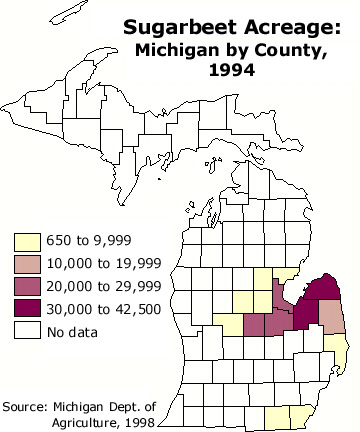
Beet maps

Not much to say other than this is simply visionary:

Beet Map


Friday, January 17, 2014

Bacterial species description papers "rules" & IJSEM (Storification)

Another request to Twitter and some very useful responses and discussion. I have compiled the responses via Storify.


Request for suggestions for bacterial genome annotation tools (Storify of some answers)

Posted a request to Twitter about tools for genome annotation and got a collection of useful responses. I have compiled them here via Storify.


#Badomics word of the year already? Yup. The 'Consciousome' from Deepak Chopra


Oh my.  As many out there know I have a thing with "badomics" words.  These are words someone has invented where they have added the ome suffix on to the word to try and capture some of the hype of genomics.  And though many many people do this, the ones I call "badomics" words are the ones where the ome addition is all hype and no use.  And this AM I was informed of a doozy via Twitter:
And so I went to the link and found this: Self-Directed Biological Transformation Initiative -- A New Frontier 'Consciousome' | Deepak Chopra and Rudolf E. Tanzi.  And what I found there was almost a textbook example of how to create a badomics word.  Here is the critical paragraph
The current frontier in brain research, to map the entire connectivity of the brain, the so-called connectome project, points to an even more exciting frontier, the "consciousome." This takes the brain to the next level, where we need to explore how our conscious choices may liberate us from biology-as-destiny. Our conscious choices and reactions to life experiences remodel the neural circuitry of our brains and, now, we need to explore the effects on our genomes.
Just what is the consciousome?  I cannot tell.  But it has something to do with genomics.  And with consciousness.  Hmm.  They try to clarify later on
Where the connectome is like a diagram of all the telephone wiring in a city, the consciousome embraces the conversations taking place using the wiring.
Not really helping.  So - what does it have to do with genomics?  Unclear until later
By opening up the genetic doorway to consciousness, however, we take a leap forward. For example, recent studies indicate that meditation can have a strong effect on the length of chromosome telomeres, the nucleotide sequences that protect chromosomes from the deterioration linked to aging. That these beneficial effects occur immediately indicates just how responsive genetic activity is to mind-body interventions -- something never previously suspected.
So - the consciousome is the affect of conscious thought on the genome?  Whether or not you think this is something worth studying, the slapping on of the ome term on the end of consciousness is a self directed thought that should never have been done.  There is no entity that is the consciousome.  The term makes no sense.  It is certainly a badomics word of grand magnificence.

I note - there is some seriously bizarre other stuff in this article like the following:
In our Self-Directed Biological Transformation Initiative, a 100-subject study to map biological transformation, leaders in the fields of healthcare, art, business, environment, sports, entertainment, science and technology will be given a protocol to measure new genetic activity, searching for positive evolutionary effects
What?  How exactly are they searching for "positive evolutionary effects" and what does that even mean?  And why do this with the "leaders in the fields ...". How are they supposed to be different?

And also
This "soft inheritance," in which the parents' life experiences and behavior may directly influence the genome of their offspring (transmitted via the epigenome), is arguably the most profound "living legacy" we can pass along to our children.
So now they have gone from a few studies in mice showing epigenetic inheritance of a few things to the "most profound living legacy we can pass along to our children".  Uggh.  Talk about overselling genomics - this is overselling a word / field that does not even exist yet and the word certainly should not exist ever.  Personally, I think brain science is very very interesting and important.  Let's not cloud it up by coining new fuzzy terms, trying to capture the hype of genomics, and overselling the science.  And for this, Deepak Chopra, Rudolf Tanzi and their coauthors Tara Sheahan, Gina Murdock, and
Glenda Greenwald are winners of the coveted "Worst New Omics word award."

Sunday, January 12, 2014

A little bit about PhyloSift: phylogenetic analysis of genomes and metagenomes

New paper from people in the Eisen lab: PhyloSift: phylogenetic analysis of genomes and metagenomes [PeerJ].

Basically, the concept behind Phylosift is to provide for high quality, automated, high throughput phylogeny-driven analysis of metagenomic sequence data.  The software was developed openly on github and has been available in some form for more than a year.  Aaron, Holly, Erick and I have discussed it extensively in various talks around the world and thus we assume some are already familiar with it.

This project was coordinated by Aaron Darling, who was a Project Scientist in my lab and is now a Professor at the University of Technology Sydney.  Also involved were Holly Bik (post doc in the lab), Guillaume Jospin (Bioinformatics Engineer in the lab), Eric Lowe (was a UC Davis undergrad working in the lab) and Erick Matsen (from the FHCRC).

Abstract:

Like all organisms on the planet, environmental microbes are subject to the forces of molecular evolution. Metagenomic sequencing provides a means to access the DNA sequence of uncultured microbes. By combining DNA sequencing of microbial communities with evolutionary modeling and phylogenetic analysis we might obtain new insights into microbiology and also provide a basis for practical tools such as forensic pathogen detection.

In this work we present an approach to leverage phylogenetic analysis of metagenomic sequence data to conduct several types of analysis. First, we present a method to conduct phylogeny-driven Bayesian hypothesis tests for the presence of an organism in a sample. Second, we present a means to compare community structure across a collection of many samples and develop direct associations between the abundance of certain organisms and sample metadata. Third, we apply new tools to analyze the phylogenetic diversity of microbial communities and again demonstrate how this can be associated to sample metadata.

Saturday, January 11, 2014

Worth a look: American Academy of Microbiology report on the Human Microbiome


Definitely worth checking this out: FAQ: Human Microbiome, January 2014. It is a report from the American Academy of Microbiology and it is really well done.  In addition to the report itself there is also and Infographic and a nice little handout.

The report was based on discussions with a collection of Human Microbiome Gurus:


And it was written  by Ann Reid and Shannon Greene. It has a variety of useful tidbits and has a reasonable number of caveats - such as "it should be noted, however, that at this point, most studies, even in mice, are looking at correlations between gut microbiome composition and factors like weight, insulin sensitivity, and other metabolic measures."


Wednesday, January 08, 2014

Interesting NSF Funding Opportunity - "Genealogy of Life"


From the web site:

SYNOPSIS
All of comparative biology depends on knowledge of the evolutionary relationships (phylogeny) of living and extinct organisms. In addition, understanding biodiversity and how it changes over time is only possible when Earth's diversity is organized into a phylogenetic framework. The goals of the Genealogy of Life (GoLife) program are to resolve the phylogenetic history of life and to integrate this genealogical architecture with underlying organismal data. 
The ultimate vision of this program is an open access, universal Genealogy of Life that will provide the comparative framework necessary for testing questions in systematics, evolutionary biology, ecology, and other fields. A further strategic integration of this genealogy of life with data layers from genomic, phenotypic, spatial, ecological and temporal data will produce a grand synthesis of biodiversity and evolutionary sciences. The resulting knowledge infrastructure will enable synthetic research on biological dynamics throughout the history of life on Earth, within current ecosystems, and for predictive modeling of the future evolution of life 
Projects submitted to this program should emphasize increased efficiency in contributing to a complete Genealogy of Life and integration of various types of organismal data with phylogenies. 
This program also seeks to broadly train next generation, integrative phylogenetic biologists, creating the human resource infrastructure and workforce needed to tackle emerging research questions in comparative biology. Projects should train students for diverse careers by exposing them to the multidisciplinary areas of research within the proposal.

Tuesday, January 07, 2014

Important new paper on impact of having women as conveners on gender ratio of speakers

There is an important new paper from Arturo Casadevall and  Jo Handelsman: mBiosphere: Scientific meetings: convening committees with at least one woman boost numbers of women speakers. It was published January 7, 2014 in the open access journal mBio. 

Their abstract
We investigated the hypothesis that the gender of conveners at scientific meetings influenced the gender distribution of invited speakers. Analysis of 460 symposia involving 1,845 speakers in two large meetings sponsored by the American Society for Microbiology revealed that having at least one woman member of the convening team correlated with a significantly higher proportion of invited female speakers and reduced the likelihood of an all-male symposium roster. Our results suggest that inclusion of more women as conveners may increase the proportion of women among invited speakers at scientific meetings. 
IMPORTANCE The proportion of women entering scientific careers has increased substantially, but women remain underrepresented in academic ranks. Participation in meetings as a speaker is a factor of great importance for academic advancement. We found that having a woman as a convener greatly increased women’s participation in symposia, suggesting that one mechanism for achieving gender balance at scientific meetings is to involve more women as conveners.
Basically they conclude that having women serve as conveners for sessions and meetings increases the chance that women will be well represented as speakers.

Much of their key findings are shown in Figure 1

From their paper: FIG 1 Proportion of women speakers as a function of convener gender composition for the years 2011, 2012, and 2013 at the GM and ICAAC meeting. All comparisons were significant at P < 0.05 by Student’s t test


What to do about this? They have some suggestions at the end of the paper
Whatever the mechanism driving the results, practical actions are suggested by the data. The results suggest that an experiment in which at least one woman is included in every team of conveners might increase the proportional representation of women among the speakers at ASM meetings. An alternative might be to explicitly charge conveners with finding speakers who reflect the diversity of microbiologists. These strategies are worth testing. In the process, we might find that our meetings draw on a fuller arc of talent in microbiology and are enriched by increased gender balance. 
This study suggests a simple mechanism for increasing women’s participation in a critical part of a scientific life. Further research should determine whether discriminatory behaviors contribute to the outcomes and whether the outcomes contribute to the loss of women from academic science.
Some press for this article
Some other things I have written about gender ratio in meetings:

Most recent post

A ton to be thankful for -- here is one part of that - all the acknowledgement sections from my scholarly papers

So - it is another Thanksgiving Day and in addition to thinking about family, and football, and Alice's Restaurant, I also think a lot a...