Showing posts with label science art. Show all posts

Sunday, January 18, 2015

Today in microbes and art: Bioart and Bacteria - The Artwork of Anna Dumitriu

I could spend a lot of time on this website: Bioart and Bacteria - The Artwork of Anna Dumitriu.  I found out about it from a Tweet from Dumutriu:

And it is right up my alley (being interested in the interface between art and science, especially in relation to microbes).  Lots of interesting sections here including:

Sequence
Super-organism
Don't Try This At Home
[micro]biologies: the bacterial sublime
Modernising Medical Microbiology

And many more.  I do not know much about the artist but really glad she pointed me to this.  

Wednesday, October 22, 2014

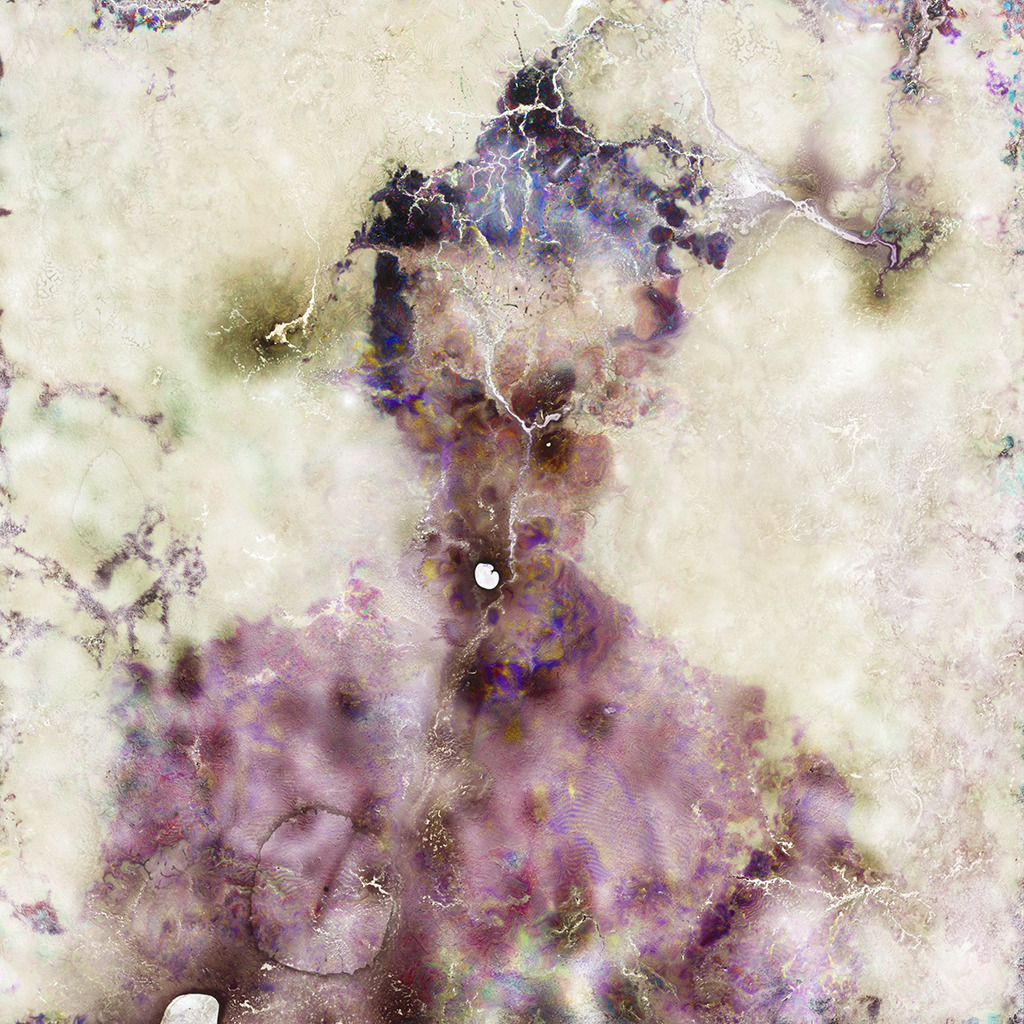
Microbe-themed art of the month: Seung-Hwan Oh portraits w/ mold

OK this is pretty cool (from a microbe-art-science point of view): An Artist Who Paints Portraits With Mold | WIRED.  Seung-Hwan Oh "had to set up a micro-fungus farm in his studio" and he puts film in a warm wet environment (note to self - there could be a new human microbiome aspect of this project depending on what warm wet environment is chosen) and sometimes seeds the system with some mold.  And then he lets nature do its work.

See more about his Impermanence works here. (Really - check out the works - they are wild).

At that site the work is described in the following way:
The visual result of the symbiosis between film matter and organic matter is the conceptual origin of this body of work. The process involves the cultivation of emulsion consuming microbes on a visual environment created through portraits and a physical environment composed of developed film immersed in water. As the microbes consume light-sensitive chemical over the course of months or years, the silver halides destabilize, obfuscating the legibility of foreground, background, and scale. This creates an aesthetic of entangled creation and destruction that inevitably is ephemeral, and results in complete disintegration of the film so that it can only be delicately digitized before it is consumed.
Also see his Tumbl page where one can find many other images like this one:


Hat tip to Kate Scow for posting about this on Facebook.

Friday, September 12, 2014

Fun read of the day: On whimsy, jokes, and beauty: can scientific writing be enjoyed?

This is such a fun paper: On whimsy, jokes, and beauty: can scientific writing be enjoyed? by Stephen Heard in Ideas in Ecology and Evolution 7: 64–72, 2014  I found out about it in an email from Heard, who sent it to me because he had earlier commented on a blog post I had written: The best writing in science papers part 1: Vladimir Nabokov in Notes on Neotropical Plebejinae (Lycaenidae, Lepidoptera).

Anyway - enough about me - what about this paper?  It has so many nuggets of interest I am not sure which to highlight so I will just go through some of it.  Oh - and it is published with a Creative Commons Attribution license (yay).
Abstract: While scientists are often exhorted to write better, it isn’t entirely obvious what “better” means. It’s uncontroversial that good scientific writing is clear, with the reader’s understanding as effortless as possible. Unsettled, and largely undiscussed, is the question of whether our goal of clarity precludes us from making our writing enjoyable by incorporating touches of whimsy, humanity, humour, and beauty. I offer examples of scientific writing that offers pleasure, drawing from ecology and evolution and from other natural sciences, and I argue that enjoyable writing can help recruit readers to a paper and retain them as they read. I document resistance to this idea in the scientific community, and consider the objections (well grounded and not) that may lie behind this resistance. I close by recommending that we include touches of whimsy and beauty in our own writing, and also that we work to encourage such touches in the writing of others.
OK - the title would have drawn me in anyway but the abstract definitely had me.
If scientific writers aren’t sure how to write better, it isn’t for lack of advice. Dozens of guidebooks discuss form, style, and goals in scientific writing (e.g., Montgomery 2003, Davis 2005, Day and Gastel 2006, Katz 2006, Matthews and Matthews 2007, Rogers 2007, Harmon and Gross 2010, Hofmann 2010, Pechenik 2010, Greene 2013, Heard unpubl.).
OK - I am going to have to look at some of these.

Heard documents a bit of a spat between Sprat and Boyle from the 1660s regarding scientific writing.  I especially like the Boyle quote:
To affect needless rhetorical ornaments in setting down an experiment...were little less improper than...to paint the eyeglasses of a telescope...in which even the most delightful colours cannot so much please the eye as they would hinder the sight...And yet I approve not that dull and insipid way of writing, which is practiced by many...for though a philosopher need not be solicitous that his style should delight his reader with his floridness, yet I think he may very well be allowed to take a care that it disgust not his reader by its flatness...Though it were foolish to colour...the glasses of telescopes, yet to gild...the tubes of them may render them most acceptable to the users (Boyle 1661:11-12, spelling and punctuation modern- ized).
Heard then goes through some different aspects of good scientific writing
  • Sightings (1): Playfulness in the scientific literature
  • Sightings (2): Beauty
Also - he then doscusses pushback against the "notion that whimsy, jokes, and beauty can have a place in our scientific literature." which I have also seen in many contexts.

He ends with suggestions and I quote the whole section with some highlights:
If you write papers that are crystal clear and thus effortless to read, you’ll have achieved the primary goal of scientific writing and your work will be among the best of our literature. But if you want to reach for even more, if you agree with me that we can also offer our readers some pleasure in reading, what can you do? To begin, you can try to write with small touches of whimsy, humanity, humour, and beauty—without, of course, compromising clarity; and even knowing that sometimes, reviewers will make you take them out. I am not suggesting writing in which art shares the stage equally with content (as can be true in the lay literature). Rather, the goal that’s within our reach is clear, functional writing punctuated with occasional nuggets of playfulness or glints of beauty—to extend Boyle’s metaphor, not a telescope of solid gold but one lightly gilded. 
You can also work to encourage pleasure in what your colleagues write, in two complementary ways. First, when you review manuscripts, you can suppress the reflex telling you to question any touches of whimsy, humour, or beauty that you find; you can even (gently) suggest some be put in. Second, you can announce your admiration of writing that has given you pleasure. Announce your admiration to the writers who crafted the passage, to editors who might be considering its fate, and to students or colleagues who might read it. If we choose to, we can change our culture to deliver, and value, pleasure along with function in our writing.
This is a must read paper.  And I really wish more people would endorse the idea that scientific writing can include more than just science.  Of course, there are many who already endorse this notion but for those who do not - give it a try.



Wednesday, August 20, 2014

Nice Art and Science example - UC Davis Medical School molecule sculpture

Quikc post here.  A month or so ago I went to the UC Davis Medical School in Sacramento for a meeting and got to see this amazing new sculpture for the first time.


For more about this and the Artist Roger Berry see this article.  It is always inspiring and uplifting to see nice architecture and nice art in a science building. 


Monday, January 20, 2014

This looks awesome: DC Art Science Evening Rendezvous (DASER) 2/20

Wow - this looks awesome.  Bummed I can't be there -- DC Art Science Evening Rendezvous (DASER)


From their web site:
DC Art Science Evening Rendezvous (DASER)
Thursday, February 20, 2014, 6 p.m. (doors open at 5:30)
Keck Center, 500 Fifth St., N.W., Room 100

Free and open to the public. Registration and photo ID required.

Email cpnas@nas.edu by February 6, 2014 to request American Sign Language interpretation.

D.C. Art Science Evening Rendezvous (DASER) is a monthly discussion forum on art and science projects in the national capital region and beyond. DASERs provide a snapshot of the cultural environment and foster interdisciplinary networking. This month, in celebration of its third anniversary, DASER explores the theme of art as a way of knowing. Access the live webcast. It begins streaming at 5:30 p.m. EST.

5:30 to 6:05 p.m. Welcoming remarks

6:05 to 6:10 p.m. Community sharing time. Anyone in the audience currently working within the intersections of art and science will have 30 seconds to share their work. Please present your work as a teaser so that those who are interested can seek you out during social time following the event.

6:10 to 7:10 p.m. Panelists' presentations (15 minutes each)

Michele Banks, Artist, Washington, D.C.
Diane Burko, Artist, Philadelphia, Pennsylvania
Robert Root-Bernstein, Professor of Physiology and Bioartist, Michigan State University, East Lansing
Nina Samuel, Art and Science Historian and Independent Curator, New York City and Berlin, Germany

7:10 to 8:00 p.m. Discussion

8:00 to 9:00 p.m. Reception

DASER is co-sponsored by Cultural Programs of the National Academy of Sciences (CPNAS) and Leonardo, the International Society for the Arts, Sciences, and Technology. DASER fosters community and discussion around the intersection of art and science. The thoughts and opinions expressed in the DASER events are those of the panelists and speakers and do not necessarily reflect the positions of the National Academy of Sciences or of Leonardo.

Friday, February 15, 2013

My new microbial art for my office: salt evaporation ponds and goethermal spring stamps

Thanks to Russell Neches in my lab I found out about the Earthscapes series stamps from the US Postal Service.  Two of the stamps feature microbial ecosystems and I ordered framed, enlarged versions of the photos for my office.


They are available at the links below:

Go microbes.


Thursday, November 15, 2012

Microbes, art and a bit of satire all in one place - Design Interactions at the RCA

Got pointed to an interesting site recently - "Design Interactions at the RCA"  This is a program (or as they call it - a programme) at the Royal College of Art in London.  One of the current students - Lana Porter - contacted me about a possible project she was working on involving microbes.  She also pointed me to some past projects connected to microbes from the program.  The two she pointed to are:
  • Viruses, close enemies or distant cousins? | Design Interactions at the RCA. From Mikael Metthey.  It appears to be from a few years ago but I am not sure.  Regardless, it is pretty humorous.  It is basically a description of an attempt to create "more intimate ways to approach the process of vaccination" by having poxteddy bears and cowpox rides and vaccination playgrounds.
  • The Race.  From Michael Burton.  Also from a few years ago. This one is about antibiotics and microbial evolution and the hygiene hypothesis.  
And then browsing around the site led to some other interesting concepts:
Seems like a fun programme (or program) ...

Thursday, September 27, 2012

Headline says it all "Opera singer grows algae on her face by feeding it w/ her breath & then the audience eats it"

Wow.  I am always on the lookout for microbe-themed art.  In most cases, when I see such art, I think "wow - that is an interesting way of embedding microbes into a traditional form of art".  You know - painting with microbes or art with microbes in it or such.  Well, in this new case I can say this is the most unusual and most creative use of microbes in art I have ever seen: Opera singer grows algae on her face by feeding it with her breath and then the audience eats it

You see, an opera singer work a "head-mounted, face-clinging device" which contained within in some algae in water.  And then the algae was fed by the opera singer's breath.  This is part of something called the "Algae Opera".  The most amazing part of this is described in the io9 article
"Because the algae's growth is dependant on the amount of CO2 it receives, the singer controlled her pitch and volume to alter various characteristics of the algae, including taste (what they called "sonic enhancement"). Depending on the way she sang, the different pitches and frequencies could make the food taste either bitter or sweet"
And then at the end of the performances the audience was invited to sample some of the algae. Yum.  Certainly a bit weird.  But kudos on the creativity index.

Saturday, July 07, 2012

Microbial music: Christine Lavin and the Amoeba Hop

Always searching for science-art-music combinations.  Especially ones that focus on some aspect of science I work on, like microbes. And, well, though this recording is less than ideal, and you need to wait a minute and a half or so, once you get to the song it is worth it.

The song is "The Amoeba Hop" and the singer is the brilliant Christine Lavin.


I have had this song in my head on and off for years and wanted to post about it for a while.  I finally remembered to Google it tonight after reading a tweet about combining music and biology.  I used to listen to Lavin all the time in college and even went to a show of hers in 1989 in Ft. Collins, CO with my brother and my friend Saul Jacobson.  As a side note - we saw Lavin at some music hall type of place the the night after seeing Killdozer at a VFW post.  As a second side note - the Killdozer show was crazy (and I even found someone else who wrote about it here).

Anyway - not only did I find the video posted above but I discovered she wrote a book in 2002 based on the song - and the book even got a review in the New York Times.   Gonna probably have to get that book at some point ...


Thursday, June 28, 2012

Most unusual use of #microbes of the week: fermented fashion

Fermented clothing on mannequin from
http://bioalloy.org/o/projects/micro-be.html
Well, this is certainly unusual: The Genteel | Fermented Fashion.  I found out about this from a Tweet from Irene Kim


Anyway the article describes the "Micro'be'" project for which more details are available here.  Some interesting details at that site include a description

Imagine a fabric that grows...a garment that forms itself without a single stitch!
The fashion that starts with a bottle of wine...
Micro'be' fermented fashion investigates the practical and cultural biosynthesis of clothing - to explore the possible forms and cultural implications of futuristic dress-making and textile technologies.
Instead of lifeless weaving machines producing the textile, living microbes will ferment a garment.
A fermented garment will not only rupture the meaning of traditional interactions with body and clothing; but also raise questions around the contentious nature of the living materials themselves.
This project redefines the production of woven materials.
By combining art and science knowledge and with a little inventiveness, the ultimate goal will be to produce a bacterial fermented seamless garment that forms without a single stitch. 
So - in essence they are trying to grow clothing as a side product of wine fermentation.  Not sure what it is like to wear such clothing - or to be around someone wearing it - but it is a fun idea.

Most recent post

A ton to be thankful for -- here is one part of that - all the acknowledgement sections from my scholarly papers

So - it is another Thanksgiving Day and in addition to thinking about family, and football, and Alice's Restaurant, I also think a lot a...