Showing posts with label fecal transplants. Show all posts

Tuesday, March 05, 2019

Interesting and important story on fecal transplants in @nytimes


This is definitely worth a read:

Drug Companies and Doctors Battle Over the Future of Fecal Transplants - The New York Times. By Andrew Jacobs. March 3, 2019.

The lead in is good:
CAMBRIDGE, Mass. — There’s a new war raging in health care, with hundreds of millions of dollars at stake and thousands of lives in the balance. The battle, pitting drug companies against doctors and patient advocates, is being fought over the unlikeliest of substances: human excrement.
The story is both interesting and includes some very important stuff going on behind the scenes that may affect the future of fecal transplants as a treatment in t. It seems that a variety of folks including those from companies who are trying to develop treatments mimicking fecal transplants are trying to get the FDA to crack down on the use of actual feces for carrying out fecal transplants.
“The first principle of medicine is do no harm, and at the moment we don’t have a long-term track record of F.M.T.’s adverse effects,” said Dr. Sahil Khanna, an associate professor of gastroenterology at the Mayo Clinic who has conducted industry-funded clinical trials on fecal transplants. “We also need to move away from transferring poo from one person to another.”
and
Drug companies, which have been struggling to funnel patients into the clinical studies that are required for F.D.A. approval, would like federal officials to restrict the stool bank’s ability to distribute fecal matter in the hope that more patients will enroll in their trials.
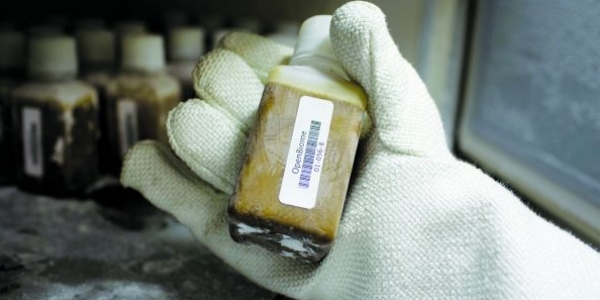
On the other side are those from places like OpenBiome as well as many clinicians who think that the regulation may have already gone far enough or even too far.
“It is very frustrating to see hyperregulation again ruining a good thing in health care,” said Dr. Colleen Kelly, a gastroenterologist at the Brown University medical school.
and
“I never imagined the solution to my nightmare could be so simple,” he said. “I just hope Big Pharma doesn’t make it unaffordable for the people like me.”

Wednesday, June 21, 2017

Irresponsible reporting on "poop doping" from the Washington Post

UPDATE 1 - see below - the author updated her article including some of my critiques.
UPDATE 2 - also see Embryette Hyde's post about using (or not using) the American Gut data to inform lifestyle changes
UPDATE 3. June 25. - Boing Boing picked up the story.  Without major caveats.  I posted a comment there pointing to my blog and answered one other comment but then was not aware the discussion was going on much more there until a Tweet today.  Some interesting discussions there and also some strange things.  Some criticisms of me (some reasonable .. some a bit much).
UPDATE 4. June 26. Nicholas Starapoli at the Genetic Literacy Project critiques the stories on poop doping. Poop doping: No, elite athletes can’t improve performance by optimizing gut bacteria
UPDATE 5. Also see Beth Skwarecki Sex, Poop, and Champagne Are Great, But Their Health Benefits Are Overrated

Went on a bit of a Twitter tirade last night. See more below


The Washington Post story, by Marissa Payne, requires a log in but the article is now in other papers that are free online including the Denver Post here.

It is just really bad reporting because the claims of one scientist are presented as facts without any scrutiny and these claims need lots of scrutiny.

Recently this story was covered in Bicycling Magazine and I gave them an "overselling the microbiome" award for their reporting on it.  I guess I am pretty surprised that the Washington Post doubled down on some of the claims.

Here is some commentary on just some of what is wrong with the Post article.

"Peterson, herself a pro endurance mountain biker, has discovered that the most elite athletes in the sport have a certain microbiome living in their intestines that allow them to perform better"
No evidence has been presented anywhere that these microbes "allow them to perform better".  At best, there may be evidence that elite athletes in this case have different microbes.   That as far as I know has not been presented for the case here.  Seems possible.  But this of course does not mean that those microbes they have allow for better performance.  There could be dozens of reasons why such athletes have differences in their micro biomes (e.g., diet, exercise, interactions all effect the microbiome).
Peterson didn’t decide on the fecal transplant solely to enhance her performance during her mountain bike races, but to cure a host of symptoms that have affected her since she was a child and contracted Lyme disease.
Seriously?  This basically is implying that she did a self fecal transplant that enhanced her performance and cured her Lyme disease.  She is an N of 1.  She did a fecal transplant and then some of her self assessed health changed.  What about, say, the placebo effect?  Or, how about - 100 other things changed in her life before and after the fecal transplant which could have affected her.  Or maybe the antibiotics she claimed to have taken before the transplant did something?  Ridiculous to make any claims about her self fecal transplant having any known impact.

Then there is this
“I had no microbes to help me break down food, and I had picked up bugs in the lab where I was working because my system was so weak and susceptible,” she told Bicycling.
This is a pretty stunning claim. She had no microbes that help break down food before this?  And she also had been infected by microbes from the lab where she worked?  I don't buy either of these claims.

And what about
“I just did it at home,” she said of the February 2014 procedure. “It’s not fun, but it’s pretty basic.”
Referring to home fecal transplants.  I mean, I am all for people doing really whatever they want at home.  But they should do it with their eyes as wide open as their other parts.  And that requires the full poop on fecal transplants.  They have real and potential risks (e.g., see this).  One can get pathogens from them.  The transplant itself could have negative effects.  And if one assumes the microbiome has major effects, then one might get other unwanted traits from the donor too.  It is dangerous to promote self fecal transplants without discussing any of the possible risks.

Overall, I find this reporting by the Post to be dangerous.  And no the one caveat in the article below is not enough
Peterson said it’s too early to make any concrete conclusions about how the microbiome affects performance, but she’s convinced there’s enough evidence to suggest it does make a difference.
How about instead of "she is not convinced" saying "There is no evidence for any of her claims and this is snake oil".  That would be more accurate.


UPDATE June 21 2:54 PM

Marissa Payne updated her story with some comments from me

See https://twitter.com/MarissaPayne/status/877631691883298816

Because the text has been changed in the Washington Post story I am posting the text here from the Denver Post version in case it gets updated too, so people can see the original.

-------------------------------
To be a professional cyclist, one must have guts, microbiologist Lauren Peterson says, and she doesn’t just mean that in the metaphorical sense. Peterson, herself a pro endurance mountain biker, has discovered that the most elite athletes in the sport have a certain microbiome living in their intestines that allow them to perform better, and if you don’t have it, well, there may soon be a way to get it.

“Call it poop doping if you must,” Peterson told Bicycling magazine last week about her research.

Peterson, a research scientist at the Jackson Laboratory for Genomic Medicine in Farmington, Connecticut, heads up an initiative called the Athlete Microbiome Project, in which she compares stool samples of elite cyclists to amateur bikers. Her findings strikingly shine a light on a handful of microorganisms that apparently separate the guts of elite athletes from average people.

The most important, perhaps, is Prevotella. Not typically found in American and European gut microbiomes, Prevotella is thought to play a role in enhancing muscle recovery.

“In my sampling, only half of cyclists have Prevotella, but top racers always have it,” she told Bicycling. “It’s not even in 10 percent of non-athletes.”

Peterson reports she hosts Prevotella in her own gut – but not naturally. In fact, she might be the first case of “poop doping,” thanks to a fecal transplant she administered herself three years ago. Her donor? Another elite athlete.

Peterson didn’t decide on the fecal transplant solely to enhance her performance during her mountain bike races, but to cure a host of symptoms that have affected her since she was a child and contracted Lyme disease.

“I had no microbes to help me break down food, and I had picked up bugs in the lab where I was working because my system was so weak and susceptible,” she told Bicycling.

But, she continued, “I couldn’t find a doctor who could help me” since in the United States, fecal transplants are only performed to treat serious cases of Clostridium difficile, a disease that causes chronic diarrhea. And so Peterson went rogue.

Peterson detailed her decision to perform the “risky” procedure on herself on the podcast “Nourish Balance Thrive” last year. She admitted to thinking it was a “bad idea” at first because if not done with proper screenings of both parties, it could worsen a person’s problems. But through chance, she came across a donor, an elite long-distance racer, who had his microbiome mapped and screened after a case of food poisoning, which showed he was otherwise healthy. So Peterson took antibiotics to wipe out her own gut bacteria and essentially performed a reverse enema.

“I just did it at home,” she said of the February 2014 procedure. “It’s not fun, but it’s pretty basic.”

Within a month, Peterson said, she began feeling better than she’d felt in years.

“I had more energy than I knew what to do with,” she told the same podcast last year. “Like everything just changed.”

More importantly for her life’s work, however, her own success with the fecal transplant gave her the idea to start the Athlete Microbiome Project, for which she rounded up 35 of her cycling friends, according to the Scientist magazine, to kick off her research.

Along with Prevotella, Peterson said she also identified another possibly performance-enhancing microbe called Methanobrevibacter archaea, which Peterson found to be more prevalent in the samples from elite athletes. This bacteria’s function is also opaque, however, Peterson told the Scientist, “it allows your entire gut microbiome to work more efficiently” by more effectively breaking down complex carbohydrates in the gut.

Peterson said it’s too early to make any concrete conclusions about how the microbiome affects performance, but she’s convinced there’s enough evidence to suggest it does make a difference.

“What we’re learning is going to change a lot for cyclists as well as the rest of the population,” Petersen told Bicycling magazine. “If you get tested and you’re missing something, maybe in three years you’ll be able to get it through a pill instead of a fecal transplant. We’ve got data that no one has ever seen before, and we’re learning a lot. And I think I can say with confidence that bacterial doping . . . is coming soon.”

Saturday, May 10, 2014

Well, crap - crap does a crappy job as a treatment sometimes (re: fecal trasnplants and IBD)

Well, this seems like seriously big news in the microbiome world: Fecal Tx Flunks IBD Test but Optimism High.  Charles Bankhead reports on results presented at the "Digestive Disease Week" meeting.  At the meeting Paul Moayyedi from McMaster University reported that a clinical trial of fecal microbial transplants (FMT for short) was stopped midway through the trial due to "lack of efficacy".  More specifically Bankhead reports
The investigators found no significant differences in the primary outcome or any of the secondary outcomes, which included the Inflammatory Bowel Disease Questionnaire and the EQ5D health status assessment
The researcher seems enthusiastic about FMT still but certainly this means that FMT for IBD is not going to be like FMT for CDiff (just wanted to make sure I got in a lot of abbreviations there).  I am sure there will be much more to come on FMT and it would be good to see more detail on what was presented at the meeting (a paper, or poster, or such).  But for now, this hopefully will temper some of the overselling of FMT that is going around (e.g., Overselling the microbiome award: Mercola/Perlmutter on fecal transplants for severe neurological dysfunction).


Related posts:

Sunday, April 27, 2014

Overselling the microbiome award: Mercola/Perlmutter on fecal transplants for severe neurological dysfunction

Well, this is pretty scary.


An automated Google Search I have picked up a hit to an article by Mercola about an interview he did with David Perlmutter: Key Dietary Strategies to Protect Yourself from Alzheimer’s : Natural Wellness Review

And the article covers many topics but one is pretty over the top.  There is a section on recommendations by Dr. Perlmutter to promote brain health.  And one of them is quoted below:
Fecal transplantation, in cases of severe neurological dysfunction where poor gut flora appears to be a contributing factor. Your microbiome is critical for multiple reasons, including regulating the set point of inflammation, producing neurotransmitters like serotonin, and modulating systems associated with brain function and brain health. This form of therapy is now the standard of care for life-threatening C. difficile infections.
Yup.  He is recommending fecla transplants to treat severe neurological dysfunction.  Not the first person to suggest a connection between microbes and neurology.  Not the first person to say that maybe trying to change the microbiome might be an interesting thing to test as a treatment for some issues.  But with no caveats here they just jump right in to using this to treat neurological dysfunction.  This is just grossly over the top and will likely mislead many many people with neurological dysfunctions into thinking fecal transplants are a known effective treatment.  I wonder if Dr. Perlmutter will start offerring home fecal transplant kits for sale on his web site (which I will not link to here).

Now, I think microbes are important.  And I think there is potential here for fecal transplants for a lot of issues.  But potential is different than proven.  By a long show.  And people like Mercola and Dr. Perlmutter should be ashamed for misleading people like this.  And thus they are today's winners of an "Overselling the Microbiome" award.

Thursday, January 30, 2014

Visualization of fecal transplants - well - thankfully - of the microbial community data not the actual transplant

I love things like this. A simple Youtube video from Antonio González Peña and Rob Knight's group. The video shows data from a study of microbial communities and how they respond to a fecal transplant. Simple. Short. And the visualization is nice.


Tuesday, January 28, 2014

Expert translation of details on "Clinical trial for autologous stool transplant" that is seeking volunteers

Well, if you are between 18 and 70 and are healthy and want to participate in a  clinical trial this may be for you.  Titled Autologous Fecal Therapy the description uses some science jargon to describe the plan.  They say
"Ten healthy volunteers will be recruited to receive either an autologous stool transplant or a saline enema to determine if autologous fecal microbiota therapy will be able to rapidly, and safely, restore a patient's fecal microbiome after antimicrobial exposure."
Or, in other words - they want you to (1) save your shit (2) take some antibiotics and (3) deliver either salt water or your own shit back into your rear.

Actually quite interesting.  And I encourage people to consider volunteering.  But I just thought it would be good to make sure you knew what this was about ...

Wednesday, September 25, 2013

Fecal transplants as treatment for anxiety? Not so fast (but worth pondering)

 Just read this: Gut Bacteria Transplant: A New Treatment For Anxiety? | Psychology Today: calm vs. anxious.  On the one hand, I agree that the microbiome very well may have interesting effects on human behavior.  Well, actually, we know the microbiome does impact human emotion and behavior.  For example, I get pretty anxious when I have gut problems, and we certainly know that the microbiome has a major impact on gut health.  And of course, we know lots of examples of microbes affecting behavior of animals.  The latest on this that I am aware of comes from studies by Wendy Ingram in my brother's lab at UC Berkeley - who has been looking at Toxoplasma and it's effect on mouse behavior (e.g., see Toxoplasma infection permanently shifts balance in cat-and-mouse ... and Cats, Mice and Toxoplasma Gondii Parasite Weird Love Triangle and Mice Aren't Scaredy-Cats When Infected By Toxoplasma).

On the other hand, despite the apparent connections between microbes and emotion and behavior in some cases, this does not mean either that (1) microbes have a role in causing anxiety in people or (2) even if microbes CAUSE anxiety that microbiome transplants could treat the anxiety.  Anyway - I certainly think this is an interesting area of research but I urge caution before we go overboard in marketing fecal transplants for everyone with any issues connected to behavior or emotions ...

Sunday, September 22, 2013

Jerusalem Post on Allergy and Fecal transplants

Some interesting tidbits in this Jerusalem Post article: Health Scan: Ungluing the complexity of allergy | JPost | Israel News (a bit overenthusiastic too but just thought I would point some of these lines /quotes out):

  • "Studies in adults show that more than 90 percent of patients are cured following such therapy and, experts say, they have every reason to believe the numbers would be equally impressive in children." - not sure this is true (i.e., the 90% cured level).
  • In less than a decade, we’ll have lab-cooked poop that we can administer to restore balance in the guts of people with a wide array of conditions caused by the imbalance between good and bad germs.” OK - a bit overenthusiastic 
  • But this is my favorite: "The concept is hardly new. The method originated with ancient Chinese healers who gave their diarrhea-ravaged patients “yellow soup,” a concoction of fecal matter and water. Thousands of years later, the delivery approach has evolved" - So - I have been writing and talking about fecal transplants for a while now (e.g., see this) and have linked them to coprophagy and poo tea and such but never heard of the yellow soup thing.

Saturday, September 07, 2013

Families that share everything: Health2Fit video on brother helping sister by being a donor for a fecal transplant

I guess today is fecal transplant day. So why not a little news story from Health2Fit about families that share everything ...


Fecal transplants taken up by American Hospital Association in letter to HHS about Medicare/Medicaid

Interesting discussion of Fecal Transplants is this letter from the American Hospital Association to HHS about Medicaid / Medicare: Marilyn Tavenner September 6, 2013 Page 1 of 33 September 6 ...

Key text is below:


"FECAL MICROBIOTA TRANSPLANTATION
Fecal microbiota transplantation (FMT), also known as fecal bacteriotherapy, or human probiotic infusion, is a medical treatment for patients with Clostridium difficile (C. difficile) enteritis or ulcerative colitis. C. difficile infection occurs in patients who have been administered antibiotics for a long period of time. The antibiotics destroy important disease-fighting bacterial flora in the intestine. Fecal transplants are believed to restore the bacteria back to normal, and the patient can recover. The fecal transplant works by repopulating friendly flora in the infected intestines. The donated feces is screened for disease and then mixed with a saline solution to the consistency of a milkshake.FMT can be performed by various routes including nasogastric (NG) tube, nasojejunal tube, upper tract endoscopy (EGD), colonoscopically or by retention enema. However, based on an editorial published in the Journal of Clinical Gastroenterology (Volume 45, Number 8, September 2011), colonoscopic FMT is the preferred method for the vast majority of C. difficile infection patients, and if carried out early, may prevent development of severe infection.

Effective with the 2013 edition of the CPT manual, the American Medical Association developed the CPT code 44705 (Preparation of fecal microbiota for instillation, including assessment of donor specimen) that includes:
  • development of the intestinal instillate for the recipient; and
  • evaluation of the donor specimen, including the physician review of results of testing the donor’s specimen for infectious pathogens
The CPT manual instructions require that the actual instillation or fecal microbiota transplant be coded separately using CPT 44799 for either oro-nasogastric tube or enema. Additional instruction in the CPT manual identifies that all laboratory testing provided for the patient is to be reported separately. Based on this instruction and the intent of the CPT code 44705, this is an add-on or “list separately in addition to the primary procedure,” which would be the instillation procedure, e.g., the oro-nasogastric tube or enema.

Fecal transplant recruiting on Craigslist

See this Craigslist post for the Boston area: Are you a healthy adult, 18-50 years old? - copied below.  It seems that fecal transplants really are everywhere ...


 Are you a healthy adult, 18-50 years old? (Massachusetts General Hospital)


Fecal Microbiota Transplant
Healthy adult volunteers 18-50 years old
Involves donation of stool samples and medical screening
Blood draws, complete medical exam
No medical problems
5-7 out-patient visits at MGH
Compensation up to $700 for completion of study
617-724-8625
  • Location: Massachusetts General Hospital
  • it's NOT ok to contact this poster with services or other commercial interests
Posting ID: 4050676649

Posted: 2013-09-06, 4:04PM EDT

Updated: 2013-09-06, 5:09PM EDT

Saturday, May 18, 2013

Just in time for #ASM2013 - FDA adding regulations for fecal transplants #microbiome

Well, I guess this could be good news or bad news or both.  The FDA has sniffed the winds of microbiome studies and decided that it wants some more regulation on fecal transplants (aka fecal bacteriotherapy).  See for example Fecal Transplant: FDA Wants Regulation.  Fecal transplants are spreading like crazy these days and every where I go in real life and online I hear and see more about them.   For more on fecal transplants see some of my previous posts such as More (you know you wanted it) on fecal transplants and the microbiome and Fecal transplants in the news and Transfaunation and Fecal Transplants: What Goes Around Comes Around, Literally and Figuratively.

I guess the FDA feels like they have to do something given the spread of FT.   Given how many scam artists and oversellers of the microbiome are out there I think some sort of increased protection or regulation is probably a good thing.  But I am not sure what the best way to do this is.  Clearly some are unhappy with the FDA sticking their noses into fecal transplants (e.g., see here).  But given how little we know about FTs other than as treatment for Clostridium dificile infections it seems like one could make a reasonable argument for more regulation or caution.  It seems strange though that we can do just about anything and everything we want to kill all the microbes around us with very little regulation and yet attempting to manipulate the microbes in and on us or add a few here and there is being regulated more.

What do others think?  Do we need more regulation from the FDA on fecal transplants?

UPDATE - some links to other discussions of this:

Saturday, November 17, 2012

Must read microbiome paper of the month: defined microbioata treatment of Cdiff infections

This is a must read: PLOS Pathogens: Targeted Restoration of the Intestinal Microbiota with a Simple, Defined Bacteriotherapy Resolves Relapsing Clostridium difficile Disease in Mice

This is the paper I referred to in a previous post: Mouse study of fecal transplants to treat Cdiff infection.  This post was about a BBC News story that appeared to have jumped the embargo.  And then the news article disappeared and the scientific article was missing.  Thankfully the paper is now out.

The article has gotten some press that was not retracted.
More on fecal transplants and bacteriotherapy from my blog can be found below:

Saturday, November 10, 2012

Overselling the microbiome award of the month: Integrative medical group of Irvine

Wow.  Just discovered this site: Fecal Transplantation | Integrative Medical Group of Irvine.  Not sure how long it has been out there.  But this is one of the more aggressive and perhaps egregious overselling of the power of the human microbiome that I have seen. They are promoting fecal transplants at their clinic as a way to cure a diverse array of ailments from ulcerative colitis to obesity and imply they can be used for cardiovascular health, emotional status, bone health, and more.  My "favorite" part:
As our understanding of the enormous importance of bowel micro-biota (bacteria) grows, the indications for fecal transplant will expand greatly and public acceptance will follow. But there is no reason for you to wait. Dr. Lee, our naturopathic doctor, is one of only a tiny handful of specialists certified in the use of fecal transplant. She can expertly manage your case.
Yes that is right.  We (the royal We of course) are on the verge of showing that the microbiota does EVERYTHING and therefore, if anything ails you, just wash your troubles away with some shit from a relative.  There is no reason to wait.  Come in to our clinic now.

And for the misleading nature of this site, I am giving this Integrative Medical Group of Irvine my coveted "Overselling the microbiome award."  Previous winners and discussions of this issue are listed below:


------
UPDATE September 2017

Was just looking back at this post.  Alas the link to the Irvine web site was dead.  But thankfully the Internet Archive indexed this page. See https://web.archive.org/web/20130405021335/http://integrativemgi.com/fecal-transplantation/. It is from 2013 but may be the same as what I was seeing.

I am copying the text below

Fecal Transplantation

The gastrointestinal (GI) system is largely responsible for the well-being of every other cell and system in the body. It absorbs the nutrients which all cells require, expels toxic wastes, nurtures the complex bacterial bio-matrix which produces essential enzymes and vitamins, protects the body from invading organisms, and participates in critical “cross-talk” with the brain and the immune system.
When the bacterial communities of the intestinal tract become altered or damaged, their essential processes malfunction and the health of the individual declines – sometimes slowly, but at other times with devastating speed. When this happens, we attempt to “heal the gut,” a process that involves elimination diets, healing supplementation and probiotics. This can take many weeks or longer.
Recently, however, a new treatment has been developed that is proving highly beneficial, amazing fast, and in many cases lifesaving. Though fecal transplantation sounds unappealing, this amazingly simple procedure rejuvenates the gastrointestinal (GI) system literally overnight by taking fecal material from a healthy donor (preferably a relative), carefully processing it, and then inserting it into the colon of the patient. This is a simple and safe procedure, and, of course, the donor is thoroughly screened for communicable diseases.
The most common application of fecal transplant is in patients suffering from a serious intestinal infection caused by Clostridium difficile bacteria. Usually infections with C. diff occur following oral administration of antibiotics, and with increasing frequency the resulting infection is resistant to all antibiotic therapies. Lives have been saved and transformed in a matter of days following a fecal transplant treatment.
Exciting novel applications are evolving for fecal transplant. One is for the treatment of ulcerative colitis (UC). Patients on the verge of having their colons removed or patients living in misery with UC have experienced dramatic remissions following fecal transplants.
Another novel application involves the use of fecal transplants in obese patients. It has been discovered that in these individuals, the GI bacteria differ from those found in thin, healthy people. These so-called “fat bacteria” can extract a significantly greater quantity of calories from the same amount of food as do normal bowel bacteria. There is great hope that doing a fecal transplant on an obese individual will stimulate more appropriate bacterial behavior, and weight loss will become much easier.
Data now exists that the bacteria in the gut impacts virtually all aspects of health. Cardiovascular well-being, emotional status, bone strength, as well as immune health are all dependent on a healthy bowel flora.
As our understanding of the enormous importance of bowel micro-biota (bacteria) grows, the indications for fecal transplant will expand greatly and public acceptance will follow. But there is no reason for you to wait. Dr. Lee, our naturopathic doctor, is one of only a tiny handful of specialists certified in the use of fecal transplant. She can expertly manage your case.
If you are interested in learning more about how fecal transplants can improve your health, we encourage you to call our office to schedule an appointment with Dr. Lee.

Friday, October 19, 2012

Mouse study of fecal transplants to treat Cdiff infection

Interesting story in thge BBC News on a paper from PLoS Pathogens: BBC News - Faecal transplant clue to treating gut bug (seems that the article has disappeared - maybe they jumped the Embargo? --- anyone --- found another version here). In the work, researchers from the Sanger Institute infected mice with Clostridium difficile and then treated them with different combinations of microbes isolated from mouse feces. In the end they are reported to have identified a combination of six strains that was highly effective in clearing the C. difficile infections. I say "reported to have ..." because I cannot find the PLoS Pathogens paper, again suggesting to me that the BBC story may have somehow jumped the embargo. Will post more when more comes out.

Wednesday, September 26, 2012

Fecal transplants in the news

CNN has a story on a fecal transplant case: Little-known fecal transplant cures woman's bacterial infection - CNN.com.  It is worth a look and if you want to laugh (sometimes in pain, sometimes for jokes) read the comments. Some other recent stories on this topic include
And the CNN story got picked up by Reddit
As many know - I have been talking / writing about such treatments a bit recently.  I discussed it in my Tedmed talk (which is now on Ted).

And I have a blog post with background and links on the topic.

Wednesday, August 22, 2012

Got poo?: Clinical trial on fecal transplants (aka fecal bacteriotherapy) to treat C. difficile infections

Normally I avoid covering press releases here on my blog but this one is actually worth noting: Groundbreaking Clinical Trial Looks at Fecal Transplant as Treatment for C. Difficile | Women's Medicine Collaborative.  It details the funding of a clinical trial to study the effectiveness of fecal transplants in treating Clostridium difficile infections.

Fecal transplants have gotten a growing amount of publicity over the last few years.  And they certainly seem to have potential.  But though they have been shown to be safe, they have not yet been shown in a clinical trial to be effective in treating anything.  So it is good to see a funded clinical trial on such transplants (though I note, transplant is probably the wrong word to use - maybe fecal bacteriotherapy is more appropriate.

For some background on fecal transplants see

Sunday, July 29, 2012

Episode of Radio New Zealand "This Way Up": "Meet your microbes" discussion w/ me

Did an interview over the phone with Simon Morton for Radio New Zealand's "This Way Up."  Discussing microbial diversity and in part as a follow up on my TEDMED/TED talk.

Tuesday, December 20, 2011

Transfaunation and Fecal Transplants: What Goes Around Comes Around, Literally and Figuratively

In 2006 when I had just moved to UC Davis from TIGR, I was on a Southwest flight from Sacramento to (I think) Arizona. The person sitting next to me and I did the normal chit chat - what do you do? where are you going? etc. And the conversation became fascinating. The person sitting next to me was Mike Lagrone - a farrier (I forget people's names frequently ten minutes after meeting them - but his name I remember even today, so he clearly made an impression). He travelled around the West helping take care of people's horses. (I note - I think more information about him is here Mike Lagrone | EquiMed - Horse Health Matters).

Most recent post

A ton to be thankful for -- here is one part of that - all the acknowledgement sections from my scholarly papers

So - it is another Thanksgiving Day and in addition to thinking about family, and football, and Alice's Restaurant, I also think a lot a...