Saturday, May 31, 2014

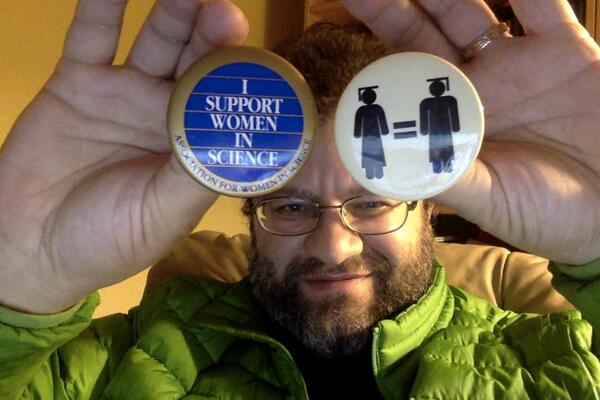
Love this - The Aggie Transcript #UCDavis Undergraduate Life Sciences Journal

I just love things like this: The Aggie Transcript | An undergraduate life sciences journal at UC Davis.  From their site:
The Aggie Transcript is is a forum for undergraduate UC Davis students to share news, original writing, and art related to the life sciences.
Here are some recent posts:
What a great idea.


Wednesday, May 28, 2014

CAMERA metagenomics resource is shutting down

Just got this email and thought it would be of interest to many out there.

Thank you for being a CAMERA user during its operation as a resource for
environmental genomics. During the past few years, CAMERA has been able to
offer a number of important community resources, including an exceptionally
well curated environmental genomic database, the ability for researchers to
deposit molecular sequence datasets with associated environmental
parameters (metadata), open access to computational resources to enable
metagenomic comparisons, educational resources, and helpdesk services.
These efforts have been funded through the Gordon and Betty Moore
Foundation (GBMF) Marine Microbiology Initiative and the National Science
Foundation to serve the needs of the marine microbiology community and
other users.
In particular, the CAMERA compute resources, which include large-scale
BLAST capabilities and other workflow-enabled analysis capabilities
(RAMMCAP), were generously supported by the GBMF, the San Diego
Supercomputer Center, the NSF XSEDE program, and commercial Cloud computing
resource providers (CODONiS).
Due to the termination of GBMF support, CAMERA can no longer accommodate
the computational needs of the community. Therefore, starting July 1, 2014,
CAMERA will begin to shut down the CAMERA portal and will no longer accept
any new workflow submissions. The results of workflows submitted by July 1,
2014 will be available to users through July 15th. Urgent requests for the
temporary use of CAMERA workflow resources beyond July 1, 2014 will be
considered on a case-by-case basis.
If you are a current or prior CAMERA user and would like to retrieve
personal data from the system, we strongly encourage you to do so now.
As announced earlier this year, CAMERA will continue to maintain free and
open access to its rich collection of curated data and metadata via the
CAMERA Data Distribution Center (DDC), which includes links to the Marine
Microbial Eukaryote Transcriptome Sequencing Project. In conjunction with
the portal shutdown, CAMERA will also no longer accept user data
submissions past July 1st (but data submissions currently in progress will
be completed and made available via the DDC).
Please contact us at camera-info@calit2.net regarding matters pertaining to
the use of CAMERA.
Thank you so much for your support and participation!

Monday, May 26, 2014

Gulp - a good book for those into, well, our insides

On Saturday I went into downtown Davis, CA with my kids to get them haircuts and then to get a present for one of their friends for a birthday party. We decided to get a present at Avid Reader downtown. And after looking for the gift and for some books for my kids I decided I wanted to check out their science section. And I came up with a present for myself too


And then started reading it. It is quite good.

On top of reading the book I have been checking out some interviews with the author Mary Roach. Quite entertaining. For example I was pointed to one on Twitter:


And I then remembered I had been pointed to another via email a while back by Steve Faith at UC Davis:  A Brief Tour Of The Alimentary Canal, From Spit To You Know What : Shots - Health News : NPR.
Still not done with the book but if you want a great read about our insides - I recommend Gulp by Mary Roach very highly.

Sunday, May 25, 2014

Local elections in Davis, Yolo County and California are apparently a way for junk mail to be distributed. What a waste.

Well, the local elections in Davis, Yolo County and California are as far as I can tell mostly a way for junk mail to be distributed. What a waste.

Registered for #ASM2014 but could not go; meeting sounded good; but annoyed ASM sold my info to advertisers

Very annoyed with the American Society for Microbiology right now as I have been collecting some of the junk mail I got associated with the meeting.  I presume that ASM sold my information to these advertisers.  I did not explicitly give permission for them to do that.  Not good.


Friday, May 23, 2014

Overselling the microbiome award - many - for stories about placental vs. oral microbiomes

A few days ago on Twitter I was pointed to a news story about the human microbiome:


I looked at the article and definitely agreed with Ed. So I responded
And then a mini conversation happened


And I pondered writing up an "overselling the microbiome award" but I got caught up in other things. And then today some people (including Jens Walter) pointed me to this New York Times article about the same topic: Study Sees Bigger Role for Placenta in Newborns’ Health - NYTimes.com. And I decided I had to write something up because too many news stories were not doing a great job with the science here.

Thursday, May 22, 2014

Quick Post - Interview of me is up on the Story Exchange re: #WomenInSTEM especially at conferences


Thanks to the Story Exchange and Candice Helfand for featuring me and the issue of Women in Science on their blog.  Here is a link to the interview she did with me a few days ago that she just posted:  Welcoming Women at STEM Conferences - and Beyond | The Story Exchange.  The interview discusses not only some of the reasons to care about diversity in science and at science meetings, but also how I got interested in the topic in the first place.

For some other background on my work and posts in this area see this page with a compilation of my Posts on diversity (gender, etc) in science.

Some selected ones are below:

Wednesday, May 21, 2014

May 23 at #UCDavis - Wikipedia editathon about women in science and academia

Phoebe Ayers, librarian extraordinaire at UC Davis is running another Wikipedia Editathon on women in science and academia.  See Wikipedia:GLAM/University of California Davis Libraries.  It will be May 23.  The last one went quite well.  I had posted a few announcements here and there (e.g., Wanted - participants and helpers for a "Women in Science Editathon) about the previous one that was inspired by Dawn Sumner and run by Phoebe.  These are good ways not only to help promote women in science but also to learn a bit about Wikipedia and about some female scientists.

Not protesting this commencement address: Nancy Hopkins at BU on Gender Bias in STEM

Thank you Paula Olsiewski for pointing me to this: Boston University’s 141st Commencement Baccalaureate Address: Nancy Hopkins.  It is the text of the commencement address that Nancy Hopkins gave at BU on Monday.  And it is really worth reading.  Or watching.

And fortunately BU has posted video of the talk


In the talk Hopkins discusses her work in biology and the subtle and overt gender bias she has seen. Hopkins is quite an amazing person. For more about her see
Also see a talk by Hopkins at U. Chicago from 2011 at a colloqiuium on advancing women in science and engineering. 


Lab meeting at Yolo Basin - science should be fun ...

Was both a very good and a very bad day yesterday.  I will leave out the bad here other than to say that a close relative was diagnosed with a very bad cancer.  Fortunately, I had already planned to have my lab meeting (in picnic format) out at Yolo Basin Wildlife area and so I had to soldier on.  I scouted out the Yolo Basin in the early AM (after dropping my mom off at the airport).  And during the scouting trip I saw all sorts of cool wildlife.  Some of the pics are below:

Coyote hunting rodents off in the distance

Ring necked pheasant
And then I headed on over to where we were going to have the picnic (to make sure they were not doing any construction work near there as I had seen trucks there a few days before).  And on the way to the parking lot I saw some otter poop in the road.  It seemed very very fresh.  So I slowed down (to even less than the 15 MPH I was going) and then I saw them.


Two otters.  Just a few feet in front of me.  Playing.  They eyed me suspiciously, and then headed into the little channel.

Thursday, May 15, 2014

Right to be forgotten bill has grave implications for science

Yes, the web can be a quagmire of inaccurate, offensive libelous crap.  But wow - this new ruling about the "right to be forgotten bill" in Europe I think goes too far (e.g., see this story for more info on the bill Google gets 'right to be forgotten' requests hours after EU ruling - Telegraph).  (Quick summary - the ruling basically says that people have the right to request that search engines make it impossible to access   certain links - such as ones to stories the requestor does not like).

I am particularly concerned about how this bill will affect scientific discourse.  Suppose for example that Andrew Wakefield wants criticism of his fraduelent work on vaccines to be expunged from the links that come up in Google searches?  What should Google do there?  What about retracted papers in general?  What is the person behind the paper does not think that retracted papers should appear in searches for that person's name?  This seems to be one of those cases of a very very slippery slope being created to solve a real problem but to solve it in the wrong way.

UPDATE - may not be as big a risk to Science as I thought ...

Tuesday, May 13, 2014

No overselling here - Martin Blaser on the Daily Show discussing Missing Microbes and the human microbiome

Martin Blaser does a good job on the Daily Show discussing the human microbiome and his new book Missing Microbes.

USA Today article on "Your home's odor may be making you sick"

Quick post - just saw this Tweet from the Airmid Healthgroup


It points to a story in USA Today that may be of interest - Your home's odor may be making you sick.  It is about the work on Joan Bennett and researchers from Rutgers and Emory.  I don't have time to dig into it right now but perhaps others do.


UPDATE 5 minutes later
Oops - posted to the wrong blog. First time I have done this. This was supposed to go to microBEnet. I have posted it there now.

Saturday, May 10, 2014

Well, crap - crap does a crappy job as a treatment sometimes (re: fecal trasnplants and IBD)

Well, this seems like seriously big news in the microbiome world: Fecal Tx Flunks IBD Test but Optimism High.  Charles Bankhead reports on results presented at the "Digestive Disease Week" meeting.  At the meeting Paul Moayyedi from McMaster University reported that a clinical trial of fecal microbial transplants (FMT for short) was stopped midway through the trial due to "lack of efficacy".  More specifically Bankhead reports
The investigators found no significant differences in the primary outcome or any of the secondary outcomes, which included the Inflammatory Bowel Disease Questionnaire and the EQ5D health status assessment
The researcher seems enthusiastic about FMT still but certainly this means that FMT for IBD is not going to be like FMT for CDiff (just wanted to make sure I got in a lot of abbreviations there).  I am sure there will be much more to come on FMT and it would be good to see more detail on what was presented at the meeting (a paper, or poster, or such).  But for now, this hopefully will temper some of the overselling of FMT that is going around (e.g., Overselling the microbiome award: Mercola/Perlmutter on fecal transplants for severe neurological dysfunction).


Related posts:

Suggestion of the week: Create Project Specific Pages on ImpactStory #AltMetrics

So - I have been doing a little "hacking" of the Impact Story system to create pages specific for individual projects rather than for me or other researchers.  I did this last week for my microBEnet project: Made a project page (hack?) for microBEnet on ImpactStory.  And been playing around with the concept some more.

For example see this page I made for the "iSEEM2: Environmental Niche Atlas" project that is a collaboration between my lab and the lab of Katie Pollard at UCSF (supported by the Gordon and Betty Moore Foundation).  To do this, I registered a new account in ImpactStory (with the first name i and last name SEEM2; using an alternative email address I have). I then used the "upload individual products" and loaded up Pubmed IDs, DOIs, Github web addresses, Slideshare web addresses and more.  And Voila I get I nice page with Altmetrics for our project rather than for myself.


Now I have not loaded everything done on this project yet, but already this is a helpful way to post results from our project and look at some of their metrics. I also updated the website for the project: http://iseem2.wordpress.com.

I think making such project specific pages will end up being useful in many ways. I discovered one this AM in an email I got from Impact Story.  I have appended it below.  Turns out they give weekly updates on how your metrics have changed for that week.  This is the best thing I have seen regarding "Alt Metrics" anywhere.  Very very useful.  Still not sure if this is an "acceptable" use of ImpactStory but I figure they should be OK with it.

Friday, May 09, 2014

Bad microbiology reporting of the month award: C-Net on IBM "Sequencing the City" meeting

Well, I am still really annoyed by this unbearable article on C-Net yesterday: IBM sees big opportunity in sequencing microbes by Daniel Terdiman.  The article is about this "Sequencing the City" meeting organized by IBM that was on Tuesday and Wednesday.  I talked at the meeting on Tuesday (I could not go on Wednesday).  For more about my talk see: What to do when you realize the meeting you are speaking at is a YAMMM (yet another mostly male meeting)?.  But I am not criticizing the meeting here.  I am criticizing the article in C-Net which has many many flaws. For example consider:
According to James Kaufman, a research manager at the Almaden Research Center, the move to study metagenomics -- the study of systems of micro-organisms -- came from what he called a tipping point in big data. As more and more government-funded institutions study organisms and bacteria, they've collected more information about them, and submitted much of their work to centralized databases. "So there's a growing library of genomes across the field of life," Kaufman said. "That made possible metagenomics."
What?  Metagenomics has been around for a long time.  Sure, many people in the field are taking advantage of so called big data, but there was no "tipping point" needed to launch the field.  This is just completely misguided.
And then even worse
The result: We can now look at and understand whole ecosystems at the bacterial level. One example of how that manifests is what IBM refers to as the Human Microbiome Project. According to an IBM document, that's about characterizing "microbial communities found at multiple human body sites to discover correlations between changes in the microbiome with changes in human health."
So - there have been dozens of high profile papers from the Human Microbiome Project.  There are hundreds of web pages with information about the project.  It was started years and years ago.  And the reporter quotes an "IBM document" to tell us what the Human Microbiome Project is?   And even worse the reporter says "what IBM refers to as the Human Microbiome Project" like they ran it / designed it.  Good that they refer to it as the Human Microbiome Project.  You know why?  Because that is what it is known as to all the other $(&@)(* people in the whole (%&# world.

The reporter goes on to write
This kind of work is not entirely new, but the scientists who will be gathering at IBM Research this week are grappling with one conundrum: they don't know what they don't know. So a big topic of conversation, and a big part of what IBM would like to see advanced, is "the ability to do metagenomics on the scale of a city or the world....That will depend on software services available in the cloud," Kaufman said. "It has to be cheap, easy, and accessible from anywhere. That's what we're really good at."
Once again making it seem like IBM is somehow leading this field.  Not to pick on IBM here.  I am glad they organized the meeting.  But either the reporter just got handed a press release from IBM and wrote it up, or did not do any type of background research, or both.  Sure IBM would like to see this.  But so would lots of other people.  Why make this all about IBM?  There are so many people who have done interesting work in the area of "microbiology of the built environment" - why are none of them even discussed?  What exactly is the point of this article if not to simply be a PR piece for IBM?  Aaaaaarg.

Friday, May 02, 2014

Love work of @billgates but "mosquitoes kill more people than people do" is just wrong

I truly love the work Bil Gates and the Gates Foundation have been doing over the last years.  Absolutely wonderful stuff.  But I have a bone (or perhaps a proboscis) to pick with this latest effort: The Deadliest Animal in the World | Bill Gates.  The article discusses some "facts" about how many people different animals kill.  And it uses this to argue for the need for more attention to be placed on mosquitoes.  I agree with the conclusion.  Mosquitoes are a big deal and need much much much more work and attention.  But the data is just, well, not sound.  Here is the problem I have

1. Many of the animals, including mosquitoes, are on the list are there because of the diseases they transmit.  For example, dogs are there (for rabies), and tsetse flies are there for sleeping sickness.  That is, they do not kill people directly but indirectly because of a disease they transmit.

2. If we follow that logic, which I am fine with, then we need to add a whole lot of deaths to the "human" column.  After all, humans transmit a whole heck of a lot of diseases that kill humans.  One source I found has the following #s
  • HIV/AIDS: 1.78 million per year
  • Tuberculosis: 1.34 million per year
  • Flu: 250-500,000 per year
  • HAIs: >100,000
  • Syphilis: 100,000
  • Measles: 600,000
and many many many more.   The totals are probably greater than 5 million per year that are killed by infectious diseases where it was humans who transmitted the agent to other humans.  Way more than the mosquitoes.  Again, I agree with the conclusion.  We need lots more attention on mosquitoes.  But there seems little doubt to me which animal is most responsible for the spread of deadly pathogens to humans.  And that animal is us.


UPDATE 5/3

What to do when you realize the meeting you are speaking at is a YAMMM (yet another mostly male meeting)?

I am supposed to be talking at a meeting Tuesday: Almaden Institute 2014: Sequence the City -Metagenomics in the Era of Big Data.

In looking at the agenda for the meeting I am pretty bummed about the gender ratio of speakers. Looks like 18:5 Men to Women. 
  • Jeff Welser IBM 
  • David Haussler UCSC 
  • Daniel Huson Tubingen U 
  • Joe DeRisi UCSF 
  • Jane Carlton NYU 
  • Ajay Royyuru IBM 
  • Paula Olsiewski Sloan Foundation 
  • Christopher Mentzel Moore Foundation 
  • Anne Marie Kimball Gates Foundation 
  • Jonathan Eisen UC Davis 
  • Jessica Green U Oregon 
  • Mark Adams JCVI 
  • Eric Alm MIT 
  • Raul Andino UCSF 
  • Scott Kahn Illumina 
  • Mike Lelivelt Ion Torrent 
  • Radoje (Rade) Drmanac Complete Genomics 
  • Brett Bowman Pacific Biosciences 
  • Chris Mason Cornell 
  • Bart Weimer UC Davis 
  • David Crean Mars 
  • Astri Wayadande Oklahoma State U 
  • Christopher Elkins FDA
Not sure what to do about this. I am certainly (in a few minutes) going to be writing to the organizers. I am also pondering cancelling talking. I try very hard to be vigilant about gender ratios at meetings and it drives me crazy to see such skews. I know it is not always possible to have meetings have equal representation and I know some people try very hard and do not succeed. But this seems unpleasantly extreme. So - any thoughts or recommendations as to what to do would be appreciated.


UPDATE 5/5 -

Thursday, May 01, 2014

Overselling the microbiome award: Time Magazine & Martin Blaser for "antibiotics are extinguishing our microbiome"

Well, alas, Time magazine turned what could have been a story about the spread of antibiotic resistance into what appears to be a promotion for Martin Blaser's new book: Antibiotic-Resistant Bacteria Are Now In Every Part of the World | TIME.com.

The article starts of OK - reporting on the new WHO report on antibiotic resistance.  But then it gets into the microbiome and what antibiotics supposedly do to it.  Some quotes:
"But even more concerning, say experts like Dr. Martin Blaser, director of the human microbiome program at the New York University Langone Medical Center and author of Missing Microbes, is how these antibiotics are affecting the makeup of both good and bad bacteria that live within us – our microbiome. The first big cost of antibiotics is resistance,” he says. “But the other side of the coin is [the fact that] antibiotics are extinguishing our microbiome and changing human development.
Extinguishing our microbiome?  Really?  The evidence simply does not support such a claim.  I personally think antibiotics may be contributing to messing up the microbiome in many people and that this in turn might be contributing to the increase in a variety of human ailments (e.g., I mentioned this issue in my TED talk and many many times here and elsewhere).  But "extinguishing"?  Not even close.  In fact, many of the published sutdies done so far suggest that the human microbiome is pretty resilient in response to antibiotics.  Really serious overselling of the impact of antiobitcs by Blaser.

And "changing human development?"  Not sure what the evidence for that is either.  Most likely this refers to the role the microbiome plays in immune system development but I am not aware of strong evidence that antibiotics lead to changes in human devleopment.

They then quote Blaser again:
If I prescribe a heart medicine for a patient, that heart medicine is going to affect that patient,” says Blaser. “But if I prescribe an antibiotic, that antibiotic will affect the entire community to some degree. And the effect is cumulative.
Yes antibiotics can affect more than one person because microbes (and resistance) can spread.  But "the effect is cumulative"?  I do not think that has been shown.

Finally, Time (well, Alice Park, the author) states (in relation to limiting overuse of antibiotics)
That may also help to protect our microbiomes, which in turn could slow the appearance of chronic diseases such as obesity, cancer and allergies.
What?  Now antibiotics cause obesity?  And allergies?  And cancer? Sure - there is good reason to think that antibiotic usage plays a role in obesity and allergies.  The evidence is not yet completely overwhelming but it is certainly a reasonable notion.  But how did cancer get thrown in here?

Wednesday, April 30, 2014

Grant review: Eisen may not be able to help much due to time spent on blog; Eisen's response - blog about it

Wrote a draft of this post in 2012.  Decided to post it now since I included some information about it in a talk and it has gotten some reaction on the intertubes (e.g., Blog about science? Kiss your grant proposal goodbye).  This is what I wrote after getting the reviews back and decided, for various reasons, to never post.  In retrospect, I think I should have posted then ...


Got this back in a grant review for a project that I have a minor role in:
Outstanding group of individuals, and the organizational and management structure appears sound with clear roles and responsibilities of theme faculty. There is a large focus on developing this for microbiome research, but Eisen seems to be the only team member with this expertise, and may not have the bandwidth to coordinate this on such a large project alone, especially given his high time commitment to his blog
I started drafting a letter to the reviewer - partly about how great I think I am and partly to vent some anger ... here is the beginning:
Dear Reviewer 
  1. Fuck you.
  2. Apparently getting elected to the American Academy of Microbiology this year was due to my blogging.
  3. I have 31907 citations in Google Scholar.  What the fuck do you have?
  4. My blog is in fact about EXACTLY what we were talking about in the proposal, you fucking piece of fucking shit.
  5. Fuck you.
  6. You are right in a way - I have little time to spare.  Did I somehow not do something you wanted me to do?  Fine.  Say that.  But focusing on my blog just shows you are a ...
But then I realized this was a bit too much.  I should not let this comment lead me to get defensive about my career, my blog, etc.  Plus, I was spending too much time on this.  (The above took 2 minutes and 12 seconds to write and then another 1 minute and 11 seconds to highlight and link up and ponder).  So I decided to be more concise
Dear Reviewer 
Fuck you. 
Love,
Jonathan Eisen
But then I realized,  cursing was not the solution.  Maybe love would be better?

Dear Reviewer 
Thank you for your insight.  I will do my best to spend less time blogging in the future.
Love,
Jonathan Eisen
But this still did not seem right.  So I decided that the best option was to do nothing.  So that is what I am doing.  Nothing.  No response.  No blog post.  Nothing.  There.  I feel better already.

NSF asks for comments on "genomes-phenomes" program; here's a comment - phenome is a silly #badomics term

Hmm.  Just got this in the emails.
BIO seeks community input on Genomes-Phenomes research frontiersJohn Wingfield, Assistant Director of the National Science Foundation Directorate for Biological Sciences (BIO), is pleased to announce the posting of a Wiki to seek community input on the grand challenge of understanding the complex relationship between genomes and phenomes.  The Wiki is intended to facilitate discussion among researchers in diverse disciplines that intersect with biology, such as computation, mathematics, engineering, physics, and chemistry.The Wiki format encourages open communication, captures new viewpoints, and promotes free exchange of ideas about the bottlenecks that impede progress on the genomes-phenomes grand challenge and approaches or strategies to overcome these challenges. Information provided through the Wiki will help inform BIO's future research investments and activities relevant to understanding genomes-phenomes relationships.To provide comments, ask questions and view input from and interact with other community members, first-time users should sign up for an account via this link:Sign-up.  Once registered, users will be directed to the main page of the NSF Wiki to accept the terms and conditions before proceeding.  Additional guidance and subsequent visits can be accessed via this link: Genomes-Phenomes Wiki.Community members should feel free to forward notice of this to anyone they think might be interested in contributing to the discussion. Questions regarding the Wiki should be sent to bio-gen-phen@nsf.gov.
########################################################################

Nice that they are seeking input. But really - does NSF have to adopt "phenome" as a term? How exactly is this different from "phenotype"? This seems to be a case of exactly what I was criticizing in my Badomics article in Gigascience and in all my posts here (eg bad omics words of the day, Worst New Omics Word Award, badomics, etc). Blech. Genomics is really interesting. I have worked on it for many years. But there is no need to contaminate the literature by using new, uninformative, oversold terms like "phenome".

Sunday, April 27, 2014

Overselling the microbiome award: Mercola/Perlmutter on fecal transplants for severe neurological dysfunction

Well, this is pretty scary.


An automated Google Search I have picked up a hit to an article by Mercola about an interview he did with David Perlmutter: Key Dietary Strategies to Protect Yourself from Alzheimer’s : Natural Wellness Review

And the article covers many topics but one is pretty over the top.  There is a section on recommendations by Dr. Perlmutter to promote brain health.  And one of them is quoted below:
Fecal transplantation, in cases of severe neurological dysfunction where poor gut flora appears to be a contributing factor. Your microbiome is critical for multiple reasons, including regulating the set point of inflammation, producing neurotransmitters like serotonin, and modulating systems associated with brain function and brain health. This form of therapy is now the standard of care for life-threatening C. difficile infections.
Yup.  He is recommending fecla transplants to treat severe neurological dysfunction.  Not the first person to suggest a connection between microbes and neurology.  Not the first person to say that maybe trying to change the microbiome might be an interesting thing to test as a treatment for some issues.  But with no caveats here they just jump right in to using this to treat neurological dysfunction.  This is just grossly over the top and will likely mislead many many people with neurological dysfunctions into thinking fecal transplants are a known effective treatment.  I wonder if Dr. Perlmutter will start offerring home fecal transplant kits for sale on his web site (which I will not link to here).

Now, I think microbes are important.  And I think there is potential here for fecal transplants for a lot of issues.  But potential is different than proven.  By a long show.  And people like Mercola and Dr. Perlmutter should be ashamed for misleading people like this.  And thus they are today's winners of an "Overselling the Microbiome" award.

Storify roundup of links & pics about evolution, microbes, open science, etc

So I just don't have time to do a compilation of links with extra detail about them like some people do regarding interesting information and stories they have seen over the last week or so. Instead I am trying to compile such information via Twitter posts of mine and then converting the more relevnt ones into a Storify. So here is one such storification for the last month or so.

Friday, April 25, 2014

Today's wondering - why are so few of the speakers at "UC Drought Summit" women?

Got pointed to YAMWASGR (yet another meeting with a skewed gender ratio) this AM via Twitter.


This was in reference to a meeting in Sacramento:  Apr. 25: UC Drought Summit, free and open to public | Center for Watershed Sciences and alas the gender ratio is definitely skewed on the speaker list.  Men in Blue, Women in Yellow.
  • UC activities to reduce water use on and off campus
    • • Barbara Allen-Diaz, UC Division of Agriculture and Natural Resources 
    • • Matthew St.Clair, University Office of the President
  • Current drought: causes, how bad is it, and will we see more like it?
    • • Amir AghaKouchak, UC Irvine
    • • Michael Anderson, State Climatologist
    • • Daniel Cayan, UC San Diego
    • • William Collins, UC Berkeley; Intergovernmental Panel on Climate Change
    • • Glen MacDonald, UCLA
    • • Daniel Swain, Stanford University
  • Drought-proofing California?
    • • Michael Stenstrom, UCLA 
    • • Jay Lund, UC Davis
  • Kenneth Baerenklau, UC Riverside
    • Roger Bales, UC Merced
    • • Charles Burt, Cal Poly San Luis Obispo
    • • Frank Loge, UC Davis
    • • Stephanie Pincetl,UCLA
    • • Scott Stephens, UC Berkeley
  • Remarks by Chancellor Linda P.B. Katehi, UC Davis
  • Economic consequences of the drought: agriculture, energy, forests, industry and water
    • • Katrina Jessoe, UC Davis
    • • Anthony Madrigal, Twenty-Nine Palms Band of Mission Indians 
    • • Josué Medellín-Azuara, UC Davis
    • • Daniel Sumner, UC Agricultural Issues Center
    • • David Sunding, UC Berkeley
  • Endangered species and drought: science, management and policies
    • • Richard Frank, UC Davis
    • • Ellen Hanak, Public Policy Institute of California
    • • David Hayes, Stanford University; former deputy Interior secretary
    •  • Peter Moyle, UC Davis
    • • David Sedlak, UC Berkeley
    • • Joshua Viers, UC Merced
  • State policy for future droughts: groundwater, storage, marketing and conservation
    • • Jay Famiglietti, UC Irvine
    • • Thomas Harter, UC Davis
    • • Ruth Langridge, UC Santa Cruz
    • • Steve Macaulay, consultant
    • • Samuel Sandoval Solis, UC Davis 
    • • Kurt Schwabe, UC Riversidepage2image9504     page2image9928
That comes out to 26:6 in my count or 18.8% female, 81.2% male.  Now, I note - I have no idea what the "pool" looks like in this area, but such a % certainly does not look good from an outside (to the field, even though I am an insider in that this was organized by some people at UC Davis).   Once again, I would like to point out to meeting organizers, that having a diverse pool of speakers for a meeting is important for many reasons and sometimes it takes extra work to pull it off, but in my experience it is definitely worth it.

Tuesday, April 22, 2014

A special special issue of RNA Biology - dedicated to Carl Woese and Open Access too

A must read for, well, everyone out there: RNA Biology: Table of Contents for a special issue dedicated to / about Carl Woese.  The issue includes an amazing collection of papers:


A special issue in memoriam of Carl Woese
Renée Schroeder
Page 169
http://dx.doi.org/10.4161/rna.28566

Introduction to special Carl Woese issue in RNA Biology
Robin R Gutell
Pages 170 - 171
http://dx.doi.org/10.4161/rna.28393

Carl Woese: A structural biologist’s perspective
Peter B Moore
Pages 172 - 174
http://dx.doi.org/10.4161/rna.27428

Early days with Carl
Ralph Wolfe
Page 175
http://dx.doi.org/10.4161/rna.27429

Molecular phylogenetics before sequences: Oligonucleotide catalogs as k-mer spectra
Mark A Ragan, Guillaume Bernard and Cheong Xin Chan
Pages 176 - 185
http://dx.doi.org/10.4161/rna.27505

Constraint and opportunity in genome innovation
James A Shapiro
Pages 186 - 196
http://dx.doi.org/10.4161/rna.27506

Carl Woese's vision of cellular evolution and the domains of life
Eugene V Koonin
Pages 197 - 204
http://dx.doi.org/10.4161/rna.27673

From Woese to Wired: The unexpected payoffs of basic research
Ann Reid
Pages 205 - 206
http://dx.doi.org/10.4161/rna.27701

Carl Woese, Dick Young, and the roots of astrobiology
John D Rummel
Pages 207 - 209
http://dx.doi.org/10.4161/rna.27702

Life is translation
Bojan Zagrovic
Pages 210 - 212
http://dx.doi.org/10.4161/rna.27718

Organelle evolution, fragmented rRNAs, and Carl
Michael W Gray
Pages 213 - 216
http://dx.doi.org/10.4161/rna.27799

Remembering Carl Woese
Kenneth R Luehrsen
Pages 217 - 219
http://dx.doi.org/10.4161/rna.27800

Woese on the received view of evolution
Sahotra Sarkar
Pages 220 - 224
http://dx.doi.org/10.4161/rna.27883

This article is open accessSecondary structure adventures with Carl Woese
Harry F Noller
Pages 225 - 231
http://dx.doi.org/10.4161/rna.27970

A backward view from 16S rRNA to archaea to the universal tree of life to progenotes: Reminiscences of Carl Woese
Roger A Garrett
Pages 232 - 235
http://dx.doi.org/10.4161/rna.28228

Carl Woese in Schenectady: The forgotten years
Larry Gold
Pages 236 - 238
http://dx.doi.org/10.4161/rna.28305

History and impact of RDP: A legacy from Carl Woese to microbiology
James R Cole and James M Tiedje
Pages 239 - 243
http://dx.doi.org/10.4161/rna.28306

Casting a long shadow in the classroom: An educator’s perspective of the contributions of Carl Woese
Mark Martin
Pages 244 - 247
http://dx.doi.org/10.4161/rna.28002

Looking in the right direction: Carl Woese and evolutionary biology
Nigel Goldenfeld
Pages 248 - 253
http://dx.doi.org/10.4161/rna.28640

Ten lessons with Carl Woese about RNA and comparative analysis
Robin R Gutell
Pages 254 - 272
http://dx.doi.org/10.4161/rna.28718

Memories of Carl from an improbable friend
Harris A Lewin
Pages 273 - 278
http://dx.doi.org/10.4161/rna.28866


Most recent post

A ton to be thankful for -- here is one part of that - all the acknowledgement sections from my scholarly papers

So - it is another Thanksgiving Day and in addition to thinking about family, and football, and Alice's Restaurant, I also think a lot a...