Friday, August 01, 2008
Closed Access Award #2: Andrey Rzhetsky, Michael Seringhaus and Mark Gerstein
Just got pointed to a new paper by someone near and dear to me. In this paper (Seeking a New Biology through Text Mining), Andrey Rzhetsky, Michael Seringhaus and Mark Gerstein seem to argue for the importance of text mining for the future of biology research. Text mining is indeed an important new tool in biology. Of course, it works best if you have access to the text. Alas, I would tell you more about their paper, but I have been out sick and stuck at home, and I do not have access to their paper, which was published in Cell. And thus, even without seeing their paper, I am giving them my second "Closed Access Award" for apparently outlining a path for a new biology that will be only available to some, not all.

Open Anthrax: Open access publications for those writing about B. anthracis
Well, I am sure there are going to be a million news stories and blogs over the next few days about the anthrax letters. That is because of the recent death of someone who appears to have been the latest suspect in the anthrax mailings (see for example CNN Report: Anthrax suspect kills self as FBI closes in). (Also see the LA Times, which broke the story). I must say, after the disastrous handling of some of the previous suspects, I think we should reserve judgement on this case until some of the evidence is made public.
In the interest of helping out some of those interested in the science of studying the organism that causes anthrax I am posting here some links to fully open access articles on B. anthracis.
PLoS One papers
Biomed Central Journals
In the interest of helping out some of those interested in the science of studying the organism that causes anthrax I am posting here some links to fully open access articles on B. anthracis.
PLoS One papers
- Global Genetic Population Structure of Bacillus anthracis
- this one has some very nice figures that anyone can use such as this one
- Application of In Vivo Induced Antigen Technology (IVIAT) to Bacillus anthracis
- Genotyping of Bacillus cereus Strains by Microarray-Based Resequencing
- Complement C3d Conjugation to Anthrax Protective Antigen Promotes a Rapid, Sustained, and Protective Antibody Response
- Inhibition of Anthrax Lethal Toxin-Induced Cytolys ...
- Anthrax Toxins Induce Shock in Rats by Depressed C ...

Biomed Central Journals
- Bacillus anthracis secretome time course under host-simulated conditions and identification of immunogenic proteins
- Molecular approaches to identify and differentiate Bacillus anthracis from phenotypically similar Bacillus species isolates
- Microarray-based resequencing of multiple Bacillus anthracis isolates
- Identification of Bacillus anthracis specific chromosomal sequences by suppressive subtractive hybridization
- DNA sequence conservation between the Bacillus anthracis pXO2 plasmid and genomic sequence from closely related bacteria
- A tandem repeats database for bacterial genomes: application to the genotyping of Yersinia pestis and Bacillus anthracis
Wednesday, July 30, 2008
Best time to appreciate Open Access? When you're really sick and want to learn more about what you have.
Well, I have been out sick for a while. But I am now finally apparently getting better. Thanks to the work of scientists who have developed multiple classes of antibiotics. Anyway, more on that later. While I was out sick I spent a lot of time searching the web for information about nasty, cellulitis causing antibiotic resistant bacterial infections. And I was researching some other health related issues that may have contributed to my getting such an infection. Here are some tidbits I learned during this forced homecation.
- Complete OA still a long way off. One thing I re-learned during this was that it is incredibly frustrating to see how much of the biomedical literature is still not freely available online. Shame on Elsevier and all the others who are still hoarding this important information.
- Thanks to those providing OA. Related to the above issue, I came to appreciate was the societies and publishers have decided to go the OA route. I spent a lot of time reading material from ASM, BMC, PLoS, Hindawi, and a few others. And I am grateful to these groups.
- Google rocks for science searching. Cuil, not so much. If you need to find something about some scientific concept or issue, Google really does a great job. While I was out, Cuil was announced as a possible new competitor for Google in searching. From my experience, Cuil is really really lame for science searches. I like their presentation in a magazine style. But the search results were not so good.
Anyway, enough about me. This is just a quick post to say the Tree of Life will be coming back over the next week or two. I am still out sick. But a clear sign to me that I am getting better is that I finally want to blog again.
Thursday, July 24, 2008
Staying clean
Well, sorry for the lack of posting recently. Out sick thanks to a fun antibiotic resistant bacteria. In honor of that here are some tips to staying clean:
A Germ-Zapper's Guide to Clean (from the Washington Post
hat tip to Doug Rusch for pointing this out and giving me something to do other than worry about bacterial infections)
A Germ-Zapper's Guide to Clean (from the Washington Post
hat tip to Doug Rusch for pointing this out and giving me something to do other than worry about bacterial infections)
Wednesday, July 23, 2008
Is your city walkable?
Just got an announcement from a friend of mine who has started a new campaign for trying to "raise America's Walk Score." They have launched a web site www.walkscore.com with walkability rankings of 2,508 neighborhoods in the largest 40 U.S. cities. If you go to the site and type in your address you can see how you score (Downtown Davis does really well). And if you support walkable communities they have a petition online to encourage Congress to support walking towns ...
Davis Hosting Stage 2 of the Tour of California 2009
Big big news for Davis. Stage 2 of the Tour of California in 2009 will start in Davis (after Stage 1 which starts and ends in Sacramento).

For more information see Velonews here.
Also see the SacBee story here.
- Stage 1, Saturday, Feb. 14 – Sacramento
- Stage 2, Sunday, Feb. 15 – Davis to Santa Rosa
- Stage 3, Monday, Feb. 16 – Sausalito to Santa Cruz
- Stage 4, Tuesday, Feb. 17 – San Jose to Modesto
- Stage 5, Wednesday, Feb. 18 – Merced to Clovis
- Stage 6, Thursday, Feb. 19 – Visalia to Paso Robles
- Stage 7, Friday, Feb. 20 – Solvang (individual time trial)
- Stage 8, Saturday, Feb. 21 – Santa Clarita to Pasadena
- Stage 9, Sunday, Feb. 22 – Rancho Bernardo to Escondido

Thursday, July 17, 2008
Closed Access Award #1: American Psychological Association
Well, I wrote up this award a short time ago and already the story has changed. But I am still giving the award. On Tuesday, Peter Suber reported that
Apparently someone convinced them this was not the brightest thing in the world to do as they are now reconsidering this move (I learned about this reconsideration from the Scientist magazine blog here ... you need to register to read the blog). This blog reports
I agree with Peter that this is a stunningly inane move on their part (for more discussion see Suber's follow up here). They are basically saying that to carry out a simply electronic submission they will charge $2500.The American Psychological Association may have the worst publisher policy to date for NIH-funded authors. Excerpt:
In compliance with [the NIH OA policy], APA will deposit the final peer-reviewed manuscript of NIH-funded research to PMC upon acceptance for publication. The deposit fee of $2,500 per manuscript for 2008 will be billed to the author's university per NIH policy....
Even after collecting the fee, the APA will not deposit the published version of the article, will not allow OA release for 12 months, will not allow authors to deposit in PMC themselves (and bypass the fee), will not allow authors to deposit in any other OA repository, and will not allow authors to retain copyright.
Apparently someone convinced them this was not the brightest thing in the world to do as they are now reconsidering this move (I learned about this reconsideration from the Scientist magazine blog here ... you need to register to read the blog). This blog reports
A statement sent to The Scientist today from APA Publisher Gary VandenBos said: "A new document deposit policy...is currently being re-examined and will not be implemented at this time...APA will soon be releasing more detailed information about the complex issues involved in the implementation of the new NIH Public Access Policy."Even though they are reconsidering their policy, since they have not out and out rescinded it, I am still giving the American Psychological Association my first "Closed Access Award" for this incredibly silly move
VandenBos was not available for further comment.
Tuesday, July 15, 2008
Conflict of interest and openness
The New York Times had a long and extensive article on conflicts of interest in medicine. See Times article here.
I was pleasantly surprised to see them discuss the concept that open access to data can help correct for bias if it occurs by allowing others to redo analyses. For example:
“Having everyone stand up like a Boy Scout and make a pledge isn’t going to quell suspicion,” said Dr. Donald Klein, an emeritus professor at Columbia, who has consulted with drug makers himself. “The only hope to rule out bias is to have open access to all data that’s produced in studies and know that there are people checking it” who are not on that company’s payroll.Unfortunately the Times does not raise the issue of access to the publications themselves. Clearly having the data is good. But if nobody can read the papers and they can just read the press releases that come from the papers, we are all doomed.
I see PLoS in everything

Seen recently at the California Railroad Museum. I guess the people from Nature were right - PLoS One is leaving its mark everywhere.
Sunday, July 13, 2008
Stanford - Promoting open access while selling access to "closed" journals
Some people may have seen the press Stanford got a few weeks ago regarding the Open Access initiative of their School of Education. For some more information on this see
Stanford's Education School Requires Open Access
Stanford University School of Education's Open Access Mandate—Harvard Medical School Next?
Science Commons » Blog Archive » A new open access mandate at Stanford
Certainly sounds like a good move on their part. And then I got an interesting thing in the mail from the Stanford Alumni Association (I earned my PhD from Stanford) trying to get me to join the association (see letter below). What was the selling point? If I joined I would get access to newspapers, periodicals and even scientific journals, through their library. So Stanford is all for OA in some places. But while they have access to closed journals, they will use that as a recruitment tool to join the Alumni Association. Seems to me like a better way to push for Open Access would be for all of Stanford to take the School of Education's position and for the university to immediately cancel all subscriptions to completely closed access journals.
Certainly sounds like a good move on their part. And then I got an interesting thing in the mail from the Stanford Alumni Association (I earned my PhD from Stanford) trying to get me to join the association (see letter below). What was the selling point? If I joined I would get access to newspapers, periodicals and even scientific journals, through their library. So Stanford is all for OA in some places. But while they have access to closed journals, they will use that as a recruitment tool to join the Alumni Association. Seems to me like a better way to push for Open Access would be for all of Stanford to take the School of Education's position and for the university to immediately cancel all subscriptions to completely closed access journals.

Saving Money and Gas and the Planet by Not Travelling
A UC Davis professor has been getting some local press for NOT going to a meeting . Well, OK that is not exactly the point. He (Timothy Morton) gave his talk remotely by video taping it and then having the people in Scotland watch the DVD and then talk to him. The reason for the news coverage is that by doing this this saves both money and carbon output. Given that I have been canceling trips left and right recently for some medical reasons, I like this idea.
So what I am now going to say is that I am canceling the trips for environmental reasons ...
I even gave a talk over iChat to a metagenomics gathering in Berlin that was organized by Dan Falush. I was supposed to go to to this workshop last week as a run up for the International Congress of Genetics (which I have also bailed on but they did not offer to let me speak remotely).
I might add that doing a talk by iChat worked out OK ... we probably needed speakers for the computer on the other end and microphones so I could hear the discussion. And not sure my talk was any good. But technically, iChat worked out fine.
So what I am now going to say is that I am canceling the trips for environmental reasons ...
Saturday, July 12, 2008
Day 2 on the pump
Well, Day 2 has begun. And I confess I still find the whole thing to be freaky. I had a rough night trying to sleep with the pump by my side and the tube connected to me. At one point it fell out of my pocket and onto the floor. In addition, my 3.5 year old daughter woke up screaming few times wanting daddy to come to her room. So I rushed into her room, once forgetting to pick up the pump from the bed and nearly dragging it on the floor.
I spent much of the AM trying to figure out how I was supposed to take a shower with this thing. I disconnected the tubing but was not sure how wet I could let the port on my belly get. So I washed the rest of me and was careful with the port.
I decided to skip work today. Just could not deal with it. And I spent the AM doing some yard work and the PM making jam and freezing some of our summer fruit growing in our yard. And I still was a bit freaked out by the whole thing.
So we decided to go out for dinner and though it was nice to be able to punch in how much I was going to eat and get a bolus from my pump, I still found the whole thing stressful. I did not know what to do with the tubing nor exactly how to carry the pump around. Then we went out for ice cream and eventually came home. So - Day 2 survived but still not exactly relaxing.
I spent much of the AM trying to figure out how I was supposed to take a shower with this thing. I disconnected the tubing but was not sure how wet I could let the port on my belly get. So I washed the rest of me and was careful with the port.
I decided to skip work today. Just could not deal with it. And I spent the AM doing some yard work and the PM making jam and freezing some of our summer fruit growing in our yard. And I still was a bit freaked out by the whole thing.
So we decided to go out for dinner and though it was nice to be able to punch in how much I was going to eat and get a bolus from my pump, I still found the whole thing stressful. I did not know what to do with the tubing nor exactly how to carry the pump around. Then we went out for ice cream and eventually came home. So - Day 2 survived but still not exactly relaxing.
UC Davis Med School's conflict of interest policies among best
A little late on tis post but still wanted to point out this story in the Davis student newspaper (California Aggie - UC Davis Med School's conflict of interest policies among best). They report that:
The American Medical Student Association recently conducted a ranking of medical schools based on their policies regarding free gifts from pharmaceutical companies. UC Davis was one of only seven schools nationwide who received a grade of "A" - meaning the school has a comprehensive policy that restricts pharmaceutical company representatives' access to both campuses and academic medical centers.Good to see this. I find the layers of real and potential conflicts of interest in medical research in general to be very poorly handled by the community. Not that basic science is immune to this problem either but it seems worse in medical research. For some scathing commentary on conflict of interest in medical research, keep an eye on Steven Salzberg's blog. Every once in a while he has some juicy stuff to discuss.
Good sources for Air Quality Information for Davis
Just in case anyone needs it here are a couple of good sources for air quality information for Davis and the area
Hopefully the fires will stop sometime soon.
Friday, July 11, 2008
Do you get permission to engineer your microbe?
Well, lots of researchers manipulate microbes in various ways in the lab. They delete genes. They make mutants They insert genes. Sometimes, they insert antibiotic resistance genes to help with the genetic manipulations they are doing.
Do researchers always think about the potential risks of what they are doing? Well, probably not. Most of the time that is OK as the risks are negligible. But some of the time, there are real risks to consider. One example of a real risk is the introduction into some pathogen of genes encoding a form of antibiotic resistance not seen normally in that pathogen. If that strain escapes from the lab, it could, in theory, spread into the real world and make treating infections by that pathogen more difficult.
All Things Considered had a very interesting story on "Making Drug-Resistant Germs In The Lab" about exactly this issue a few days ago where they discussed how one researcher submitted to an NIH oversight panel a request to carry out this type of experiment. It seems as though very few researchers actually submit requests to carry out these experiments, even though many are doing it. NPR also discussed how the CDC reviews requests to manipulate certain really nasty pathogens and that most of the requests have been granted. Unfortunately, I cannot find a transcript for this story to quote, but it is really worth listening to.
Do researchers always think about the potential risks of what they are doing? Well, probably not. Most of the time that is OK as the risks are negligible. But some of the time, there are real risks to consider. One example of a real risk is the introduction into some pathogen of genes encoding a form of antibiotic resistance not seen normally in that pathogen. If that strain escapes from the lab, it could, in theory, spread into the real world and make treating infections by that pathogen more difficult.
All Things Considered had a very interesting story on "Making Drug-Resistant Germs In The Lab" about exactly this issue a few days ago where they discussed how one researcher submitted to an NIH oversight panel a request to carry out this type of experiment. It seems as though very few researchers actually submit requests to carry out these experiments, even though many are doing it. NPR also discussed how the CDC reviews requests to manipulate certain really nasty pathogens and that most of the requests have been granted. Unfortunately, I cannot find a transcript for this story to quote, but it is really worth listening to.
Wanted -Microbial Genomics Lead at JGI
The Joint Genome Institute, where I work part of the time, is seeking a lead scientist for their Microbial Genomics work.
Sr. Research and Management Opportunity
The DOE Joint Genome Institute (JGI) in Walnut Creek, CA has an exciting Staff Scientist opportunity available. Will be responsible for leading the JGI's Microbial Genome Program including the development of an independent research program in microbial genomics. Will manage all aspects of the program from application review through sequencing and genome analysis. Will be expected to collaborate with external scientific communities, present scientific data and publish results independently and with collaborators. Will also participate as a member of the JGI senior management team. This position reports to the Deputy Director of Scientific Programs.
For more information see here. If you want to play a leadership role in microbial genomics, this job is for you.
How will I survive? iPhone Upgrade crashed ...

Well, not my normal posting here. But I have been trying to use my iPhone more and more for blogging and was excited about some of the new software upgrades that were made available today. And so I started the upgrade. And the iTunes server has apparently crashed and now my phone is stuck in "Emergency calls only" mode. So much for mobile blogging for today at least.
Phylojeanomics and The Jeans of Life
Well after the PLoS Nature dust up, I thought we needed a little humor in our lives. So here is an old Levis add with a distinct evolution theme. Maybe Jindal should propose a Levis boycott?
Thursday, July 10, 2008
Starting pumping
Well after 24 years of Type I diabetes I am now switching from multiple daily injections to using a pump. Not sure if this will be a permanent shift but it is worth a try.
I note, I have been in excellent control with the injections and do not really find them that annoying. But lately I have had some issues with control (both on the high and low end) and I thought it would be worth trying the pump.
So I went to my doctor, who happens to also have Type I diabetes. And he recommended I go on the Medtronic Paradigm 722 pump. And so, without much fanfare I did it.
It took a month or so for the paperwork from my insurance to work through the system and I was approved for the pump. And then they sent me a big box with all sorts of stuff in it. And I scheduled an appointment with a Medtronic tutor who would show me how to use it.
And that is what I did today. I went in to my doctor's office and me the tutor. And we went through the basics (I had spent about two hours playing around with the pump the day before). And then we got some insulin from the doctor and she showed me how to connect the tubing. And then I connected myself (using one of the Medtronic Quick-Set systems).
It was not too painful, but I got some sort of stress response - pale and sweaty - much like the last time I gave blood. But I got through that and felt a bit better. And then I was sent home. Just like that I was a cyborg on the pump.
I confess - despite being a biologist (Professor) and having lots of knowledge about how these things work, I spent the rest of the day kind of freaking out with a tube connected to my belly fat. Nothing rational in the freak out session - just felt weird being connected to this pump when normally I would just give a shot and then be "free." Oh well, we will see how it goes. I even went from the doctor's office to a meeting I had on my campus about teaching a new course and managed to not completely flip out and run out of the meeting.
And then I went home and kind of sulked around the house while I tried to figure this thing out. So - not too bad but not sure I like this thing. When using injections between shots I could at least pretend to be somewhat normal. Now with a tube sticking into my side that is not going to happen.
I note, I have been in excellent control with the injections and do not really find them that annoying. But lately I have had some issues with control (both on the high and low end) and I thought it would be worth trying the pump.
So I went to my doctor, who happens to also have Type I diabetes. And he recommended I go on the Medtronic Paradigm 722 pump. And so, without much fanfare I did it.
It took a month or so for the paperwork from my insurance to work through the system and I was approved for the pump. And then they sent me a big box with all sorts of stuff in it. And I scheduled an appointment with a Medtronic tutor who would show me how to use it.
And that is what I did today. I went in to my doctor's office and me the tutor. And we went through the basics (I had spent about two hours playing around with the pump the day before). And then we got some insulin from the doctor and she showed me how to connect the tubing. And then I connected myself (using one of the Medtronic Quick-Set systems).
It was not too painful, but I got some sort of stress response - pale and sweaty - much like the last time I gave blood. But I got through that and felt a bit better. And then I was sent home. Just like that I was a cyborg on the pump.
I confess - despite being a biologist (Professor) and having lots of knowledge about how these things work, I spent the rest of the day kind of freaking out with a tube connected to my belly fat. Nothing rational in the freak out session - just felt weird being connected to this pump when normally I would just give a shot and then be "free." Oh well, we will see how it goes. I even went from the doctor's office to a meeting I had on my campus about teaching a new course and managed to not completely flip out and run out of the meeting.
And then I went home and kind of sulked around the house while I tried to figure this thing out. So - not too bad but not sure I like this thing. When using injections between shots I could at least pretend to be somewhat normal. Now with a tube sticking into my side that is not going to happen.
Forget Lincoln-Douglas - How about a Lincoln-Darwin debate?
In case you did not see it - it is worth seeing the discussion of Lincoln vs. Darwin in Newsweek (How Darwin and Lincoln Shaped Us). They set up the discussion by pointing out that they had the same birthday. They say Lincoln was more important. Not going to argue but not sure they are right. My favorite section on this article:
This questioning spirit is one of the most appealing facets of Darwin's character, particularly where it finds its way into his published work. Reading "The Origin of Species," you feel as though he is addressing you as an equal. He is never autocratic, never bullying. Instead, he is always willing to admit what he does not know or understand, and when he poses a question, he is never rhetorical. He seems genuinely to want to know the answer. He's also a good salesman. He knows that what he has to say will not only be troubling for a general reader to take but difficult to understand—so he works very hard not to lose his customer. The book opens not with theory but in the humblest place imaginable: the barnyard, as Darwin introduces us to the idea of species variation in a way we, or certainly his 19th-century audience, will easily grasp—the breeding of domestic animals. The quality of Darwin's mind is in evidence everywhere in this book, but so is his character—generous, open-minded and always respectful of those who he knew would disagree with him, as you might expect of a man who was, after all, married to a creationist.
Wednesday, July 09, 2008
Evolution education, Jindal and the election
There is an interesting piece on the "Science Education Act" in Louisiana in the New Scientist (see New legal threat to school science in the US ). by Amanda Gefter. This act seems to be designed to "lip ID in "through the back door" and is promoting itself as a bill for "Academic Freedom" Personally, I am all for academic freedom, including the ability to study and discuss all sorts of controversial things. However, it is clear this is not what the bill is really about. It is about teaching religion as science. The New Scientist reports
It is worth reading this article if you care about science education.
"Supporters of the new law clearly hope that teachers and administrators who wish to raise alternatives to evolution in science classes will feel protected if they do so. The law expressly permits the use of "supplemental" classroom materials in addition to state-approved textbooks. The LFF is now promoting the use of online "add-ons" that put a creationist spin on the contents of various science texts in use across the state, and the Discovery Institute has recently produced Explore Evolution, a glossy text that offers the standard ID critiques of evolution (see "The evolution of creationist literature"). Unlike its predecessor Of Pandas and People, which fared badly during the Dover trial, it does not use the term "intelligent design"."All I can say is that if McCain picks Bobby Jindal (the governor of LA and supporter of this bill) as his running mate it will be the ultimate proof that McCain is no longer the independent thinker he used to be and is instead a complete tool of others.
It is worth reading this article if you care about science education.
Tuesday, July 08, 2008
Overselling genomics Award #5: Duckweed will save the world
OK. I really wanted to leave this one alone because it involves the Joint Genome Institute (JGI) where I work part of the time. And I really like JGI and what it is doing in many aspects of genomics. But this one is just so over the top that I could not leave it alone. There is a press release from Rutgers that came out regarding a new project to sequence the duckweed genome (see News: Duckweed genome sequencing has global implications) and the Eureka release here
And this one is just so over the top in terms of overselling I do not know where to begin. First, they had me at the title
And this one is just so over the top in terms of overselling I do not know where to begin. First, they had me at the title
Duckweed genome sequencing has global implicationsBut the subtitle is even better
Pond scum can undo pollution, fight global warming and alleviate world hungerThere is really little else to say. I commend the JGI and DOE for supporting this work as it sounds reasonable and work on this organism may have many uses. But, umm, this was the most obvious "Overselling genomics award" I have ever given.
Wednesday, July 02, 2008
Only Nature could turn the success of PLoS One into a model of failure
Now, mind, you I like Nature as a publishing unit. They publish some very fine journals. Now, most of them are not Open Access, so I choose not to publish there if I can avoid it. But I still like them. And many of the editors and reporters there are excellent - smart, creative, insightful and such. But Nature the publisher can also be completely inane when it comes to writing about Open Access and PLoS. In a new article by Declan Butler, Nature takes another crack at the PLoS "publishing model"
The problem with PLoS now is ... wait for this ... the success of PLoS One. PLoS One it turns out is publishing a lot of papers (including one by me, today). And bringing in a decent amount of money to PLoS apparently (note for full disclosure - I am involved in PLoS Biology as "Academic Editor in Chief" and PLoS Computational Biology as an Academic Editor ... although I should note I am not involved in financial discussions at PLoS in any way).
So why is the success of PLoS One a problem? Well, because it allows Nature to do the old good cop bad cop routine and to write, again, about the "failings" of the PLoS publication model. Now, mind you, the article does not quote a single source for what the PLoS publication model is. But they do say it has failed. From what I can tell here is the logic of the failure argument:
- Nature believes PLoS' model for success revolved solely around PLoS Biology and PLoS Medicine and some of the other other PLoS journals being self sustaining after a few years.
- Analysis of some financial information suggests that PLoS Biology and Medicine currently are not breaking even
- PLoS One is apparently wildly successful and thus is brining in some money to PLoS.
- PLoS One publishes a lot of papers (they discuss this a bit and imply that this is a bad thing because some of the papers must be bad. Note - they do not back this up with any evidence. Silly for me to ask a science journal to use evidence)
- Therefore, the entire PLoS Publication model is a failure.
The problems with this logic are, well, large. Here are some:
- Does Nature really think that there ever was a single "model" for how PLoS should be evaluated?
- If so, where is the documentation of what this model actually was?
- Even if there was a PLoS model and even if it turns out to be not exactly what PLoS is doing now, what is the big deal? If you were a stockholder of any company and they told you "we are never going to change our business model no matter what happens in the world around us" I would recommend you not buy their stock. It is simply farcical to expect any entity to stick to a single simple model forever.
- Does not Nature supplement some of their bigger journals with their higher volume other journals?
- Most companies these days use high profile entities such as PLoS Biology and PLoS Medicine to attract attention to other portions of their company in order to help bring in money. Is this somehow not allowed by PLoS? Doesn't Nature do the same thing?
- If you look at the figure Nature shows of PLoS $$$, it shows income rising in 2007 and expenses going down. How did that get turned into a bad thing?
So - I still do like Nature publishing because much of the time it has high quality stuff. It even has high quality stuff commenting/criticizing the Open Access movement and pointing out some of the challenges with it. But this article by Butler is not an impressive piece of work. I really wanted to give him an award but could not think of what to give.
See also (thanks to Bora for pointing out a bunch of these links)
- FrontalBlogotomy
- Drug Monkey: Nature offers a completely objective and unbiased review of PLoS.
- Gnxp
- Greg Laden
- Grrrlscientist
- Peter Suber
- Alex Holcombe/Ceptional Nature targets financial weakness of PLoS journals
- Plausible Accuracy
- Bora at Blog Around the Clock
- Bill Hooker
- Health Science and Libraries Blog
- Questionable Authority
- WordMunger
- Neurotic Physiology When Journals Pounce
- Class of the business models from A Man with a PhD
- Bjorn Brembs
- Hank at Scientific Blogging
- Timo Hannay at Nature
- Nature Re-Attacks Open Access and PLoS
- Nature vs. PLoS by John Dupuis
- Commentary: Open access equals bulk publishing? by Lars Jensen
- The ‘threatening’ success of PLoS; now heard aloud!
- Science Literature and Changing Times
- The future of scientific publishing
- PLoS, Nature and the community backlash
- PLoS In Nature : The Big Picture
- New salvos in the publishing wars
- Science Commons’ John Wilbanks on the Declan Butler article
- PLoS and the future of publishing - as framed by Nature
- OA and the broader social good
- The economics of open access, part two
- What’s the deal with PLoS One?
My first PLoS One paper .... yay: automated phylogenetic tree based rRNA analysis

 Well, I have truly entered the modern world. My first PLoS One paper has just come out. It is entitled "An Automated Phylogenetic Tree-Based Small Subunit rRNA Taxonomy and Alignment Pipeline (STAP)" and well, it describes automated software for analyzing rRNA sequences that are generated as part of microbial diversity studies. The main goal behind this was to keep up with the massive amounts of rRNA sequences we and others could generate in the lab and to develop a tool that would remove the need for "manual" work in analyzing rRNAs.
 The work was done primarily by Dongying Wu, a Project Scientist in my lab with assistance from a Amber Hartman, who is a PhD student in my lab. Naomi Ward, who was on the faculty at TIGR and is now at Wyoming, and I helped guide the development and testing of the software.
We first developed this pipeline/software in conjunction with analyzing the rRNA sequences that were part of the Sargasso Sea metagenome and results from the word was in the Venter et al. Sargasso paper. We then used the pipeline and continued to refine it as part of a variety of studies including a paper by Kevin Penn et al on coral associated microbes. Kevin was working as a technician for me and Naomi and is now a PhD student at Scripps Institute of Oceanography. We also had some input from various scientists we were working with on rRNA analyses, especially Jen Hughes Martiny
We made a series of further refinements and worked with people like Saul Kravitz from the Venter Institute and the CAMERA metagenomics database to make sure that the software could be run outside of my lab. And then we finally got around to writing up a paper .... and now it is out.
You can download the software here. The basics of the software are summarized below: (see flow chart too).
- Stage 1: Domain Analysis
- Take a rRNA sequence
- blast it against a database of representative rRNAs from all lines of life
- use the blast results to help choose sequences to use to make a multiple sequence alignment
- infer a phylogenetic tree from the alignment
- assign the sequence to a domain of life (bacteria, archaea, eukaryotes)
- Stage 2: First pass alignment and tree within domain
- take the same rRNA sequence
- blast against a database of rRNAs from within the domain of interest
- use the blast results to help choose sequences for a multiple alignment
- infer a phylogenetic tree from the alignment
- assign the sequence to a taxonomic group
- Stage 3: Second pass alignment and tree within domain
- extract sequences from members of the putative taxonomic group (as well as some others to balance the diversity)
- make a multiple sequence alignment
- infer a phylogenetic tree
I note - the key is that it is completely automated and can be run on a single machine or a cluster and produces comparable results to manual methods. In the long run we plan to connect this to other software and other labs develop to build a metagenomics and microbial diversity workflow that will help in the processing of massive amounts of sequence data for microbial diversity studies.
I should note this work was supported primarily by a National Science Foundation grant to me and Naomi Ward as part of their “Assembling the Tree of Life” Program (Grant No. 0228651). Some final work on the project was funded by the Gordon and Betty Moore Foundation through grant #1660 to Jonathan Eisen and the CAMERA grant to UCSD.
Wu, D., Hartman, A., Ward, N., & Eisen, J. (2008). An Automated Phylogenetic Tree-Based Small Subunit rRNA Taxonomy and Alignment Pipeline (STAP) PLoS ONE, 3 (7) DOI: 10.1371/journal.pone.0002566
Monday, June 30, 2008
Looming news
Just having some fun with/at Carl Zimmer who claims he has some news to post very soon. See
Top five metaphors Darwin considered and rejected for "The Tree of Life"
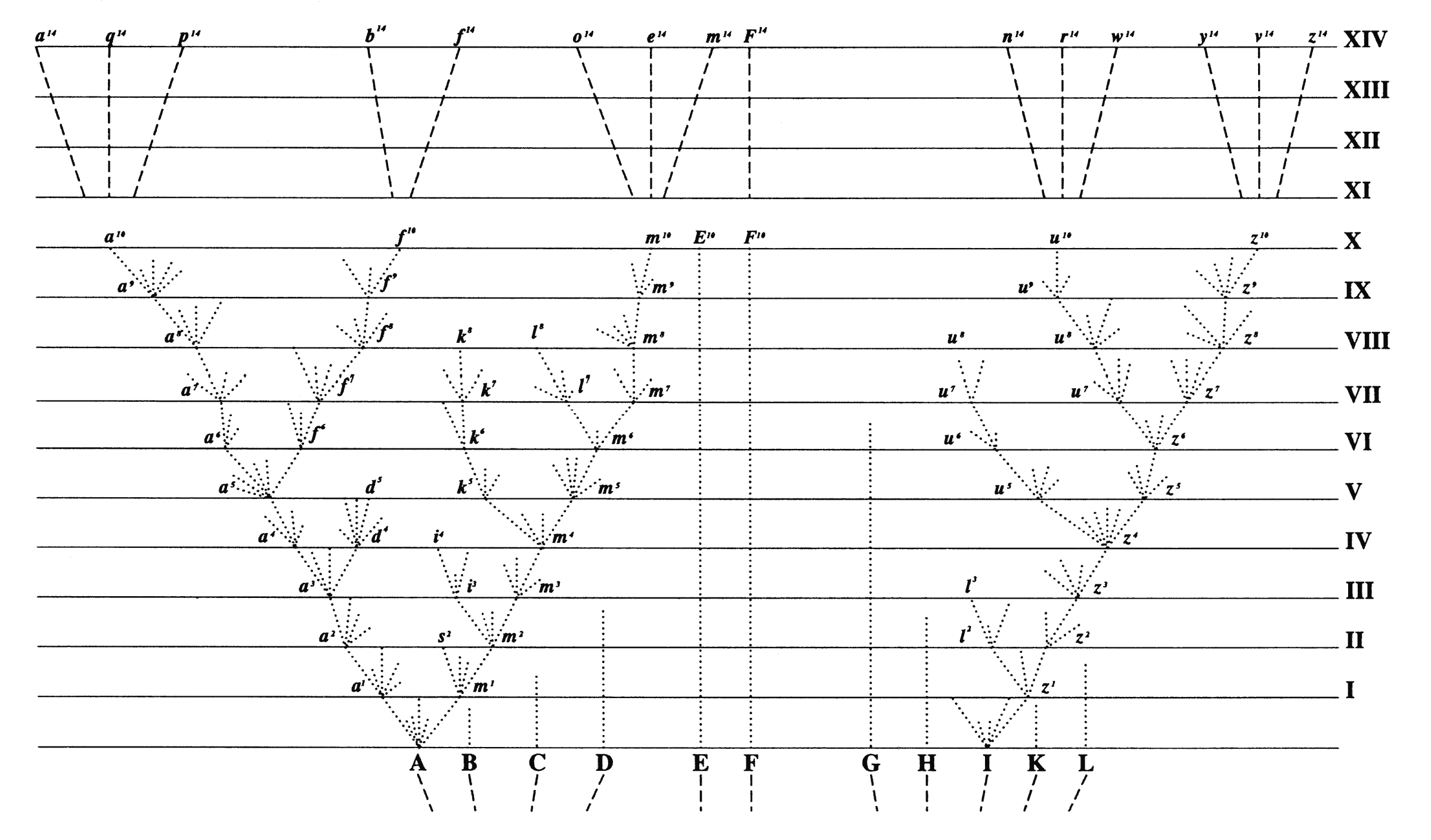
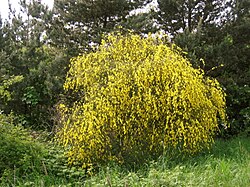
Well, as I am desperately trying to prevent Hollywood from corrupting the term "Tree of Life" and I got to thinking. Why did Darwin and others have to use the metaphor of a tree to represent the branching history of organisms through evolutionary time? Why did other metaphors not get used? Well, thanks to a little research I did by communicating with Darwin directly (as I did when he announced his endorsement of Obama), I have found out that Darwin went through many other metaphors before settling on the "Tree of Life." (note the tree-like figure here which is based on the one figure in the Origin of Species).
And here are the top 5 other such metaphors for what is now known as "The Tree of Life"
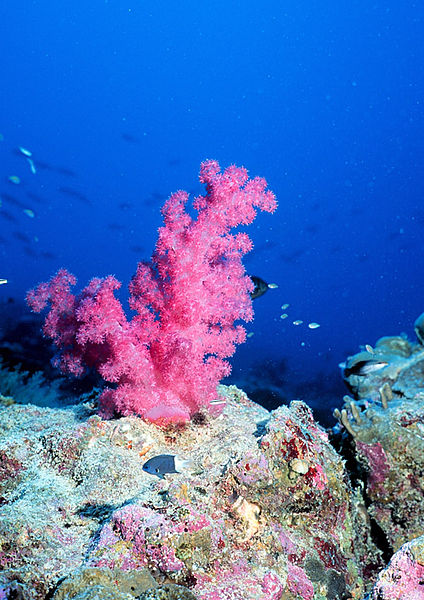
The coral of life. Darwin particularly liked this one as he did some work on marine organisms. But ultimately he rejected it because he was worried about anti-evolutionists killing coral to get back at Darwin.
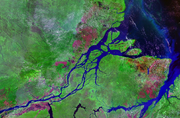
The watershed of life. Rivers exhibit branching patterns much like trees. The big problem Darwin saw was that sometimes separate river branches reconnect to each other, which did not follow his model for descent. If only Darwin knew about lateral gene transfer.
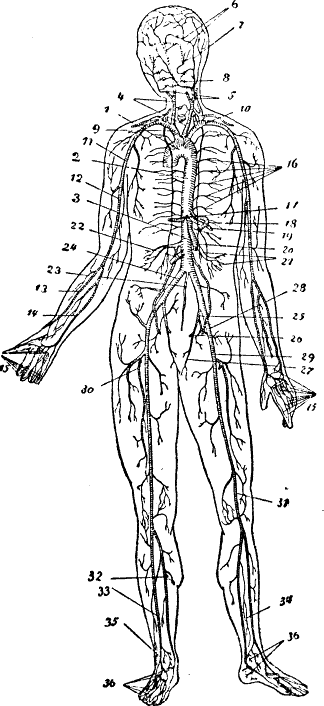
The blood vessels of life. Darwin was desperate to find visceral connections for people to evolution. This one would have been great. The big problem here was the "going" and "coming" nature of arteries and veins.
The shrub of life. Thus turns out to have been one of Darwin's favorites because it captures the richness of diversity more than a sparsely branching tree. However, shrub, even then, was used as a derogatory term to refer to height challenged individuals. And Darwin did not want to upset this key constituency so he avoided this term.
The lungs of life. While this has some positive features (e.g., it is unidirectional like a tree), thankfully Darwin did not stick to this or we would have competition from "LOL" for all the domain names.
Other possibilities included "the Plumbing System of Life" and "the Highway Map of Life". If you know of others Darwin may have considered, let me know.

Friday, June 27, 2008
Calling all evolutionary biologists - protect the "Tree of Life" from extinction by Hollywood
OK, I am getting worried. As I wrote a few weeks ago, there is a new movie coming out supposedly next year called "The Tree of Life" starring Brad Pitt, Sean Penn and others. Well, the movie sounds like it could be good. But though this may sound like a cool thing to those of you out there who study the Tree of Life in some way, we are at risk here. There will soon be 100s of blogs, web pages, news stories, etc. writing about the Tree of Life movie. And uses of the Tree of Life by evolutionary biologists will lose their google rankings. The term "The Tree of Life" is at risk of a form of extinction.
So what are we to do? I am calling on all evolutionary biologists and bloggers and biologists in general to to link to other sites that use the term as much as possible. For example, you can add a link to my blog, which is after all called "The Tree of Life."
So please, add links to some Tree of Life pages. And start using the term yourself as much as possible.
Here are some places you should link to
- Jonathan Eisen's "Tree of Life" blog (no selifsh interest here)
- Tree of Life Web Project
- Tree of life (science) - Wikipedia, the free encyclopedia
- Green Tree of Life at Berkeley
- Fungal Tree of Life Project
- Beetle Tree of Life project
- Fly Tree of Life project
- Mammal Tree of Life project
- Cypriniformes Tree of Life project
- Liverwort Tree of Life Project
- Early Bird Tree of Life project
- Early Bird Tree of Life project
- Angiosperm Tree of Life project
- Cnidaria Tree of Life Project
- Decapoda Tree of Life Project
Please post additional links in the comments here and please help save "The tree of life"
----------------------------------
Note - here are some sites responding and helping save "The tree of life"
- The Evilutionary Biologist John Dennehy talks about the tree of life in his post titled "Tree of life".
- Nodalpoint is helping out.
- Jeremy at Another Blasted Weblog is saving the tree.
Thursday, June 26, 2008
Jelly Bellies in the New York Times
Well, Jelly Bellies, a semi-local institution (they are based in Fairfield for those who have not seem them from I-80) has gotten some good press in the Times today. I hear they have a nice tour that kids and adults like but we have not done it yet. I must say, I like their Sport Beans when I go for bike rides. Anyway, just good to see local businesses getting some props in the Times.
Combinging two of my favorite things - chocolate and genomes
Well, the Mars company has really done it now (see Unwrapping the Chocolate Genome -from washingtonpost.com). They are planning to sequence the cacoa genome. Genomes and chocolate. Man are they going to get every bioinformatics person I know to apply to help out with this project ...
Some little notes on the project:
Some little notes on the project:
- They plan to release the data for public use: "Mars plans to make the research results free and accessible through the Public Intellectual Property Resource for Agriculture, a group that supports agricultural innovation, as they become available. The intent is to prevent opportunists from patenting the plant's key genes."
- They are doing this in a collaboration with IBM
- Good quote by Howard Shapiro: "We have the ability as a private company to take charge of the future," Howard-Yana Shapiro, global director of plant science for Mars, said."
Wednesday, June 25, 2008
Swimming the Mirror: Poems for My Daughter on KDVS Today at 5 PM
Brad Buchanan will be discussing and reading from his new book of poems, "Swimming the Mirror: Poems for My Daughter" (Roan Press) on KDVS 90.3 FM today (Wednesday) at 5pm. Please consider tuning in. Also available onlne at http://www.kdvs.org/listen/.
Roan Press is a new Sacramento area publisher. In the email I got they say
Why I am writing about this? Well Brad and I used to play street hockey together in grad. school at Stanford. No - neither of us started Google as did other street hockey players from Stanford. But you should check out Brad's new book of poems from Roan Press and also can see some of his past stuff at an old blog here.
Roan Press is a new Sacramento area publisher. In the email I got they say
"Please mark your calendars for Roan Press's first Book Launch Party at the Book Collector (1008 24th Street) on July 23 at 7:30 pm. Roan Press is a new Sacramento publisher with an interest in poetry, fiction, books of essays and other genres. We particularly welcome submissions from Northern California writers, but are open to work from anyone, anywhere. Please also watch for our website, www.roanpress.com, which is coming soon"
Tuesday, June 24, 2008
Overselling genomics award #4: University of Western Ontario and Graham Thompson on honeybee altruism
In my blog I give out some snarky awards for things that annoy me including the Genomics by Press Release Award and the Adaptationomics Award and the Overselling Genomics Award. Sometimes I really want to give something an award but I am not sure what it should get. That is the case here. There is what I find to be a painful press release on "Selfish Genes" in honeybees put out by University of Western Ontario. This press release relates to a paper being published in Genetics. on QTL mapping in honeybees and searching for alleles/genes that suppress the reproductive activity in worker bees. This suppression is a form of altruistic behavior in a way and has been the subject of a good deal of research. Basically, the ended up mapping some of the suppression to a few regions of the genome.
The press release however, goes way way overboard in interpreting their results and claiming "New Discovery Proves 'Selfish Gene' Exists." They imply throughout the press release that prior work simply suggested that selfish genes were theoretically possible in this case and that now with their results they have been proven. For example they quote the lead author Graham Thompson:
The press release however, goes way way overboard in interpreting their results and claiming "New Discovery Proves 'Selfish Gene' Exists." They imply throughout the press release that prior work simply suggested that selfish genes were theoretically possible in this case and that now with their results they have been proven. For example they quote the lead author Graham Thompson:
This means that the 'selfish' gene does exist, not just in theory but in reality.This is way beyond an overstatement. Their results are nice and interesting but they are part of a continuum of work on bees (and other selfish systems) and do not in any obvious way suddenly prove the existence of this selfish gene compared to prior work that they imply was just guesswork. I am personally baffled by the extent of this claim -- basically ignoring work by many others as well as work in a variety of systems outside of bees. They end the press release with the following:
"This basically provides a validation for a huge body of socio-biology," says Thompson, who adds the completion of Honey Bee Genome Project in 2006 was crucial to this discovery.For that last statement, I am thus giving them my "Overselling genomics award" #4. But they easily could have gotten a few others.
NOTE - I had changed the award to just U. Western Ontario and not including Thompson because it is the University that appears to be responsible for the press release not Thompson. However, a commenter (Oliver) convinced me that if we want to clean up press releases we need to make the scientists involved in the story help make sure the press releases are clean, so I put Thompson back in.
Hat tip to T. Ryan Gregory for pointing this out. And you should check out his new Genomics by press release "award" at his blog Genomicron. I will probably be writing about the same story soon.
Hat tip to T. Ryan Gregory for pointing this out. And you should check out his new Genomics by press release "award" at his blog Genomicron. I will probably be writing about the same story soon.
Monday, June 23, 2008
Extremophiles getting some props too
With the Mars Lander scratching the surface of the Red Planet looking for indications that life could exist there, the time is ripe for some public education about microbes and extremophiles. And fortunately the press is picking up on this possibility. For example, CNN.COM has picked up an AP story on extremophiles: Life in Earth's toughest places; how about Mars? - CNN.com
In the article, Alicia Chang from AP writes:
But if there were past or present life on the red planet -- a big if -- scientists speculate it would likely be similar to some extreme life on Earth -- microscopic and hardy, capable of withstanding colder-than-Antarctica temperatures and low pressures.AND
Most living things on Earth thrive not only in the presence of water, but also need sunlight, oxygen and organic carbon. But the range of conditions in which life can survive has been expanded with recent discoveries of micro-organisms trapped in glaciers and rocks or living in volcanic vents and battery acid-like lakes.The AP article is quite reasonable, as far as science reporting goes. However, there is some stink going on in the bloggosphere about AP bullying bloggers regarding fair use so you might want to check out AP: Stupid, it hurts! and AP Files 7 DMCA Takedowns Against Drudge Retort and AP/Drudge Retort “Resolution” Leaves Fair Use Questions Unanswered.
UC Davis Bodega Marine Lab getting some props
Now, I have written here before about the spectacular site for UC Davis' Bodega Marina Lab in Bodega Bay). And lest anyone not believe me, Bodega Bay and the Marine Lab has been written up in the San Francisco Chronicle in an article entitled: Marine lab a spectacular spot on Bodega Bay.
The article lead in is all you really need to know:
The article lead in is all you really need to know:
Mention Bodega Bay, and the first thing that comes to mind - even now, 45 years later - is Tippi Hedren getting her head pecked by a gaggle of sociopathic seagulls. The town's visitor center hands out 8,000 maps a year pinpointing where Alfred Hitchcock filmed the most memorable scenes of the 1963 classic "The Birds."
But each year, 10,000 to 12,000 people travel to a spectacular spot west of town to visit a less-famous site, the Bodega Marine Laboratory, a UC Davis outpost where about 100 graduate students and scientists study underwater life along the Northern California coast.
Each Friday afternoon, from 2 to 4, docents lead free, hourlong tours that wind through parts of the sprawling complex. It soon becomes clear that visiting a marine lab isn't anything like visiting for-profit aquariums, with their polished tanks and fancy signs. Here, the only live exhibits are a tide pool and three small aquariums.
Mind you, Bodega Bay itself is not the most happening town in the world. But it has a few stores, restaurants and cafes (which they review some of in the Chronicle article). The lab is also the site for the "Workshop in Applied Phylogenetics." One cool thing about this workshop is that the organizers have begun building a Wiki to gather information on phylogenetic methods and tools and this wiki is open to everyone to use and contribute to. So if you are interested in phylogenetics you might want to check out the wiki and start adding to it. And you might want to keep an eye out for announcements for next years course.
Open Science Highlight -- JoVE: Journal of Visual Experiments
I am starting to browse around at JoVE (the Journal of Visualized Experiments). This is an open journal dedicated to publishing biological research in a visual format. It is pretty cool. Some good videos include ones by Jared Ledbetter's group on studying microbes inside termites (see Layers of Symbiosis - Visualizing the Termite Hindgut Microbial Community
and Extracting DNA from the Gut Microbes of the Termite (Zootermopsis nevadensis)) for example. Others of interest to this blog include one by Ed Delong's group on Large-Scale Screens of Metagenomic Libraries.
Anyway - JoVE is definitely worth checking out ... visual presentations are probably the way of the future ...
In addition to experiments, JoVE also has some interviews. For example, I am embedding a nice video from JoVE with a talk by Ed Delong on microbial communities (Microbial communities in nature and laboratory - interview (Video Protocol). To view the embedded video click the play button below.
Saturday, June 21, 2008
How Darwin won the evolution race
There is a cool article in the Observer today on the "race" between Darwin and Wallace on publishing the theory of natural selection (How Darwin won the evolution race | Science | The Observer).
When I read this I cannot help wonder what would have happened if this race had happened today. With publishing and the spread of ideas occurring at a much slower pace in the past, Darwin could afford a bit of time to polish up all the lines of thought and evidence presented in the Origin of Species. It is really his work on building up such evidence that helped convince people of the importance of natural selection. So - if this had happened today - Darwin and Wallace would certainly have been on Science Friday. Lots of bloggers would have written about it. But would Darwin have taken the time to polish up his loose ends or would he have just rushed out his short paper on natural selection and then gotten caught up in the hype and debate?
Anyway, the article has some good bits both about the history and about the acceptance (or lack thereof) of evolution and natural selection today. My favorite lines is:
When I read this I cannot help wonder what would have happened if this race had happened today. With publishing and the spread of ideas occurring at a much slower pace in the past, Darwin could afford a bit of time to polish up all the lines of thought and evidence presented in the Origin of Species. It is really his work on building up such evidence that helped convince people of the importance of natural selection. So - if this had happened today - Darwin and Wallace would certainly have been on Science Friday. Lots of bloggers would have written about it. But would Darwin have taken the time to polish up his loose ends or would he have just rushed out his short paper on natural selection and then gotten caught up in the hype and debate?
Anyway, the article has some good bits both about the history and about the acceptance (or lack thereof) of evolution and natural selection today. My favorite lines is:
Natural selection is simply too important for society to live without it, he (Steven Jones) argues. It is the grammar of the living world and provides biologists with the means to make sense of our planet's myriad plants and animals
Friday, June 20, 2008
Tree of Life Runners Web Notes 6-20-2008
Just some little notes here in lieu of more detailed posts.
- Interesting Open Access papers to look at:
- Evolution in the news:
- Other science news:
- Open Access blogging:
- Microbes
- What Happens If This Government-Sponsored Research Finds Raw Milk Really Is Good for Us? (a bit of a conspiracy theory but also entertaining
Street View for Davis on Google Maps
If you have not already heard, Google Maps has added the "Street View" function for Davis, CA where they drove around in a truck and took pictures of the front of every address.
View Larger Map
Oh - and here I am .... loading my car up for a trip.
View Larger Map
See here for a view of Central Park.
or click on the pic below.View Larger Map
Oh - and here I am .... loading my car up for a trip.
View Larger Map
Wednesday, June 18, 2008
Prochlorococcus on Science Friday
 Well, I wish I had known this in advance and I would have posted something about it here before last Friday. But anyway - Penny Chisholm (from MIT) and her beloved Prochlorococcus (important photosynthetic marine microbes) were featured on Science Friday last week. Fortunately, NPR broadcast's like ScienceFriday are a form of Open Access. And you can listen to Penny here. It makes for some good listening -- she has some good lines about the importance of microbes as well as the need for more support for work on microbes. She also gives a good plug for the Gordon and Betty Moore Foundation's Marine Microbiology Initiative (full disclosure - I just got a grant from this program). Note - the Science Friday host makes a bit of a blunder when at the end he asks if they have talked about viruses when a few minutes before she had done exactly that (for more on Prochlorococcus viruses see the Sullivan et al PLoS Biology paper here). You can also get a video of Penny giving a talk here.
Are You Intellectually Clean?
Well, brain doping continues to be an issue, long after the buzz of April Fools Day is over. Now comes what I think must be a spoof of some kind: a site where people can make an "Academic Oath" saying they are clean by putting the following on their CV or WebSite:
For the honour of humanity and the integrity of the academy, I declare I have not, nor ever will, use any drug for an intellectual advantage. See, www.academicoath.com
Freeing My Father's Scientific Publications Update
Well, I have made some progress already in my quest I began on Father's Day to free up the scientific publications of my father (see The Tree of Life: Freeing My Father's Scientific Publications).
I wrote to the powers that be at the journal "Endocrinology" asking about when back issues might be made available. And I got a VERY quick reply from someone from Highwire Press which is the place that puts out Endocrinology on the web
Pubmed Central: 3
Free access: 17
Fee access: 11
Unavailable: 4
Getting better. Of course, I want them all to be as widely available as possible so I am still going to work to move everything up the list towards Pubmed Central. Also, my brother suggests (in the comments to my previous post) that since my father was a government employee we should be able to just post his papers online. I think this is a good option but I still will be working on the "official" channels to see what happens.
Since I made the original posting there have been some useful comments about what I might do on some other sites. See for example, this FriendFeed discussion (I have just discovered FriendFeed and it seems quite cool but I am not sure if everyone can see this discussion or not so please let me know if this link does not work).
I will keep posting on my progress as well as what I learn about Copyright, Free Access, etc.
I wrote to the powers that be at the journal "Endocrinology" asking about when back issues might be made available. And I got a VERY quick reply from someone from Highwire Press which is the place that puts out Endocrinology on the web
Dear Jonathan Eisen,The person who wrote back was almost apologetic about how long this might take but I am personally very pleased. Given that Endocrinology says the make all articles more than a year old available for free, this likely means that my father's three papers in Endocrinology will soon be available for free online. This then changes my tally to:
The Endocrine Society is currently in the process of loading back issues for all of their journals. It will most likely be six months before back content is online.
Pubmed Central: 3
Free access: 17
Fee access: 11
Unavailable: 4
Getting better. Of course, I want them all to be as widely available as possible so I am still going to work to move everything up the list towards Pubmed Central. Also, my brother suggests (in the comments to my previous post) that since my father was a government employee we should be able to just post his papers online. I think this is a good option but I still will be working on the "official" channels to see what happens.
Since I made the original posting there have been some useful comments about what I might do on some other sites. See for example, this FriendFeed discussion (I have just discovered FriendFeed and it seems quite cool but I am not sure if everyone can see this discussion or not so please let me know if this link does not work).
I will keep posting on my progress as well as what I learn about Copyright, Free Access, etc.
Subscribe to:
Posts (Atom)
Most recent post
A ton to be thankful for -- here is one part of that - all the acknowledgement sections from my scholarly papers
So - it is another Thanksgiving Day and in addition to thinking about family, and football, and Alice's Restaurant, I also think a lot a...

-
Wow. Just wow. And not in a good way. Just got an email invitation to a meeting. The meeting is " THE FIRST ANNUAL WINTER Q-BIO ...
-
 Well, I have tried to hold off giving out awards here since I kind of botched my last attempt at this. But here goes. Yesterday, researcher...
 -
 I have a new friend in Google Scholar Updates I have written about the Updates system before and if you want more information please see...
