Saturday, January 31, 2015
Quick post - wanted - input on best practices for sample processing & storage for microbiome studies
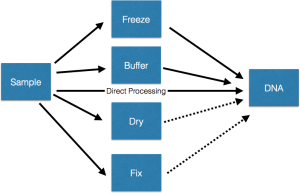
Over at microBEnet I have a post that may be of interest to many readers: Best practices for sample processing and storage prior to microbiome DNA analysis freeze? buffer? process? | microBEnet: the microbiology of the Built Environment network. Basically I am hoping to get a discussion going about the ins and outs of sample processing and storage for microbiome studies. We have been having lots of discussions in my lab and with collaborators about this and thought it would be better to just get everyone involved.


Wednesday, January 28, 2015
Storify, wrap up of talk by Shirley Tilghman, ex president of #Princeton, at #UCDavis
Shirley Tilghman, ex president of Princeton, gave a talk at UC Davis yesterday as part of the Chencellor's Colloquium. I live Tweeted the talk and made a Storify of some of the Tweets and responses. Here it is
Friday, January 23, 2015
Gender and tenure diversity and Github teams (from #UCDavis)
OK this is very interesting: Having higher gender and tenure diversity is associated with higher productivity in GitHub teams. - Computer Science
Thanks to the UC Davis College of Engineering Twitter Feed for pointing me to this
Study: Higher gender + tenure diversity associated with higher productivity in GitHub teams, http://t.co/qHXOvMmGKb @github @phylogenomics
— UC Davis Engineering (@UCDavisCoE) January 23, 2015
The paper behind this is available as a preprint here.
Abstract:
Software development is usually a collaborative venture. Open Source Software (OSS) projects are no exception; in- deed, by design, the OSS approach can accommodate teams that are more open, geographically distributed, and dynamic than commercial teams. This, we find, leads to OSS teams that are quite diverse. Team diversity, predominantly in of- fline groups, is known to correlate with team output, mostly with positive effects. How about in OSS?
Using GITHUB, the largest publicly available collection of OSS projects, we studied how gender and tenure diversity relate to team productivity and turnover. Using regression modeling of GITHUB data and the results of a survey, we show that both gender and tenure diversity are positive and significant predictors of productivity, together explaining a sizable fraction of the data variability. These results can inform decision making on all levels, leading to better out- comes in recruiting and performance.Really, really fascinating.
Thursday, January 22, 2015
Trials and tribulations with the "UC Care" medical plan & w/ UCSF, UC Davis health systems
The University of California healthcare options are, well, less than ideal right now, in my opinion. Here is a little story about my recent experiences.
September 2014.
Forced to switch to the UC Care health plan because UC cancelled the health plan that allowed me to be a part of the Sutter Medical Group. Sutter has always been awesome. Wonderful care. Wonderful people. Rapid scheduling of appointments. And I was very sad to be forced to switch. I kept my primary care physician at Sutter but realized I would have to switch for many other things.
I was not pleased to be pushed into the UC Care plan because my experience with the UC Davis Medical Group has been beyond disappointed in the past. For example see this: U. C. Davis Medical Group - their time is MUCH more important than yours. Admittedly, I had not been to people in the UC Davis group in a while, so -- maybe things had changed.
Plus I was pleased to note that the UC Care said I should choose their plan if "You want direct access to all providers without a referral." Why yes, that sounded good. Hah hah hah. Silly me.
September 2014.
Of course. Just as I switched medical groups I had a serious health issue in need of attention. Called UC Davis Nuerology to make an appointment with the specialist recommended by a colleague. They told me I needed a referral. I told them I had UC Care health plan which says I do not need a referral. They said that it did not matter what plan I had, I needed a referral. So I asked my doctor for a referral.
October 2, 2014.
Meanwhile I wrote to one of the people in the UC Davis Neurology Department where I wanted an appointment to ask how I should make an appointment and told him that I had been referred to him by a UC Davis MD (trying to pull some sort of nepotism here). He connected me to his assistant and I sent her the info she asked for.
October 13, 2014.
I had not heard back from his assistant so I wrote to her again.
October 19, 2014.
I received a letter in the mail from UC Davis "reminding" me I had an appointment in Neurology scheduled for December 17, 2014.
Now, I guess it was nice to have an appointment. But I note - they never called me to ask when would be good for an appointment. They never contacted me at all. And this was clearly less than ideal - an appointment in two months.
So I called them to ask - how did this get scheduled? They said they must have scheduled it with me. I told them, no, nobody even contacted me. I then asked - is there anything sooner? Nope. I then asked - what if I cannot make that date and time (I was scheduled to be away). They then said that would cause a significant delay in the appointment. What the $*@#$8? This is not the first time I have had trouble scheduling appointments with UC Davis physicians but this was absurd. I then asked - is there anything I need to do in advance? They said nope. So I waited. Two plus months. For an appointment for which I needed a referral even though I had signed up for UC Care. Oh - and - I guess just to prove they had no clue what they were doing - they spelled ny name wrong (Johnathan).
December 17, 2014.
I had my appointment with the neurology specialist. He was very nice. Seemed pretty knowledgeable. He had some disconcerting misconceptions about me and I tried to correct them but he did not seems to be paying attention. He did not do any of the more complex tests I had seen in the literature that were standard in the literature I had seen for my condition. He did not even order any such tests. He concluded the visit with a possible diagnosis and then said he needed to order a series of blood tests to test some alternative possibilities. They decided I did not need a follow up appointment and that we would wait to see what the blood tests showed before deciding what to do next. I told them I was not fasting and asked if that mattered and they said no (one of the reasons I ask in advance about blood tests is that freuqently they need me to be fasting and it is easier to do that early in the AM ... but nevermind that ... they said it was not needed).
December 22, 2014
I signed up for Mychart.ucdavis (based on the recommendation from the printout I got when I left the doctor's office)-- an online system to communicate with the UC Davis Medical Group.
December 23, 2014
I got an email saying there were test results in Mychart.
January 2, 2015.
I still had not heard anything from the doctor's office. I wrote to him via the MyChart system asking if he had any update based on the test results. I called too. No response.
January 6, 2015.
I finally got a message from my doctor. It had my name wrong, again, in a different way (John). The message was short, had one useful thing in it and then said he "You need to check in with your PCP-- I have instructed our staff to contact your outside PCP and transmit labs to him and to contact you." So much for seeing a specialist directly and communicating with them. Oh, and he ended the message with "Good we checked labs and caught this now before your travels." What the $&##? I had no travel plans. This had nothing to do with travel. He spelled ny name wrong. They had me listed as having type II diabetes, when I have type I. And they wanted me to communicate with my primary care physician instead of him. Such excellent care. Oh, and he made a comment about my vitamin B levels being too high when I had told him I was taking a specific prescribed vitamin therapy and that I had taken some that AM (this would likely screw up the blood test - I think to know if vitamin levels are off one has to NOT have recently taken vitamin pills). Jesus Christ what a sham. In fact, when I told him I was taking this vitamin prescription, he said something to the effect of "random vitamins don't usually help" and I said "it is not random it is actually prescribed and there are clinical trials showing it has some benefits" but he had never heard of it nor did he seem to care.
January 7, 2015.
I decided, I needed to see another specialist. So I went back to a recommendation from another colleague for someone to see at UCSF. So I checked out the protocol for making an appointment at UCSF and I filled out an online form to request such an appointment. In the request system it asked for the preferred method of contact for me, and I said email.
January 8, 2015
A day or so later, I received an email from their system which said I had an encrypted message regarding my appointment request. I had to create a new log in to a new system in order to read the message about my appointment request. The message started with the following:
And finally I got contacted by someone who actually seemed to care.
UPDATE January 29, 2015
Still no call back from UCSF Neurology despite their promises that they would call my doctor and then call me back as soon as possible. Unbelievable.
UPDATE January 29, 2015 #2
Wrote an email directly to the Doctor I wanted an appointment with.
UPDATE January 29, 2015 #3
Tried to contact the appointment desk. Was on hold for 30 minutes before I had to hang up.
UPDATE January 30, 2015
Got through to the appointment desk. OMG how ridiculous. They said they needed to transfer me to another department (memory and dementia) because that was where I had the referral (I had asked for an appointment in neurology, I have some peripheral neuropathy). They said the doctor at UCSF had reviewed my chart and that is where they determined I needed an appointment. And that I would need to contact my doctor about this.
What the F#*$*#? Completely insane.
UPDATE February 2, 2015
Lesson of the day. UCSF doctors and personnel, other than the receptionist I interacted with on the phone, really really really do care about getting things right. After I posted again about this issue to Twitter and sent an email to my brother who forwarded it to people at UCSF, many people stepped up to try to help. All of them have been incredibly gracious and concerned and helpful.
And at the same time I decided to get a copy of the referral from my primary care physician just in case there was a mistake from their end.
And, well, there it was. The referral was to see a neurologist for diabetic related neuropathy issues. Looked good. Then I looked at page 2. And there was a comment about my having a history of dementia and that they could not do an MRI due to my pacemaker. Well. WTF? What chaos.
Certainly this explains why UCSF thought I should see the dementia clinic. It does not explain why UCSF neurology would never return my calls and was rude on the phone, but, well, it does make me feel like a schmuck for the mistake my doctor's office made.
UPDATE February 2, 2015 1:45 PM
Finally - a call from UCSF. Yay. And they are going to contact my docs office and confirm that I do not have dementia. And then, maybe then, I will get an appointment.
UPDATE February 2, 2015 5:45 PM
Well, I got a call from the UCSF Neurology appointment desk. The person said they were calling because I had apparently contacted another doctor who contacted them (were they pissed off about this? sounded like it). And they told me the first appointment was April 19. Wow. That is, like, not soon. Lovely. I took it. But am going to see if there is a way to move it up.
UPDATE April 19, 2015
So - I finally had my appointment with a Neurologist at UCSF. I had to get up so so early for my 9 AM appointment at UCSF Parnassus campus. I was planning to take the train at 5:45 AM and then somehow wind my way to the UCSF campus. And my alarm was somehow silenced. I woked up at 5:30. And I literally threw stuff in my bag and changed and jumped in my car. But there was just no way to make it. And so I decided to suck it up and drive into SF. Traffic was bad already that early. And I was pretty wiped when I got to UCSF. And I was prepared for the worst.
But OMG. What a difference. I was treated so incredibly well by everyone there. The information desk people on the 1st floor were helpful. The lab people where I went for blood tests afterwards were pleasant and helpful. The staff in the Neurology Department were friendly and respectful and helpful. And my doctor. Wow. She was just so great. Yes I do have some neuropathy. And yes indeed it does completely suck. And yes it still freaks me out and stresses me out. But now I finally feel like I am getting excellent medical care. And that is uplifting, even though my health is imperfect. Such a contrast compared to the awful experience at the UC Davis Neurology
UPDATE April 21, 2015
Got a call from a UCSF Neurologist to discuss my blood test results. My doctor was not available so an alternative doctor called me. And she was phenomenal too. Spent quite a while on the phone discussing things. Came up with a plan. All based on actual science.
UPDATE April 22, 2015
Got my medical report in the mail from UCSF. Incredibly detailed report about my appointment, recommendations for me, and more. Another wonderful feature. I have STILL not gotten any such thing from UC Davis.
September 2014.
Forced to switch to the UC Care health plan because UC cancelled the health plan that allowed me to be a part of the Sutter Medical Group. Sutter has always been awesome. Wonderful care. Wonderful people. Rapid scheduling of appointments. And I was very sad to be forced to switch. I kept my primary care physician at Sutter but realized I would have to switch for many other things.
I was not pleased to be pushed into the UC Care plan because my experience with the UC Davis Medical Group has been beyond disappointed in the past. For example see this: U. C. Davis Medical Group - their time is MUCH more important than yours. Admittedly, I had not been to people in the UC Davis group in a while, so -- maybe things had changed.
Plus I was pleased to note that the UC Care said I should choose their plan if "You want direct access to all providers without a referral." Why yes, that sounded good. Hah hah hah. Silly me.
September 2014.
Of course. Just as I switched medical groups I had a serious health issue in need of attention. Called UC Davis Nuerology to make an appointment with the specialist recommended by a colleague. They told me I needed a referral. I told them I had UC Care health plan which says I do not need a referral. They said that it did not matter what plan I had, I needed a referral. So I asked my doctor for a referral.
October 2, 2014.
Meanwhile I wrote to one of the people in the UC Davis Neurology Department where I wanted an appointment to ask how I should make an appointment and told him that I had been referred to him by a UC Davis MD (trying to pull some sort of nepotism here). He connected me to his assistant and I sent her the info she asked for.
October 13, 2014.
I had not heard back from his assistant so I wrote to her again.
I am writing to see if you got this information I sent Oct 3 and if there is any more information you need from me. ThanksI again did not hear back.
October 19, 2014.
I received a letter in the mail from UC Davis "reminding" me I had an appointment in Neurology scheduled for December 17, 2014.
Now, I guess it was nice to have an appointment. But I note - they never called me to ask when would be good for an appointment. They never contacted me at all. And this was clearly less than ideal - an appointment in two months.
So I called them to ask - how did this get scheduled? They said they must have scheduled it with me. I told them, no, nobody even contacted me. I then asked - is there anything sooner? Nope. I then asked - what if I cannot make that date and time (I was scheduled to be away). They then said that would cause a significant delay in the appointment. What the $*@#$8? This is not the first time I have had trouble scheduling appointments with UC Davis physicians but this was absurd. I then asked - is there anything I need to do in advance? They said nope. So I waited. Two plus months. For an appointment for which I needed a referral even though I had signed up for UC Care. Oh - and - I guess just to prove they had no clue what they were doing - they spelled ny name wrong (Johnathan).
December 17, 2014.
I had my appointment with the neurology specialist. He was very nice. Seemed pretty knowledgeable. He had some disconcerting misconceptions about me and I tried to correct them but he did not seems to be paying attention. He did not do any of the more complex tests I had seen in the literature that were standard in the literature I had seen for my condition. He did not even order any such tests. He concluded the visit with a possible diagnosis and then said he needed to order a series of blood tests to test some alternative possibilities. They decided I did not need a follow up appointment and that we would wait to see what the blood tests showed before deciding what to do next. I told them I was not fasting and asked if that mattered and they said no (one of the reasons I ask in advance about blood tests is that freuqently they need me to be fasting and it is easier to do that early in the AM ... but nevermind that ... they said it was not needed).
December 22, 2014
I signed up for Mychart.ucdavis (based on the recommendation from the printout I got when I left the doctor's office)-- an online system to communicate with the UC Davis Medical Group.
December 23, 2014
I got an email saying there were test results in Mychart.
January 2, 2015.
I still had not heard anything from the doctor's office. I wrote to him via the MyChart system asking if he had any update based on the test results. I called too. No response.
January 6, 2015.
I finally got a message from my doctor. It had my name wrong, again, in a different way (John). The message was short, had one useful thing in it and then said he "You need to check in with your PCP-- I have instructed our staff to contact your outside PCP and transmit labs to him and to contact you." So much for seeing a specialist directly and communicating with them. Oh, and he ended the message with "Good we checked labs and caught this now before your travels." What the $&##? I had no travel plans. This had nothing to do with travel. He spelled ny name wrong. They had me listed as having type II diabetes, when I have type I. And they wanted me to communicate with my primary care physician instead of him. Such excellent care. Oh, and he made a comment about my vitamin B levels being too high when I had told him I was taking a specific prescribed vitamin therapy and that I had taken some that AM (this would likely screw up the blood test - I think to know if vitamin levels are off one has to NOT have recently taken vitamin pills). Jesus Christ what a sham. In fact, when I told him I was taking this vitamin prescription, he said something to the effect of "random vitamins don't usually help" and I said "it is not random it is actually prescribed and there are clinical trials showing it has some benefits" but he had never heard of it nor did he seem to care.
January 7, 2015.
I decided, I needed to see another specialist. So I went back to a recommendation from another colleague for someone to see at UCSF. So I checked out the protocol for making an appointment at UCSF and I filled out an online form to request such an appointment. In the request system it asked for the preferred method of contact for me, and I said email.
January 8, 2015
A day or so later, I received an email from their system which said I had an encrypted message regarding my appointment request. I had to create a new log in to a new system in order to read the message about my appointment request. The message started with the following:
This email is to acknowledge receipt of your online appointment request for a new patient appointment. We have been unsuccessful in reaching you by phone. Before an appointment can be approved for scheduling we will need the following required documents to start the review process:
· Referral along with reason or diagnosis
· Pertinent clinical notes or records
· Pertinent test results
· Front and back copy of insurance card and authorization if required by insurance
· Patient demographic information
What? Why did they ask for my preferred means of contact if they were then going to call? Oh well, at least this got through. I called to ask some questions and only got a machine so I left a message.
Janaury 12, 2015
Appointment with my primary care physician. He told me they had not received any information from the UC Davis specialist. But he agreed that it might be good to see a specialist who gave a shit (my words, not his). So he said they would make a referral to UCSF for me. I gave them the printout with the information requested from UCSF.
Janaury 17, 2015.
Got an email saying my doctor had sent over the referral information to UCSF. Called UCSF on MLK day and alas they were not open. But I left another message asking what I had to do to make an appointment.
January 19, 2015.
My wife took down a message and gave it to me saying UCSF had called about making an appointment.
January 22, 2015.
I called UCSF Neurology. It took a long long long time to get through to a person. When I finally did, I said I was calling to set up an appointment. The person was immediately somewhat rude. I gave my name and DOB and the person said I had no referral and my record there was empty. I said I had been called by UCSF and they had left a message saying I should call about an appointment. Now, mind you, I am not sure why UCSF had called me - it could have been about setting up an appointment or it could have been just to return my call. But regardless, I told the receptionist that my doctor's office had told me they had contacted UCSF and that I should call. The person repeated that they had no record of anything in my file - no calls to me - nothing. This sounded so weird that I said "Is this definitely the file for Eisen - E-I-S-E-N." and the person snapped back "I do not make spelling mistakes" or something like that. Nice. Eventually, the person transfered me to someone else who actually offered to help and to call my doctor's office. They then said they could call me back after this. I asked what number they had and the number they said was not one I recognized. Weird. But I gave them the correct number and then hung up.
After I hung up I started to get pissed off. What was the deal here? I signed up for this UC Care health insurance beause I was supposed to be able to make appointments with specialists without referrals. And I am a UC Professor - with an appointment in a medical school. I probably get treated better than the random person. What a scam. And then I remembered how badly UC Davis Medical Group treated my wife many years before. And how good the treatment we received from Sutter has been. So I posted something to Twitter.
After I hung up I started to get pissed off. What was the deal here? I signed up for this UC Care health insurance beause I was supposed to be able to make appointments with specialists without referrals. And I am a UC Professor - with an appointment in a medical school. I probably get treated better than the random person. What a scam. And then I remembered how badly UC Davis Medical Group treated my wife many years before. And how good the treatment we received from Sutter has been. So I posted something to Twitter.
Bizarre things w/ @UCSFHospitals; left me messages saying received referral & now receptionist (rudely) says they have nothing on me #fun
— Jonathan Eisen (@phylogenomics) January 22, 2015
And finally I got contacted by someone who actually seemed to care.
@phylogenomics Hi Jonathan, Sorry about that. If you want to DM us your phone number we can try to help.
— UCSF Medical Center (@UCSFHospitals) January 22, 2015
Not sure where things are going to go - but at least one person associated with a UC Medical Group is trying to help ...UPDATE January 29, 2015
Still no call back from UCSF Neurology despite their promises that they would call my doctor and then call me back as soon as possible. Unbelievable.
UPDATE January 29, 2015 #2
Wrote an email directly to the Doctor I wanted an appointment with.
UPDATE January 29, 2015 #3
Tried to contact the appointment desk. Was on hold for 30 minutes before I had to hang up.
UPDATE January 30, 2015
Got through to the appointment desk. OMG how ridiculous. They said they needed to transfer me to another department (memory and dementia) because that was where I had the referral (I had asked for an appointment in neurology, I have some peripheral neuropathy). They said the doctor at UCSF had reviewed my chart and that is where they determined I needed an appointment. And that I would need to contact my doctor about this.
What the F#*$*#? Completely insane.
UPDATE February 2, 2015
Lesson of the day. UCSF doctors and personnel, other than the receptionist I interacted with on the phone, really really really do care about getting things right. After I posted again about this issue to Twitter and sent an email to my brother who forwarded it to people at UCSF, many people stepped up to try to help. All of them have been incredibly gracious and concerned and helpful.
And at the same time I decided to get a copy of the referral from my primary care physician just in case there was a mistake from their end.
And, well, there it was. The referral was to see a neurologist for diabetic related neuropathy issues. Looked good. Then I looked at page 2. And there was a comment about my having a history of dementia and that they could not do an MRI due to my pacemaker. Well. WTF? What chaos.
Certainly this explains why UCSF thought I should see the dementia clinic. It does not explain why UCSF neurology would never return my calls and was rude on the phone, but, well, it does make me feel like a schmuck for the mistake my doctor's office made.
UPDATE February 2, 2015 1:45 PM
Finally - a call from UCSF. Yay. And they are going to contact my docs office and confirm that I do not have dementia. And then, maybe then, I will get an appointment.
UPDATE February 2, 2015 5:45 PM
Well, I got a call from the UCSF Neurology appointment desk. The person said they were calling because I had apparently contacted another doctor who contacted them (were they pissed off about this? sounded like it). And they told me the first appointment was April 19. Wow. That is, like, not soon. Lovely. I took it. But am going to see if there is a way to move it up.
UPDATE April 19, 2015
So - I finally had my appointment with a Neurologist at UCSF. I had to get up so so early for my 9 AM appointment at UCSF Parnassus campus. I was planning to take the train at 5:45 AM and then somehow wind my way to the UCSF campus. And my alarm was somehow silenced. I woked up at 5:30. And I literally threw stuff in my bag and changed and jumped in my car. But there was just no way to make it. And so I decided to suck it up and drive into SF. Traffic was bad already that early. And I was pretty wiped when I got to UCSF. And I was prepared for the worst.
But OMG. What a difference. I was treated so incredibly well by everyone there. The information desk people on the 1st floor were helpful. The lab people where I went for blood tests afterwards were pleasant and helpful. The staff in the Neurology Department were friendly and respectful and helpful. And my doctor. Wow. She was just so great. Yes I do have some neuropathy. And yes indeed it does completely suck. And yes it still freaks me out and stresses me out. But now I finally feel like I am getting excellent medical care. And that is uplifting, even though my health is imperfect. Such a contrast compared to the awful experience at the UC Davis Neurology
UPDATE April 21, 2015
Got a call from a UCSF Neurologist to discuss my blood test results. My doctor was not available so an alternative doctor called me. And she was phenomenal too. Spent quite a while on the phone discussing things. Came up with a plan. All based on actual science.
UPDATE April 22, 2015
Got my medical report in the mail from UCSF. Incredibly detailed report about my appointment, recommendations for me, and more. Another wonderful feature. I have STILL not gotten any such thing from UC Davis.
Absence of women from Middle East policy debates
For those who think about the underrepresentation of women in science meetings - this may be of interest: The mysterious absence of women from Middle East policy debates - The Washington Post. 65 percent of the events in Washington DC relating to the Middle East had no female speakers. Disheartening and something that needs to be dealt with.
Sunday, January 18, 2015
So so so cool: Tangible Interactive Microbiology for Informal Science Education
This is so cool: Tangible Interactive Microbiology for Informal Science Education.
Abstract:
I would post a picture here but they discourage it. So you will just have to go look for yourself. The PDF is free, at least for now.
Abstract:
We present an interactive platform that enables human users to interface with microbiological living cells through a touch-screen, thereby generating a tangible interactive experience with the microscopic world that is hidden to most people. Euglena gracilis, single-celled phototactic microorganisms, are imaged and optically stimulated via a microscope setup equipped with a projector and a touch- screen display. Users can directly interact with these organisms by drawing patterns onto the screen, which displays the real-time magnified view of the microfluidic chamber with the motile euglena cells. The drawings are directly projected onto the chamber, thereby influencing the swimming motion of the cells. We discuss the architecture of the system and provide exploratory user testing results in a facilitated setting, which shows engaging nature of our system for children and the general public. In conclusion, our tangible interactive microscope allows artistic expression and scientific exploration with the ease of “child’s play.”And check out this video.
I would post a picture here but they discourage it. So you will just have to go look for yourself. The PDF is free, at least for now.
Today in microbes and art: Bioart and Bacteria - The Artwork of Anna Dumitriu
I could spend a lot of time on this website: Bioart and Bacteria - The Artwork of Anna Dumitriu. I found out about it from a Tweet from Dumutriu:
And it is right up my alley (being interested in the interface between art and science, especially in relation to microbes). Lots of interesting sections here including:
Sequence
Super-organism
Don't Try This At Home
[micro]biologies: the bacterial sublime
Gut #bacteria #microbiome textiles for @edenproject #art commission @tferriss @phylogenomics http://t.co/gOyEKOQM5u pic.twitter.com/BzwyvKIZC2
— anna dumitriu (@AnnaDumitriu) January 18, 2015
And it is right up my alley (being interested in the interface between art and science, especially in relation to microbes). Lots of interesting sections here including:
Sequence
Super-organism
Don't Try This At Home
[micro]biologies: the bacterial sublime
Modernising Medical Microbiology
And many more. I do not know much about the artist but really glad she pointed me to this.
And many more. I do not know much about the artist but really glad she pointed me to this.
Friday, January 16, 2015
The best writing in science papers: Part II
Guest post by Stephen Heard
(scientistseessquirrel.wordpress.com)
Over 2 years ago now, Jonathan posted “The
best writing in science papers: Part I”. I stumbled across that post and searched excitedly for Part
II – only to discover there wasn’t one.
Well, now there is, as Jonathan has kindly allowed me to guest-post
this.
Jonathan’s Part I identified the butterfly-taxonomy
papers of Vladimir Nabokov as containing flashes of beautiful writing, and I
agree (although my favourite bits differ from his). But Jonathan wondered if picking Nabokov (an acclaimed
novelist) was “a bit unfair” and he later told me he’d never done a Part II
because other examples were too hard to find!
Actually, other examples can be found, and not
only in the papers of scientists who are also accomplished novelists. I collected a few in my recent paper “On whimsy,
jokes, and beauty: can scientific writing be enjoyed”. For example, here is Nathaniel Mermin on a
surprising result in quantum mechanics:
“There are no physical grounds for insisting that [Alice] assign the same value to an observable for each mutually commuting trio it belongs to – a requirement that would indeed trivially make her job impossible. The manner in which the nine-observable BKS theorem brings Alice to grief is more subtle than that. It is buried deep inside the mathematics that underlies the construction that makes it possible, when it is possible, to do the VAA trick.”
Here is Bill Hamilton setting up a simulation
model of antipredator
defence via herding:
“Imagine a circular lily pond. Imagine that the pond shelters a colony of frogs and a water-snake…Shortly before the snake is due to wake up all the frogs climb out onto the rim of the pond… [The snake] rears its head out of the water and surveys the disconsolate line sitting on the rim… and snatches the nearest one. Now suppose the frogs are given opportunity to move about on the rim before the snake appears, and suppose that initially they are dispersed in some rather random way. Knowing that the snake is about to appear, will all the frogs be content with their initial positions? No…and one can imagine a confused toing-and-froing in which [desirable positions] are as elusive as the croquet hoops in Alice’s game in Wonderland.”
And here is Harry Kroto describing the structure
of C60 buckyballs:
“An unusually beautiful (and probably unique) choice is the truncated icosohedron...All valences are satisfied with this structure, and the molecule appears to be aromatic. The structure has the symmetry of the icosahedral group. The inner and outer surfaces are covered with a sea of π electrons.”
Finally, read
this by Matthew Rockman – too much, too good, to even excerpt here.
It could be that writing beautifully in scientific papers is a bad idea, and we know it. Perhaps readers don’t respect scientists who resist the conventional turgidity of our writing form. I don’t think this is true, although I’m aware of no formal analysis.
Or it could be that beauty is a good idea, but well-meaning reviewers and editors squash it. In my paper I argue that beauty (like humour) can recruit readers to a paper and retain them as they read; but that reviewers and editors tend to resist its use. But again, there’s no formal analysis, so I was forced to make both halves of that argument via anecdote.
Or it could be we just don’t have a culture of appreciating, and working to produce, beauty in our writing. I think this is most of the explanation: it’s not that we are opposed to beauty as much as it doesn’t occur to us that scientific writing could aspire to it.
All of which makes me wonder: if we wanted
to make beauty more common in scientific writing, how could we do that? Well, that could make for a really long
post. I’ll mention a few thoughts,
and encourage you to leave more in the comments.
First, we could write with small touches of
beauty in our own papers. Of
course, that’s not as easy as it sounds, because most of aren’t trained or
oriented that way. To
oversimplify, it’s a chicken-and-egg problem: most of us come from science
backgrounds that lack a culture of beauty in writing. Perhaps we even came to science as refugees from the arts
and humanities where beauty is more valued. That’s true for me, at least; and I know a fair bit about
how to write functionally, but almost nothing about how to write
beautifully. But if there’s a path
to writing beauty, it probably starts in reading beauty, wherever it can be
found. Nabokov? Sure... but also
science blogs, lay essays and books about
science and nature (for a start, sample the science writing of Rachel Carson,
Lewis Thomas, Karen Olsson, Barbara Kingsolver, or John McPhee), and really,
anything we can get our hands on.
And when we read, we can be alert for language that sparkles, so as to
cultivate an ear for beauty and to build a toolbox of techniques we can deploy
in our own writing. (For some
other thoughts on this, see Helen Sword’s book “Stylish
Academic Writing”).
Second, and much easier, we could encourage
beauty in the writing of others.
As reviewers and editors, we could decide that style and beauty are not
incompatible with scientific writing.
We could resolve not to question touches of style, or unusual but
beautiful ways of writing, in the work we are judging.
Finally, we could publicly recognize beauty
when we see it. We could announce
our admiration of beautiful writing to the authors who produce it or to
colleagues who might read it. What
Jonathan and I have done with these posts is a small start on this, and I’ve
promised myself I’ll praise wonderful writing whenever I can. Thinking bigger, though, wouldn’t it be
great if there was an award for the best scientific writing of the year? I don’t mean the best science – we have
plenty of awards for that – but the best writing
to appear in our primary literature.
Such awards exist
for lay science writing; if one existed for technical writing I’d be
thrilled to make nominations and I’d volunteer to judge.
As Jonathan and I both found, examples of
beautiful scientific writing do seem to be unusual; and those that exist aren’t
well known. I don’t think it has
to be this way. W could choose to
change our culture, a little at a time, to deliver (and to value) pleasure
along with function in our scientific writing.
-----
By the way: I became interested in beauty in scientific
writing while working on a guidebook for scientific writers. It’s not available yet, but to learn
more about it, see my web site. For more of my (somewhat scattered)
thoughts on writing and on doing science, visit my
blog.
UPDATE 1/25/15
Now posted on Heard's Blog.
UPDATE 1/25/15
Now posted on Heard's Blog.
Thursday, January 15, 2015
A long (and I think good) listen: Tim Ferriss podcast on "the microbiome"
So - I have been travelling a lot lately. On one of my trips - to Las Vegas and neighboring areas - I was interviewed by Tim Ferriss for his blog. Jessica Richman of uBiome was also interviewed - she was in SF, Ferriss was somewhere else, and I was on the phone in Vegas. As soon as it was over I got caught up in the work I was doing there (field work for a new NSF Funded Project on "microbial dark matter". Anyway - the interview was entertaining and I think interesting. And then it came out while I was on the road again for another trip. So I am just getting around to posting about it now. Anway - here are some links for the podcast.
Ferriss' blog post about it: Are We Really 10% Human and 90% Bacteria? Exploring The Microbiome…
Direct links
I note - I have never done such a long interview for a show before (it was about two hours) but Ferriss was remarkably adept at making it relaxing and fun (for me at least). Even the part about Jim Watson ...
UC Davis MARS Symposium Wrap Up #globalfood #UCDavisMARS
Yesterday I went to a symposium at UC Davis that was the launching of a new partnership between UC Davis and the Mars Corporation. I note - I have been collaborating with some people at Mars on multiple microbiome related projects and generally have had great interactions with the people there. I am not directly involved in the planning for this new partnership between UC Davis and Mars and thus I was interested in hearing more about it at the symposium.
The symposium was at the Mondavi Center on UC Davis campus and I zipped in on my bike through the cold (for Davis) air and got there just before they opened the doors to the main theater. I saw a few folks I knew milling around in the lobby and said hello and then went inside with some people from my lab for the "show".
I will try to write more about this later but just one note - I found some of the big picture discussions about the importance of the nexus between food, agriculture and health to be pretty inspiring. For now - I hope the Storify I made and embedded below will give some idea as to the goings on of the symposium.
Friday, January 09, 2015
Postdoc position in Computational Biology / Infectious Disease w/ Ashlee Earl at the Broad
My friend, the brilliant Ashlee Earl is recruiting a post doc ... posting this for her.
POSTDOC – COMPUTATIONAL BIOLOGIST (INFECTIOUS DISEASE)
Requisition Number: 1571 http://www.broadinstitute.org/careers/job-openings/job-openings-0
The goal of the Bacterial Genomics Group at Broad is to develop and implement genomic and metagenomic methods to answer pressing questions related to bacteria and their role in human health. Specifically, we seek to understand the evolution and spread of bacterial pathogens (and antibiotic resistance) including the interactions that these pathogens have with their host and host-associated microbiota. We devise and carry out large-scale studies that employ genomic, metagenomic and transcriptomic data sets to understand human pathologies caused by e.g., Mycobacterium tuberculosis, carbapenem resistant Enterobacteriaceae, enterococci and uropathogenic Escherichia coli. We do this in close collaboration with clinical and academic researchers from across the Broad community and around the globe.
We are seeking a creative and highly motivated postdoctoral researcher in Computational Biology. The ideal candidate should be broadly conversant with bioinformatics techniques for genomic data analysis including metagenomic analysis. They should also be familiar with microbial ecology principles, statistics and have made significant contributions to their area of study.
Responsibilities include:
A Ph.D. in Computer Science, Bioinformatics, Biostatistics, Physics, Biological Sciences or a related field
EOE/Minorities/Females/Protected Veterans/Disabilities
POSTDOC – COMPUTATIONAL BIOLOGIST (INFECTIOUS DISEASE)
Requisition Number: 1571 http://www.broadinstitute.org/careers/job-openings/job-openings-0
The goal of the Bacterial Genomics Group at Broad is to develop and implement genomic and metagenomic methods to answer pressing questions related to bacteria and their role in human health. Specifically, we seek to understand the evolution and spread of bacterial pathogens (and antibiotic resistance) including the interactions that these pathogens have with their host and host-associated microbiota. We devise and carry out large-scale studies that employ genomic, metagenomic and transcriptomic data sets to understand human pathologies caused by e.g., Mycobacterium tuberculosis, carbapenem resistant Enterobacteriaceae, enterococci and uropathogenic Escherichia coli. We do this in close collaboration with clinical and academic researchers from across the Broad community and around the globe.
We are seeking a creative and highly motivated postdoctoral researcher in Computational Biology. The ideal candidate should be broadly conversant with bioinformatics techniques for genomic data analysis including metagenomic analysis. They should also be familiar with microbial ecology principles, statistics and have made significant contributions to their area of study.
Responsibilities include:
- Developing data analysis strategies, writing algorithms and deploying computational tools for the exploration of large genomic, metagenomic and metatranscriptomic data sets
- Collaborating closely with experimental and computational researchers to interpret analytical results for publication
- Communicating scientific findings in writing and orally
A Ph.D. in Computer Science, Bioinformatics, Biostatistics, Physics, Biological Sciences or a related field
- Must be proficient in working in the Unix environment. Solid coding proficiency in some combination of Python, Perl, Scala, Java, C/C++ and R. Experience with cluster computing and parallelization preferred.
- Comfort and experience with programming for biological data analysis
- Demonstrated ability to analyze and interpret metagenomic data
- Excellent ability to communicate scientific material
- Excellent collaborative skills and unrelenting enthusiasm for genomic science
EOE/Minorities/Females/Protected Veterans/Disabilities
Friday, January 02, 2015
Haloferax volcanii, model archaea, and me
When I was a graduate student I was looking around for an extremophile - especially an evolutionarily novel one. And I settled on this species Haloferax volcanii - a model halophilic archaeon largely because Ford Doolittle and colleagues had started to turn it into a genetic model organism (and because Patrick Keeling, from Ford's lab convinced me it was a good thing to do). So I started work on this species - doing DNA repair studies in the lab. See my PhD thesis for some of the work I did which I never published outside of the thesis for multiple reasons. But I continued to be interested in this species. And when I was working at TIGR, an NSF Program Officer approached me asking me to help get the genome sequencing done for this species. So, well, I did: The Complete Genome Sequence of Haloferax volcanii DS2, a Model Archaeon. And I became interested in other haloarchaea and eventually started working with Marc Facciotti, in the lab next to mine, in sequencing from across the diversity of the haloarchaea: Sequencing of Seven Haloarchaeal Genomes Reveals Patterns of Genomic Flux and Phylogenetically Driven Sequencing of Extremely Halophilic Archaea Reveals Strategies for Static and Dynamic Osmo-response.
Anyway - enough about me. The whole point here is to point people to a new paper: BMC Biology | Abstract | Generation of comprehensive transposon insertion mutant library for the model archaeon, Haloferax volcanii , and its use for gene discovery. Further evidence for the use of Haloferax volcanii as a model species. Tools continue to become available for genetic and experimental studies in this species. So - if you are looking for an unusual and interesting organisms to work on - consider working on this species ...
Anyway - enough about me. The whole point here is to point people to a new paper: BMC Biology | Abstract | Generation of comprehensive transposon insertion mutant library for the model archaeon, Haloferax volcanii , and its use for gene discovery. Further evidence for the use of Haloferax volcanii as a model species. Tools continue to become available for genetic and experimental studies in this species. So - if you are looking for an unusual and interesting organisms to work on - consider working on this species ...
Thursday, January 01, 2015
Really shameful overselling the microbiome from the American Society for Microbiology regarding lupus

Title: STUDY SUGGESTS ALTERING GUT BACTERIA MIGHT MITIGATE LUPUS.No - the study did not suggest that at all. The authors suggested that, yes. And the study is consistent with that. But it is also consistent with altering gut bacteria having NO EFFECT on lupus. So this title is simply deceptive.
In the text other statements are like this:
These results suggest that the gut bacteria may contribute to lupus.Stunningly, the PR includes some really inappropriate comments including:
Nonetheless, Luo suggests that people with lupus should eat Lactobacillus-containing probiotics, such as live culture yogurts, to reduce lupus flares.Seriously? Shame on ASM for allowing this garbage to be in the PR. No evidence at all is presented that this is helpful.
Also in the PR:
More generally, "The use of probiotics, prebiotics, and antibiotics has the potential to alter microbiota dysbiosis, which in turn could improve lupus symptoms," says co-principal investigator Husen Zhang. Ultimately, says Luo, fecal transplant might prove valuable as a treatment for lupus.Again, shame on ASM. No evidence is presented for this either.
And then the PR ends with
"We were inspired in part to perform this research by a study on type 1 diabetes, which found that that disease is dependent on gut microbiota," says Zhang. "Like type 1 diabetes, lupus is an autoimmune disease that is even more prevalent [than type 1 diabetes] in women."What? I know of no research that shows that type 1 diabetes is dependent on gut microbiota. I really don't even know what to say here.
This is one of the worst Press Releases I have ever seen in terms of misleading statements about microbiomes. And ASM should be embarassed about it. And ASM should retract it. And ASM should never ever put out something like this again. And for this, I am awarding a coveted "Overselling the Microbiome Award" to ASM for putting out this inappropriate press release. If any with lupus goes out and gets even remotely worse from taking such probiotics, prebiotics, or antibiotics, ASM will bear some of the responsibility for their problems. Shameful.
UPDATE 1: Jan 2, 2015
I did some searching for "probiotics" and "lupus" and found some much more tempered claims from other places. For example in "Lupus Studies Point to Gut Microbes, Epigenetics"
"The long-standing anecdotal patient reports of certain diets worsening or improving flares might be more real than we thought. They should be studied more systematically, now that we know that almost any dietary component acts on the gut microbiota, [which] in turn has profound effects on the immune system," Dr. Kriegel said. He also warned that patients should not assume that the various "probiotic" products now available to consumers would have a beneficial effect in lupus. "Probiotics could theoretically even worsen a disease state, since it is possible that physiologic immune responses against benign commensals could fuel autoimmune responses via cross-reactivity (as we hypothesize) or other mechanisms," he said.
Dr. Kriegel concluded, "I think the best will be to wait until we have a better understanding of which commensals or commensal-derived products might be driving which autoimmune disease and then target those with a diet that is known to modulate these strains or products. Ideally, the field will also develop eventually novel types of antibiotics or vaccinations against certain commensals. Such approaches would allow us, in the future, to more specifically modulate the gut microbiota in autoimmunity."Now that is responsible commenting on lupus and the microbiome. Too bad ASM allowed complete BS to get into this PR instead of more reasonaed statements.
See also
@phylogenomics Sure! BTW you may be interested in a blog post I wrote on hype in PRs: http://t.co/GlbF7wWs9n pic.twitter.com/Kfk4p3W6bF
— Freya Harrison (@friendlymicrobe) January 2, 2015
Saturday, December 27, 2014
Quick post: Viruses - don't forget about the viruses
OK OK. Everyone, everywhere keeps telling me "Viruses - don't forget about the viruses" whenever I talk about microbial communities or discuss work we are doing in my lab. Yes, I say "I know, I know" but then I panic and think "We can't even deal with the diversity of bacteria and archaea out there. We generally ignore the microbial eukaryotes. How the hell are we going to include viruses too?" But, in the end, if we are going to study microBIOMEs (as in, ecosystems that include viruses), then, well, we need to include all the players.
(I note - as I am writing this, my son asked me what I am doing and I said I am writing about viruses. He got excited and sad "Write about Ebola").
What got me on my viral kick today? Well, I have been thinking about viruses a lot recently. And then I saw this paper: The ISME Journal - Diversity of viral photosystem-I psaA genes. And it reminded me of the largely unknown diversity of viruses out there in the world.
Anyway - I was going to write a longer post about viruses, but I have to go and do something with my son.
Friday, December 26, 2014
Paper of possible interest: Exploring interactions of plant microbiomes

Just got alerted to this new (open access) paper that seems like it should be of interest to those working on plant microbiomes Scientia Agricola - Exploring interactions of plant microbiomes. It has some useful summaries of work that has been done on plant microbiomes.
Wednesday, December 24, 2014
Do preprints count for anything? Not according to Elife & G3 & some authors ..
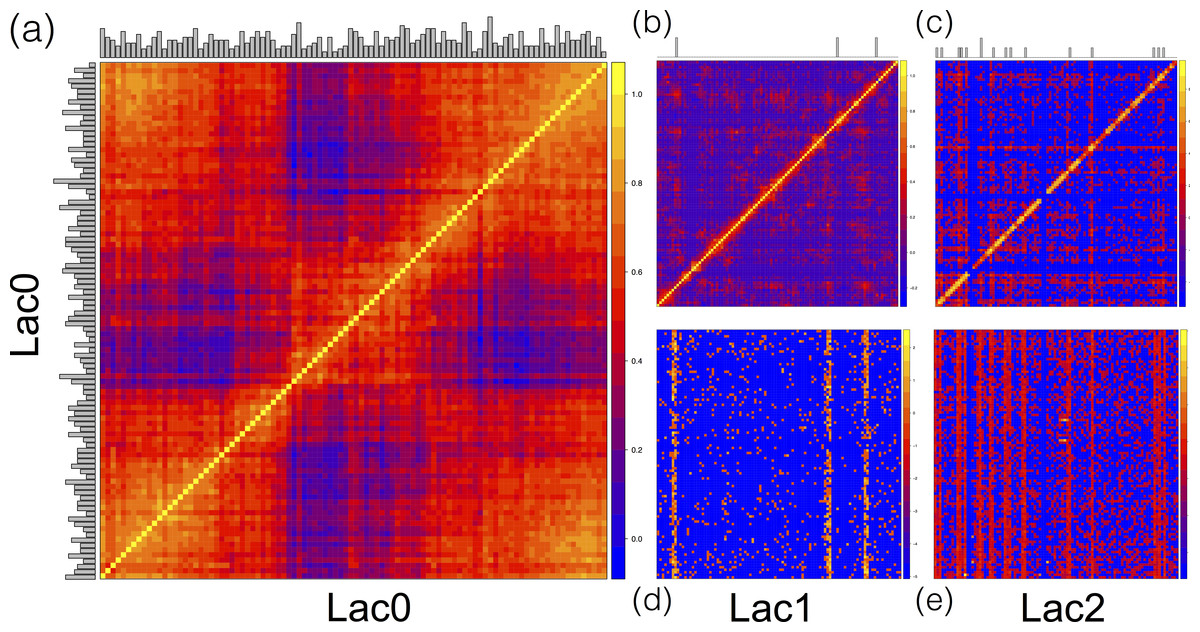
Well, just got pointed to this paper: Metagenomic chromosome conformation capture (meta3C) unveils the diversity of chromosome organization in microorganisms | eLife by Martial Marbouty, Axel Cournac, Jean-François Flot, Hervé Marie-Nelly, Julien Mozziconacci, Romain Koszul. Seems potentially really interesting.
It is similar in concept and in many aspects to a paper we published in PeerJ earlier in the year (see Beitel et al., 2014 Beitel CW, Froenicke L, Lang JM, Korf IF, Michelmore RW, Eisen JA, Darling AE. (2014) Strain- and plasmid-level deconvolution of a synthetic metagenome by sequencing proximity ligation products. PeerJ 2:e415 http://dx.doi.org/10.7717/peerj.415.
Yet despite the similarities to our paper and to another paper that was formally published around the time of ours, this new paper does not mention these other pieces of work any where in the introduction as having any type of "prior work" relevance. Instead, they wait until late in their discussion:
Taking advantage of chromatin conformation capture data to address genomic questions is a dynamic field: while this paper was under review, two studies were released that also aimed at exploiting the physical contacts between DNA molecules to deconvolve genomes from controlled mixes of microorganisms (Beitel et al., 2014; Burton et al., 2014).Clearly, what they are trying to do here is to claim that since they paper was submitted before these other two (including ours) was published, that they should get some sort of "priority" for their work. Let's look at that in more detail. Their paper was received May 9, 2014. Our paper was published online May 27 and the other related paper by Burton et al. was published online May 22. In general, if a paper on what your paper is about comes out just after you submit your paper, while your paper is still in review, the common, normal thing to be asked to do is to rewrite your paper to deal with the fact that you were, in essence, scooped. But that does not really appear to be the case here. They are treating this in a way as "oh look, some new papers came out at the last minute and we have commented on them." The last minute would be in this case, 6 months before this new paper was accepted. Seems like a long time to treat this as "ooh - a new paper came up that we will add a few comments about".
But - one could quibble about the ethics and policies of dealing with papers that were published after one submitted one's own paper. From my experience, I have always had to do major rewrites to deal with such papers. But maybe E-Life has different policies. Who knows. But that is where things get really annoying here. This is because it was May 27 when our FINAL paper came out online at PeerJ. However, the preprint of the paper was published on February 27, more than two months before their paper was even submitted. So does this mean that the authors of this new paper do not believe that preprints exist? It is pretty clear on the web site for our paper that there is a preprint that was published earlier. Given what they were working on - something directly related to what our preprint/paper was about, one would assume they would have seen it with a few simple Google searches. Or a reviewer might have pointed them to it. Maybe not. I do not know. But either way, our preprint was published long before their paper was submitted and therefore I believe they should have discussed it in more detail.
Is this a sign that some people believe preprints are nothing more than rumors? I hope not. Preprints are a great way to share research prior to the delays that can happen in peer review. And in my opinion, preprints should count as prior research and be cited as such. I note - the Burton group in their paper in G3 also did not reference our preprint in what I consider to be a reasonable manner. They add some comments in their acknowledgements
While this manuscript was in preparation, a preprint describing a related method appeared in PeerJ PrePrints (Beitel et al. 2014a). Note added in proof: this preprint was subsequently published (Beitel et al. 2014b).Given that our preprint was published before their paper was submitted too, I believe that they also should have made more reference to it in their paper. But again, I can only guess that both the Burton and the Marbouty group just do not see preprints as being respectable scientific objects. That is a bad precedent to set and I think the wrong one too. And it is a shame. A preprint is a publication. No - it is not peer reviewed. But that does not mean it should not be considered part of the scientific literature in some way. I note - this new paper from the Marbouty group seems really interesting. Not sure I want to dig into it any deeper if they are going to play games with the timing of submission vs. published "papers" as part of how they are positioning themselves to be viewed as doing something novel.
Tuesday, December 23, 2014
Buzzfeed includes microbiomes in "77 facts" but alas, gets the facts (and the math) wrong
Well, I admit it - I clicked on this Buzzfeed link someone posted on Facebook - 77 Facts That Sound Like Huge Lies But Are Actually Completely True. There are some pretty funny and interesting things on the list. However, I note - I did not click on the link per se for entertainment. I clicked on it to see if there was anything about microbes on the list. And happily, there was. Alas, what there was, was, well, a bit wrong:

Let's start with #67. "There is 10 times more bacteria in your body than actual body cells". Well, alas, this is a nice bit of information. But it is not based on facts. See Peter Andrey Smiths wonderful article in the Boston Globe about this issue. The Buzzfeed article links to a 2010 Discover Magazine bit about this topic. So they were trying to use facts. But alas, that was not based on facts itself.
Then, let's go to #68. "And 90% of the cells that make us up of aren’t human but mostly fungi and bacteria.". So - I am at a bit of a loss on this. First, isn't this really just rehashing #67 with the addition of fungi to the story? Also - I note the math here is weird. #67 would lead one to conclude that 90.9% of the cells in your body are bacterial (10:1 = 10/11 = 90.9%). So then if one adds fungi to the picture the percent of cells in our bodies that are not human goes DOWN to 90%. How does that work exactly?
So not only do they get the 10x as many cells fact wrong, they do something really weird by basically repeating #67 and then doing some weird math.
Oh well, glad they have something on microbiomes. Too bad it came out a bit wrong.
Sunday, December 21, 2014
Crosspost - papers for sale
Crossposting from ICIS Blog (even though this is short - always good to reveal where things are posted first).
Well, this is much more elaborate than I could ever have imagined: For Sale: “Your Name Here” in a Prestigious Science Journal – Scientific American. Seems that there are services out there to help people write, in essence, bogus scientific papers filled with pithy somewhat reasonable sounding phrases about certain topics. Seems we could all use some more comprehensive full text analyses of papers to try and flag such activities.
Well, this is much more elaborate than I could ever have imagined: For Sale: “Your Name Here” in a Prestigious Science Journal – Scientific American. Seems that there are services out there to help people write, in essence, bogus scientific papers filled with pithy somewhat reasonable sounding phrases about certain topics. Seems we could all use some more comprehensive full text analyses of papers to try and flag such activities.
Thursday, December 18, 2014
Great idea from Nicole King - Lists of Women Speakers - more examples wanted
Just been pointed to this compilation from Nicole King (a brilliant professor at Berkeley): Lists of Women Speakers | The King Lab.
She has put together a collection of a few links:
She has put together a collection of a few links:
As a resource for those who are interested in increasing the number of female speakers at their scientific conferences, seminar series, etc., I offer here a compendium of female speakers from diverse fields. I've started with lists that I could find easily, but if you know of additional lists, please feel free to send along the links. I would also be happy to maintain similar lists for underrepresented minorities if any such lists exist.These are the lists she maintained:
General
- University of Minnesota, Distinguished Scientists and Engineers from Underrepresented Groups
- Women scientists that give awesome seminars
- Celebrating Women in Science Symposium
- Indiana University Joan Wood Lecture Series
Field-specific lists
- American Society of Cell Biology WICB Speaker Referral Service
- Neuroscience: Annie's List
- Theoretical/computational chemistry, material science, and biochemistry
- Synthetic Biology
- Prominent ecologists
- Geoscientists
- American Physical Society Women Speakers List
Are people aware of any other relevant lists like this? Please share I will compile ...
Wednesday, December 10, 2014
New lab paper: The microbes we eat: abundance and taxonomy of microbes consumed in a day’s worth of meals for three diet types
A new paper out from my lab (with Jenna Lang as the 1st author and in collaboration with Angela Zivcovic from the UC Davis Food For Health Initiative and the Department of Nutrition): The microbes we eat: abundance and taxonomy of microbes consumed in a day’s worth of meals for three diet types. The work in the paper focuses on characterizing the abundance and taxonomy of microbes in food from three model diets.
Basically, Angela prepared meals for these three diets
Lots of interesting things reported in the paper (read it, I insist). I note - this is a demonstration project in a way - trying to get the community and others to think about the source pools of microbes that come into our system from our food. It is by no means comprehensive or conclusive (read the caveats section of the paper). Congrats to Jenna and Angela for all their hard work. Anyway - the paper is Open Access in PeerJ. Eat it up.
UPDATE: Some press and blog coverage
Basically, Angela prepared meals for these three diets
Food was purchased and prepared in a standard American home kitchen by the same individual using typical kitchen cleaning practices including hand washing with non-antibacterial soap between food preparation steps, washing of dishes and cooking instruments with non-antibacterial dish washing detergent, and kitchen clean-up with a combination of anti-bacterial and non-antibacterial cleaning products. Anti-bacterial products had specific anti-bacterial molecules added to them whereas “non-antibacterial” products were simple surfactant-based formulations. The goal was to simulate a typical home kitchen rather than to artificially introduce sterile practices that would be atypical of how the average American prepares their meals at home. All meals were prepared according to specific recipes (from raw ingredient preparation such as washing and chopping, to cooking and mixing).And then she blended them and we characterzied the microbial communities in the blended samples:
After food preparation, meals were plated on a clean plate, weighed on a digital scale (model 157W; Escali, Minneapolis, MN), and then transferred to a blender (model 5,200; Vita-Mix Corporation, Cleveland, OH) and processed until completely blended (approximately 1–3 min). Prepared, ready to eat foods that were purchased outside the home were simply weighed in their original packaging and then transferred to the blender. 4 mL aliquots of the blended meal composite were extracted from the blender, transported on dry ice and then stored at −80 °C until analysis. The following analyses were completed using these meal composite samples: (1) total aerobic bacterial plate counts, (2) total anaerobic bacterial plate counts, (3) yeast plate counts, (4) fungal plate counts, and (5) 16S rDNA analysis for microbial ecology.And Jenna Lang coordainted the sequence analysis and then Angela and Jenna (with some help here and there from me) coordianted the analysis of the different microbial data and the writing of the paper.
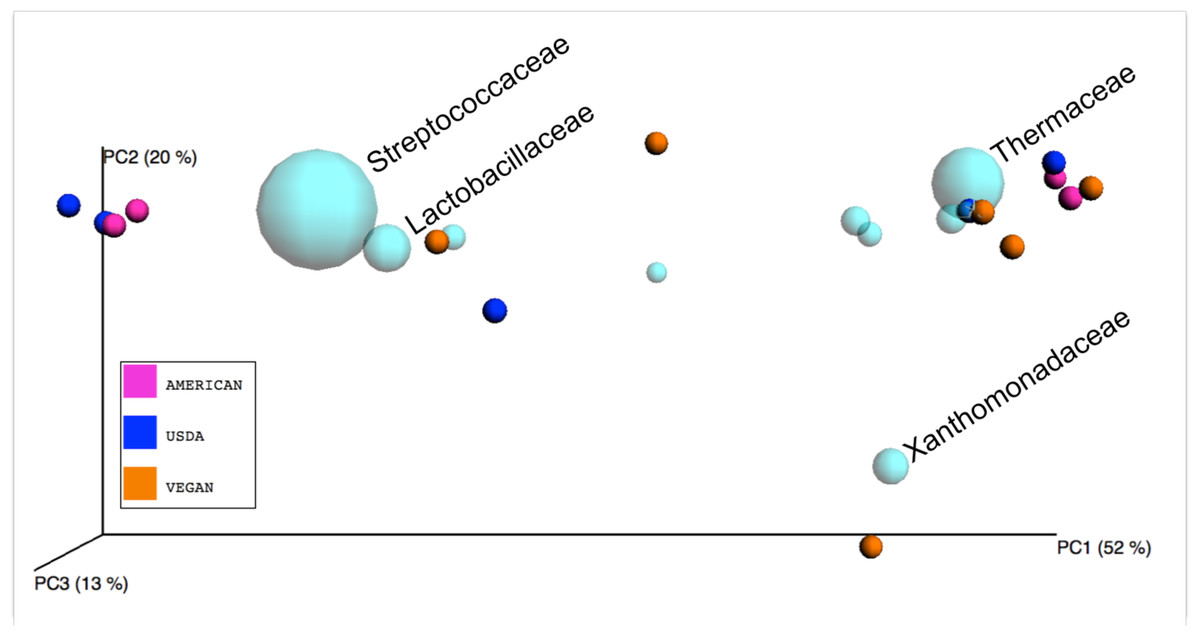 | ||
| Figure 5: Biplot of taxa in sample PCoA space. |
Lots of interesting things reported in the paper (read it, I insist). I note - this is a demonstration project in a way - trying to get the community and others to think about the source pools of microbes that come into our system from our food. It is by no means comprehensive or conclusive (read the caveats section of the paper). Congrats to Jenna and Angela for all their hard work. Anyway - the paper is Open Access in PeerJ. Eat it up.
UPDATE: Some press and blog coverage
- Kevin Bonham on SciAM Blogs: The Microbes in Your Kitchen (Or in your Starbucks mocha)
- Maddie Stone on Motherboard: Here’s How Many Microbes You Eat in a Single Day
- “This paper will hopefully convince the powers that be that the next study, actually looking at how different foods or diets with differing microbes affect people, should be funded soon,” Zivkovic told me.
- Nathan Gray: The microbes we eat: Study investigates bacteria in different diets
- Ross Pomeroy on Real Clear Science: This Is How Many Microbes You'll Eat Today
- Improbable Research: What’s Eating You, and/or Vice Versa: Microbes
- Marissa Fessenden at Smithsonian: You Eat Millions...Even Billions!...of Microbes Every Day
Saturday, December 06, 2014
Some history of hype regarding the human genome project and genomics
Just taking some notes here - relates to a discussion going on online. Would love pointers to other references relating to hype and the human genome project (including references that think it was not overhyped). I note - see some of my previous posts about this issue including: Human genome project oversold? sure but lets not undersell basic science and various Overselling Genomics awards.
Here are some things I have found:
White House press conference on announcing completetion of the human genome
The Human Genome Project: Hype meets reality
NOVA: Nature vs. Nurture Revisited
The human genome project, 10 years in: Did they oversell the revolution? in the Globa and Mail by Paul Taylor referring to: "Deflating the Genomic Bubble"
Also see Genomic Medicine: Too Great Expectations? by PP O Rourke
Also Has the Genomic Revolution Failed?
And Human genome 10th anniversary. Waiting for the revolution.
Science communication in transition: genomics hype, public engagement, education and commercialization pressures.
The Medical Revolution in Slate.
A Decade Later, Genetic Map Yields Few New Cures in the New York Times.
NNB report: Ten years later, Harvard assesses the genome map where regarding Eric Lander:
From Great 15-Year Project To Decipher Genes Stirs Opposition in the Times June 1990
From SCIENTIST AT WORK: Francis S. Collins; Unlocking the Secrets of the Genome
From READING THE BOOK OF LIFE: THE DOCTOR'S WORLD; Genomic Chief Has High Hopes, and Great Fears, for Genetic Testing June 2000 in the NY Times
The story goes through some predictions Francis Collins made for the future in a talk. These included:
Here are some things I have found:
White House press conference on announcing completetion of the human genome
Genome science will have a real impact on all our lives -- and even more, on the lives of our children. It will revolutionize the diagnosis, prevention and treatment of most, if not all, human diseases. In coming years, doctors increasingly will be able to cure diseases like Alzheimer's, Parkinson's, diabetes and cancer by attacking their genetic roots. In fact, it is now conceivable that our children's children will know the term cancer only as a constellation of stars.Collins et al. New Goals for the U.S. Human Genome Project: 1998–2003
The Human Genome Project (HGP) is fulfilling its promise as the single most important project in biology and the biomedical sciences— one that will permanently change biology and medicine.Human Genome -The Biggest Sellout in Human History
The Human Genome Project: Hype meets reality
NOVA: Nature vs. Nurture Revisited
After a decade of hype surrounding the Human Genome Project, punctuated at regular intervals by gaudy headlines proclaiming the discovery of genes for killer diseases and complex traits, this unexpected result led some journalists to a stunning conclusion. The seesaw struggle between our genes (nature) and the environment (nurture) had swung sharply in favor of nurture.
The human genome project, 10 years in: Did they oversell the revolution? in the Globa and Mail by Paul Taylor referring to: "Deflating the Genomic Bubble"
Also see Genomic Medicine: Too Great Expectations? by PP O Rourke
Also Has the Genomic Revolution Failed?
And Human genome 10th anniversary. Waiting for the revolution.
Science communication in transition: genomics hype, public engagement, education and commercialization pressures.
The Medical Revolution in Slate.
A Decade Later, Genetic Map Yields Few New Cures in the New York Times.
In announcing on June 26, 2000, that the first draft of the human genome had been achieved, Mr. Clinton said it would “revolutionize the diagnosis, prevention and treatment of most, if not all, human diseases.”
At a news conference, Francis Collins, then the director of the genome agency at the National Institutes of Health, said that genetic diagnosis of diseases would be accomplished in 10 years and that treatments would start to roll out perhaps five years after that.
Bursting the genomics bubble - Nature 2010
Has decoding the genome lived up to hype? BBC - 2010
The ethics of expectations: biobanks and the promise of personalised medicine.
The ethics of expectations: biobanks and the promise of personalised medicine.
NNB report: Ten years later, Harvard assesses the genome map where regarding Eric Lander:
At the same time, , he said genomic research has “gone so much faster than I would have imagined.” He cited " an explosion of work that will culminate, I think in the next five years, in a pretty comprehensive list of all the target that lead to different kinds of cancers and give us a kind of roadmap for finding the Achilles heel of cancers for therapeutics and diagnostics."while at the same time he blamed the press for the hype
From Great 15-Year Project To Decipher Genes Stirs Opposition in the Times June 1990
'Our project is something that we can do now, and it's something that we should do now,'' said Dr. James D. Watson, a Nobel laureate who heads the National Center for Human Genome Research at the National Institutes of Health. ''It's essentially immoral not to get it done as fast as possible.''
- Note the article has many complaining about the hype in the genome project even then ..
From SCIENTIST AT WORK: Francis S. Collins; Unlocking the Secrets of the Genome
And, Dr. Collins adds, there is nothing more important in science and medicine than the project he heads
Dr. Collins predicts that within 10 years everyone will have the opportunity to find out his or her own genetic risks, to know if cancer or heart attacks or diabetes or Alzheimer's disease, for example, lies in the future.
From READING THE BOOK OF LIFE: THE DOCTOR'S WORLD; Genomic Chief Has High Hopes, and Great Fears, for Genetic Testing June 2000 in the NY Times
The story goes through some predictions Francis Collins made for the future in a talk. These included:
- BY 2010, the genome will help identify people at highest risk of particular diseases, so monitoring efforts can focus on them.
- In cancer, genetic tests will identify those at highest risk for lung cancer from smoking. Genetic tests for colon cancer will narrow colonoscopy screening to people who need it most. A genetic test for prostate cancer could lead to more precise use of the prostate specific antigen, or P.S.A., test by identifying those men in whom the cancer is most likely to progress fastest. Additional genetic tests would guide treatment of breast and ovarian cancer.
- Three or four genetic tests will help predict an individual's risk for developing coronary artery disease, thus helping to determine when to start drugs and other measures to reduce need for bypass operations.
- Tests predicting a high risk for diabetes should help encourage susceptible individuals to exercise and control their weight. Those at higher risk might start taking drugs before they develop symptoms.
- BY 2020, doctors will rely on individual genetic variations in prescribing new and old drugs and choosing the dose. Pharmaceutical companies will take a second look at some drugs that were never marketed, or were taken off the market, because some people who took them suffered adverse reactions. It will take many years to develop such drugs and tests.
- Cancer doctors will use drugs that precisely target a tumor's molecular fingerprint. One such gene-based designer drug, Herceptin, is already marketed for treating advanced breast cancer.
- The genome project holds promise for the mental health field. ''One of the greatest benefits of genomic medicine will be to unravel some biological contributions to major mental illnesses like schizophrenia and manic depressive disease'' and produce new therapies, Dr. Collins said.
Friday, December 05, 2014
Some notes on "Citations for Sale" about King Abdulaziz University offerring me $$ to become an adjunct faculty
There is a news story in the Daily Cal titled "Citations for Sale" by Megan Messerly about King Abdullah University King Abdulaziz University trying to pay researchers who are highly cited to become adjunct professors there to boost their rankings. This article stemmed from a blog post by Lior Pachter. I was interviewed by the Daily Cal reporter about this because I had sent Lior some of the communications I had had with people from KAU where they tried to get me to do this.
I am posting here some of the email discussions / threads that I shared with Lior and Megan.
Thread #1.
Here is one thread of emails in which KAU tried to get me to become an Adjunct Professor. I have pulled out the text of the emails and removed the senders ID just in case this would get him in trouble.
Received this email 3/6/14
Dear Prof Jonathan,
How are you? I hope every thing is going well. I hope to share work with you and initiate a collaboration between you and me in biology department, Kind Abdulaziz university . My research focuses on (redacted detail). I hope that you would agree .
Redacted Name,Ph.DMy response:
Assistant Professor, Faculty of Sciences, King Abdulaziz University, Jeddah, KSA.
What kind of collaboration are you imagining?His response:
Hi Prof Jonathan,
Let me to explain that the king abdulaziz university initiated a project which is called Highly Cited Professor ( HiCi). This project can provide a contract between you and our university and from this contract you can get 7000 US$ as a monthly salary .So this project will allow you to generate two research proposal between you and a research stuff here in order to make an excellent publications in high quality journals as you always do.
I hope that I was clear. I' m looking forward to hear from you. Finally, I think that a very good chance to learn from you.Another email from him:
Dear prof Jonathan,
I' d like to tell that Prof Inder Verma will come tomorrow to our university as a highly cited professor and he also signed a contract with us. At March 28 Prof Paul Hebert will come to our university and we actually generated two projects with Prof Paul. I hope you trust me and you call Prof Inder and Paul to be sure.From me:
I trust you - just am very busy so not sure if this is right for meFrom him:
Sent from my iPhone
You will come to our university for just two visits annually and each visit will take only one week. Take you time to think. ByeAnother email from him
Seat Dr Jonathan,
What is your decision?
Monday, November 24, 2014
A night with Matt Groening and the importance of faeces, feces and faces
So - I participated in a fundraiser for Emily Levine's "The Edge of Chaos" film a week ago. And one of the key guests was Matt Groening. Not only did I get to hang out with him and discuss fecal transplants with him (really) but I had a front row seat to Matt discussing the history of how he came up with the general outline of the Simpson's characters.

And in addition to this being just awesome to witness, one part of it struck me. See the video below and in particular the part that struck me was the beginning:
Groening
basically said that only a few simple changes in faces can be recognized by people very easily. This reminds me of Jenna Lang's talk at the Lake Arrowhead meeting this year where she discussed using facial drawings as a form of visualizing microbiome data.
So - since I discussed fecal transplants with Matt and since he gave a good description of facial characteristics being easy to identify, I think we should definitely (1) try and get him to include microbiomes on the Simpsons and (2) for our work we should use Simpsons characters as model faces for different microbiomes ...
Oh and I also showed Groening some of the pics of my kids reading his "Hell" books:


And in addition to this being just awesome to witness, one part of it struck me. See the video below and in particular the part that struck me was the beginning:
Groening
basically said that only a few simple changes in faces can be recognized by people very easily. This reminds me of Jenna Lang's talk at the Lake Arrowhead meeting this year where she discussed using facial drawings as a form of visualizing microbiome data.
Citizen Microbiology: Opportunities for Engagement and Data Visualization, Lake Arrowhead, 2014 from jennomics
So - since I discussed fecal transplants with Matt and since he gave a good description of facial characteristics being easy to identify, I think we should definitely (1) try and get him to include microbiomes on the Simpsons and (2) for our work we should use Simpsons characters as model faces for different microbiomes ...
Oh and I also showed Groening some of the pics of my kids reading his "Hell" books:
So - basically it was a night of feces, faeces and faces. Seems ideal.
Sunday, November 23, 2014
Whole issues of Genome Biology/Genome Medicine on "Genomics of Infectious Disease"
Wow this has really got some nice papers: BioMed Central | Article collections | Genomics of infectious diseases special issue. I note - this goes well as a follow up to the series I co-coordinated in PLOS a few years back: Genomics of Emerging Infectious Disease - PLOS Collections
From their site:
Infectious diseases are major contributors to global morbidity and mortality, and have a devastating impact on public health. The World Health Organization estimates that 1 in 3 deaths worldwide are due to an infectious disease, with a disproportionate number occurring in developing regions.
While the completion of the first genome sequence of a pathogen, Haemophilus influenzae, in 1995 took decades of work, in recent years, high-throughput technologies have revolutionized the study of pathogens. Whole-genome sequences are now achievable within days and available for multiple pathogens, including those that cause neglected tropical diseases, which has advanced our understanding of the biology and evolution of pathogens. Crucially, such research has enabled important advances in the clinical management of infectious diseases, and continues to guide public health interventions worldwide.
In this cross-journal special issue, guest edited by George Weinstock (The Jackson Laboratory for Genomic Medicine, USA) and Sharon Peacock (University of Cambridge, UK), Genome Biology and Genome Medicine take stock of where we are now, with a collection of primary research and commissioned articles that discuss different aspects of the genomics of infectious diseases in human populations, including the progress made towards their eradication, and the remaining challenges in terms of both fundamental science and clinical management.I have copied the list from their site (I am pretty sure this is OK since these are #OpenAccess journals but not 100% sure):
Saturday, November 22, 2014
Strangest microbial headline of month: Bacteria on Russian ‘sex satellite’ survive reentry
 There is really not much to say other than to point everyone to this article: Bacteria on Russian ‘sex satellite’ survive reentry | Science | The Guardian
It defininely wins the strangest microbial headline of the month. The article restates some of the silly claims about how what they are finding supports panspermia .. but ignore the article and just enjoy the headline.
Moore Foundation: Request for Expressions of Interest: Increasing the Potential of Marine Microeukaryotes as Experimental Model Systems through the Development of Genetic Tools
Got this from the Gordon and Betty Moore Foundation and they said I could post it here.
Request for Expressions of Interest: Increasing the Potential of Marine Microeukaryotes as Experimental Model Systems through the Development of Genetic Tools
Marine Microbiology Initiative Gordon and Betty Moore Foundation November 21, 2014
The Marine Microbiology Initiative (MMI) at the Gordon and Betty Moore Foundation aims to enable scientists to uncover the principles that govern the interactions among microbes and that influence nutrient flow in the marine environment. MMI is targeting closing gaps in and supporting the advancement of experimental model systems in microbial oceanography to enable new ways to uncover fundamental biological mechanisms.
We are soliciting expressions of interest (EOIs) for early-stage research projects to develop methods to genetically manipulate marine microeukaryotes as a first step in breaking current bottlenecks in the advancement of experimental model systems. MMI has two primary foci for this expression of interest:
MMI encourages EOIs from “inter-organismal” teams of researchers – i.e., complementary groups that have experience in a well-established model system and with a microeukaryote that is not currently genetically tractable – whose collaborative effort will bring innovative approaches to the field.
MMI invites you to send an expression of interest via email that briefly outlines a research project (one paragraph or less), using the following template:
The opportunities that best align with MMI’s strategies and goals will be invited to submit proposals. MMI has allocated $7–10M to support this effort and anticipates making multiple, 2–3 year awards beginning in mid- 2015.
Please submit your EOI by Tuesday January 6, 2015 to Samantha Forde at samantha.forde@moore.org.
Request for Expressions of Interest: Increasing the Potential of Marine Microeukaryotes as Experimental Model Systems through the Development of Genetic Tools
Marine Microbiology Initiative Gordon and Betty Moore Foundation November 21, 2014
The Marine Microbiology Initiative (MMI) at the Gordon and Betty Moore Foundation aims to enable scientists to uncover the principles that govern the interactions among microbes and that influence nutrient flow in the marine environment. MMI is targeting closing gaps in and supporting the advancement of experimental model systems in microbial oceanography to enable new ways to uncover fundamental biological mechanisms.
We are soliciting expressions of interest (EOIs) for early-stage research projects to develop methods to genetically manipulate marine microeukaryotes as a first step in breaking current bottlenecks in the advancement of experimental model systems. MMI has two primary foci for this expression of interest:
-
Development of genetic tools for diatoms. Diatoms are key players in the world’s oceans, generating
~20% of the world’s organic carbon, and a strong community of researchers is in place suggesting
broad use of successfully developed methods. We are specifically interested in projects to develop
reverse and/or forward genetics.
-
Screening laboratory-scale culture collections for transformable marine microeukaryotes.
MMI encourages EOIs from “inter-organismal” teams of researchers – i.e., complementary groups that have experience in a well-established model system and with a microeukaryote that is not currently genetically tractable – whose collaborative effort will bring innovative approaches to the field.
MMI invites you to send an expression of interest via email that briefly outlines a research project (one paragraph or less), using the following template:
- The lead researcher’s name, institution, and expertise.
- Indication of focus on genetic tools for diatoms (category 1 above) or laboratory culture screening for transformability (category 2 above).
- For category 1, the name of the organism(s); or, for category 2, the taxonomic group(s) to be screened.
- A methodological or technical challenge that is hindering the development of a genetically manipulable marine microeukaryotic system that is ripe for solving and how you would address this challenge (3-5 sentences).
- The research team that would tackle this challenge, and why each team member’s expertise is relevant (one sentence per team member; please include institutional affiliations).
The opportunities that best align with MMI’s strategies and goals will be invited to submit proposals. MMI has allocated $7–10M to support this effort and anticipates making multiple, 2–3 year awards beginning in mid- 2015.
Please submit your EOI by Tuesday January 6, 2015 to Samantha Forde at samantha.forde@moore.org.
Subscribe to:
Posts (Atom)
Most recent post
A ton to be thankful for -- here is one part of that - all the acknowledgement sections from my scholarly papers
So - it is another Thanksgiving Day and in addition to thinking about family, and football, and Alice's Restaurant, I also think a lot a...

-
Wow. Just wow. And not in a good way. Just got an email invitation to a meeting. The meeting is " THE FIRST ANNUAL WINTER Q-BIO ...
-
 I have a new friend in Google Scholar Updates I have written about the Updates system before and if you want more information please see...
-
See Isolation and sequence-based characterization of a koala symbiont: Lonepinella koalarum Paper based on PhD thesis work of Katie Dahlha...
