Craig Venter was on Colbert last night, talking mostly about synthetic biology and using microbes to make various things (e.g., energy). Colbert kept trying to egg him on in various areas, but Craig played the straight man again (like the last time he was on Colbert) through most of it. Although I should note, Craig seemed much more relaxed this time.
Wednesday, October 31, 2007

Wanted - Good Microbiologist/Molecular Geneticist for UC Davis Section on Microbiology
Continuing on my trend of posting UC Davis Jobs of Relevance to my Blog. Here is a new posting:
ASSISTANT PROFESSORS
MICROBIOLOGY AND MOLECULAR GENETICS
The Section of Microbiology, College of Biological Sciences, University of California, Davis, invites applications for two tenure-track positions at the level of Assistant Professor. This is a broadly based search for candidates working on bacterial, archaeal or eukaryotic systems (microbial and non-microbial). Candidates must have an outstanding record of achievement in research and will be expected to develop a strong, externally funded, research program in microbiology and/or molecular genetics. Successful candidates will be expected to participate in normal undergraduate and graduate teaching responsibilities. Department faculty members use microbial and non-microbial systems to study diverse research subjects ranging from environmental microbiology and bacterial gene regulation to single molecule studies of protein-DNA interaction and transcriptional control in mammalian cells. See http://microbiology.ucdavis.edu/ugfaculty.htm for descriptions of faculty research. Due to limits on laboratory space availability, one of the two positions must commence on or after January 1, 2009. Applicants should submit (1) a curriculum vitae, (2) a statement of current and proposed research, (3) copies of no more than two key publications, (4) a statement of teaching interests, and (5) arrange to have at least three letters of recommendation submitted. Applications will only be accepted online at http://microbiology.ucdavis.edu/. Please see the website for details.
While applications will be reviewed until the positions are filled, only applications completed by November 16, 2007 can be assured of full consideration. The University of California is an Equal Opportunity/Affirmative Action Employer with a strong institutional commitment to the development of a climate that supports equality of opportunity and a respect for differences.
Thursday, October 25, 2007
Ten Things I Love About Cold Spring Harbor Laboratory
I know. They have gotten a bit of negative publicity recently. But CSHL is a great place. Here are some reasons.
- Dolan DNA Learning Center. A pioneer in many aspects of biotechnology and genomics education.
- Banbury Center. Just on the other side of the harbor from the main lab. The Banbury Campus is a truly spectacular place to hang out. I would know. I must have gone there a dozen times while working on my textbook. It has great places to walk to, like down a big hill to a secluded beach. And it is always peaceful and pleasant.
View Larger Map - The main campus. Also a very pleasant place to hang out. Not quite as nice maybe as Banbury, but still very peaceful and conducive to science.
- Meetings and Courses. They have quite a collection of well known meetings and courses. Personally, I have a place near and dear to my heart for the main Genomes meeting, which I used to go to often. It was the place where I first talked about "Phylogenomics" as a means to predict gene function and this was how I got my first taste of the lab.
- Books from CSHL Press Of course I am a bit biased since they just published my evolution textbook, but the general quality of what they publish is very very very high. So many of these books have been key parts of my education including "A short course in bacterial genetics," "Molecular biology of the gene", "A genetic switch", The Archaeal Laboratory Manuals, "Molecular cloning: a laboratory manual" and many others. They publish some good journals too, but since they are not fully Open Access journals, I will not mention them here but hopefully these will become more Open as time goes on.
- Caumsett State Park. Just around the corner from the Banbury Campus it is a delightful location. When I was working on my textbook and living on the Banbury Campus I would try to bike to Caumsett every day for a break.
View Larger Map - Biking down (and up) Snake Hill Road. See Google Map here. It is very steep and curvy and very fun and short enough to go up without killing yourself
View Larger Map Alex Gann. He was the original editor for my Evolution textbook. Conjure up an adjective to describe anybody you know. That adjective remarkably describes Alex too. He is anything and everything, good and bad, all rolled into one.
Barbara McClintock. I am not sure what it is about her that is so fascinating but her persistence about jumping genes is awe inspiring. And of course, she was right about something very important when lots of people told her she was wrong.
The lab was named after a Billy Joel album. How cool is that?


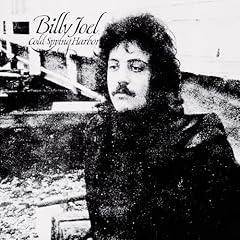
Wednesday, October 24, 2007
Microbial genomics and Metagenomics workshop
For those interested in microbial genomics or metagenomics see the announcement here:
Note the Workshop is FREE. Yes that is right. FREE.
The U.S. Department of Energy Joint Genome Institute (DOE JGI) is offering a five-day workshop on Microbial Genomics and Metagenomics, in Walnut Creek, California, January 7-11, 2008. The workshop includes two days of intensive seminars and three days of hands-on tutorials. The goal is to provide training in microbial genomic and metagenomic analysis and to demonstrate how the cutting-edge science and technology of DOE JGI can enhance your research. Participation is limited to 40 attendees (graduate students, postdocs, and faculty or staff scientists). To register for the workshop, submit your application online from the registration page: http://www.jgi.doe.gov/meetings/mgm/
Note the Workshop is FREE. Yes that is right. FREE.
Saturday, October 20, 2007
URGENT - IF YOU SUPPORT OPEN ACCESS TO SCIENTIFIC LITERATURE - WRITE YOUR SENATOR NOW
I am posting this which I received in an email.
URGENT CALL TO ACTION: Tell your Senator to OPPOSE amendments that strike or change the NIH public access provision in the FY08 Labor/HHS appropriations bill
--------------------------------
The Senate is currently considering the FY08 Labor-HHS Bill, which includes a provision (already approved by the House of Representatives and the full Senate Appropriations Committee), that directs the NIH to change its Public Access Policy so that participation is required (rather than requested) for researchers, and ensures free, timely public access to articles resulting from NIH-funded research. On Friday, Senator Inhofe (R-OK), filed two amendments (#3416 and #3417), which call for the language to either be stricken from the bill, or modified in a way that would gravely limit the policy's effectiveness.
Amendment #3416 would eliminate the provision altogether. Amendment #3417 is likely to be presented to your Senator as a compromise that "balances" the needs of the public and of publishers. In reality, the current language in the NIH public access provision accomplishes that goal. Passage of either amendment would seriously undermine access to this important public resource, and damage the community's ability to advance scientific research and discovery.
Please contact your Senators TODAY and urge them to vote "NO" on amendments #3416 and #3417. (Contact must be made before close of business on Monday, October 22). A sample email is provided for your use below. Feel free to personalize it, explaining why public access is important to you and your institution. Contact information and a tool to email your Senator are online at http://www.taxpayeraccess.org/nih/2007senatecalltoaction.html. No time to write? Call the U.S. Capitol switchboard at (202) 224-3121 to be patched through to your Senate office.
If you have written in support before, or when you do so today, please inform the Alliance for Taxpayer Access. Contact Jennifer McLennan through jennifer@arl.org or by fax at (202) 872-0884.
Thanks for your continued efforts to support public access at the National Institutes of Health.
--------------------------------
SAMPLE EMAIL
Dear Senator:
On behalf of [your organization], I strongly urge you to OPPOSE proposed Amendments #3416 and #3417 to the FY 2008 Labor, Health and Human Services and Education Appropriations bill (S.1710). These amendments would seriously impede public access to taxpayer-funded biomedical research, stifling critical advancements in lifesaving research and scientific discovery. The current bill language was carefully crafted to balance the needs of ALL stakeholders, and to ensure that the American public is able to fully realize our collective investment in science.
To ensure public access to medical research findings, language was included in the in the FY 2008 Labor, Health and Human Services, and Education Appropriations Bill directing the NIH to make a much-needed improvement to its Public Access Policy -- requiring that NIH-funded researchers deposit their manuscripts in the National Library of Medicine's online database to be made publicly available within one year of publication in a peer-reviewed journal. This change is supported by NIH Director Elias Zerhouni, and a broad coalition of educational institutions, scientific researchers, healthcare practitioners, publishers, patient groups, libraries, and student groups -- representing millions of taxpayers seeking to advance medical research.
Amendment #3416 would eliminate this important provision, leaving only a severely weakened, voluntary NIH policy in place. Under the voluntary policy (in place for more than two years) less than 5% of individual researchers have participated -- rendering the policy ineffective. The language in Amendment #3417 would place even further restrictions on the policy, ensuring that taxpayers - including doctors and scientists - are unable to take full advantage of this important public resource.
Supporting the current language in the FY08 LHHS Appropriations Bill is the best way to ensure that taxpayers' investment in NIH-funded research is used as effectively as possible. Taxpayer-funded NIH research belongs to the American public. They have paid for it, and it is for their benefit.
I urge you to join the millions of scientists, researchers, libraries, universities, and patient and consumer advocacy groups in supporting the current language in the FY08 LHHS Appropriations bill and require NIH grantees to deposit in PubMed Central final peer-reviewed manuscripts no later than 12 months following publication in a peer-reviewed journal. Vote NO on Amendments #3416 and #3417.
Thursday, October 18, 2007
Whose genome should Roche/454 sequence to make up for selecting Watson's?
In honor of one of my favorite places on the planet, Cold Spring Harbor Laboratory, I am trying to distract some of the negative attention that has come from James Watson's latest choice of words. So I am calling on everyone in the community to come up with recommendations for whose genome Roche should sequence with the 454 technology to make up for the fact that they did Watson's genome. And it would be good if the pick was someone that would make Watson a bit queasy.
Here are my top picks
Here are my top picks
- Condoleezza Rice. An absurdly powerful, smart, black woman.
- Francis Crick. Someone has to have some of his hair somewhere.
- Rosalind Franklin. Not sure about the hair. But wouldn't it be great if she was one of the reference genomes.
- Francis Collins. Apparently no love lost between Francis and Jim.
- Craig Venter. Sure his genome has been nearly completed. But why not do it again with another method.
Monday, October 15, 2007
Overselling genomics (and men) award #3 - Newsweek Magazine
Newsweek Magazine has a feature on the "10 hottest nerds" that they say are "10 of the most esteemed biologists" in the w0rld. And they ask for their insights into various things. The people are
They couldn't come up with a single woman? Or anyone doing anything else? Or any new researchers? This whole thing is completely egregious. There are plenty of completely cool things going on in biology that have little if any connection to genomics, that are not men, and/or are not established researchers.
And to get the conversation going here are some people they could have considered to diversify in at least one dimension (i.e., the male versus female thing):
So - Newsweek - you are getting my third "Overselling Genomics Award" and on top of that a bonus "Overselling Men" award. All I can say is - what were you thinking?
- Eric Lander
- Leroy Hood
- Craig Venter
- David Botstein
- Svante Paabo
- Philip Sharp
- Rudolph Jaenisch
- Kari Stefansson
- George Church
- Jay Keasling
They couldn't come up with a single woman? Or anyone doing anything else? Or any new researchers? This whole thing is completely egregious. There are plenty of completely cool things going on in biology that have little if any connection to genomics, that are not men, and/or are not established researchers.
And to get the conversation going here are some people they could have considered to diversify in at least one dimension (i.e., the male versus female thing):
- Kristen Scott
- Hopi Hoekstra
- Pamela Bjorkman
- Philippa Marrack
- Elizabeth Blackburn
- Julie Theriot
- Susan Lindquist
- Andrea Brand
- Joan Steitz
- Lucy Shapiro
- Sharon Long
- Colleen Cavanaugh
- Cindy van Dover
- Mary Claire King
- Rita Colwell
- Claire Fraser
- Nancy Moran
- Katie Pollard
- Linda Partridge
- Sarah Otto
So - Newsweek - you are getting my third "Overselling Genomics Award" and on top of that a bonus "Overselling Men" award. All I can say is - what were you thinking?
Sunday, October 14, 2007
Check out Mendels Garden at DBIADW
Just a quick note to suggest people check out Mendel's Garden at "Discovering Biology in a Digital World"
Friday, October 12, 2007
Appendix story in need of an asterix and appendix and a retraction
The appendix. What is it good for?
That was the topic of a series of news stories and a press release last week that somehow I did not blog on even though Thomas Goetz sent me the story. I was busy at a conference mind you but this is such easy pickings. This has got to be one of the poorer science reporting jobs done in a while and also one of the most misleading press releases I have seen. In the press release there are a series of phrases that make it seem like the scientists have discovered a major function for the appendix:
And the reporting seems to have bought this hook line and sinker. See
Sometimes things in this journal have lots of evidence and in other cases they do not. In this case I do not think they present any direct evidence and the evidence they present is at best circumstantial and unconvincing. Basically, they lay out a hypothesis that the appendix may have some role in the immune system. Then they highlight a further series of circumstantial connections and inferences to come to the idea that the appendix may have some role in harboring "beneficial" microbes in the gut.
It is an interesting theory. It could be true. But the evidence they present is very very circumstantial and weak at best. They seem to claim that stronger evidence would be impossible to obtain since doing experiments on humans is not easy. But given the large number of people who have had their appendices removed, one could actually do a retrospective study of how well such people recover from pathogen attacks or the use of antibiotics. Until such a study is done, it would be wrong to say these authors discovered anything. What they did is propose a hypothesis for a function of the appendix. The hypothesis might stimulate discussions and some research but lets not oversell it.
In many ways you could consider their hypothesis much like the hypothesis that microbial life existed on Mars. This Mars idea is plausible. But there is currently no evidence for it. Imagine if the reporters said "Life found on Mars" in relation to a paper proposing that life might have existed on Mars. The reporting here is no different - though the stories got it wrong. In part this is because the press release is so misleading. But reporters have got to go beyond the press release or the initial story. Just see Carl Zimmer's blog for a great example of bad reporting.
That was the topic of a series of news stories and a press release last week that somehow I did not blog on even though Thomas Goetz sent me the story. I was busy at a conference mind you but this is such easy pickings. This has got to be one of the poorer science reporting jobs done in a while and also one of the most misleading press releases I have seen. In the press release there are a series of phrases that make it seem like the scientists have discovered a major function for the appendix:
Appendix Isn't Useless At All: It's A Safe House For Good BacteriAND
William Parker, Ph.D. is one of a team of scientists to discover that the appendix has a function -- protecting beneficial bacteria.
And the reporting seems to have bought this hook line and sinker. See
- The appendix does have a use – re-booting the gut
- Appendix: It’s not useless after all
- Scientists discover true function of appendix organ
- Purpose of Appendix Believed Found
- Study: Yes...your appendix has a purpose
We propose that the human appendix is well suited as a “safe house” for commensal bacteria, providing support for bacterial growth and potentially facilitating re-inoculation of the colon in the event that the contents of the intestinal tract are purged following exposure to a pathogenThe key word here is "propose." In the paper, they do not actually really show direct evidence for any function. And the title of the journal should hint at this - the Journal of Theoretical Biology. It is a place for scientists to put out new hypotheses, including those that have little evidence behind them. Nothing is wrong with such a journal. Hypotheses are a good thing.
Sometimes things in this journal have lots of evidence and in other cases they do not. In this case I do not think they present any direct evidence and the evidence they present is at best circumstantial and unconvincing. Basically, they lay out a hypothesis that the appendix may have some role in the immune system. Then they highlight a further series of circumstantial connections and inferences to come to the idea that the appendix may have some role in harboring "beneficial" microbes in the gut.
It is an interesting theory. It could be true. But the evidence they present is very very circumstantial and weak at best. They seem to claim that stronger evidence would be impossible to obtain since doing experiments on humans is not easy. But given the large number of people who have had their appendices removed, one could actually do a retrospective study of how well such people recover from pathogen attacks or the use of antibiotics. Until such a study is done, it would be wrong to say these authors discovered anything. What they did is propose a hypothesis for a function of the appendix. The hypothesis might stimulate discussions and some research but lets not oversell it.
In many ways you could consider their hypothesis much like the hypothesis that microbial life existed on Mars. This Mars idea is plausible. But there is currently no evidence for it. Imagine if the reporters said "Life found on Mars" in relation to a paper proposing that life might have existed on Mars. The reporting here is no different - though the stories got it wrong. In part this is because the press release is so misleading. But reporters have got to go beyond the press release or the initial story. Just see Carl Zimmer's blog for a great example of bad reporting.
Genomics by Press Release Award #1
Well, I have tried to hold off giving out awards here since I kind of botched my last attempt at this. But here goes.
Yesterday, researchers in South Africa announced that they had sequenced the genome of a XDR strain of the bacterium (Mycobacterium tuberculosis) that causes TB. I sniffed around this story because someone who used to work for me, James Sakwa, was mentioned in some of the stories.
The stories proclaim how quickly the researchers were able to sequence this genome with quotes like
Albert Einstein Marie Curie and Al Gore Barbara McClintock this morning on my new EXCERCYCLER machine we invented here in Davis. It is a new green sequencing technology that is powered by a bicycle and the sequence data is generated by feeding pieces of DNA into the front derailer and sequence comes out of the back derailer. See hazy image below.

Yesterday, researchers in South Africa announced that they had sequenced the genome of a XDR strain of the bacterium (Mycobacterium tuberculosis) that causes TB. I sniffed around this story because someone who used to work for me, James Sakwa, was mentioned in some of the stories.
The stories proclaim how quickly the researchers were able to sequence this genome with quotes like
(It) took us just over a week, using other technology it would have taken up to a year," he told AFP.This sounded a lot like other claims of rapid genome sequencing ... and I was skeptical since just doing some shotgun sequencing, with whatever method, does not lead to a complete genome. Alas, it looks like my skepticism is valid. The AP reports
The complete genome sequencing data has not yet been shared with other scientists. Previous tuberculosis strains have already been mapped, and some experts are uncertain how quickly the research will result in new diagnostics or treatments.So - there is apparently no paper associated with their work. And the data is not being shared. So in that spirit, I am announcing here that I have sequenced the genome of

How Al Gore changed my life and Congratulations on a well deserved Novel Prize
My life changed a great deal in 1989 when Al Gore came to speak at Harvard for the Environmental Action Committee in which I was involved. In honor of his Nobel Peace Prize here are my notes from his talk which I had intended to write up for a Biology Department newsletter but never did. I never finished the notes but here is the start.
----------
UPDATE: Found my notes from his talk. I scanned them in and am posting here


Senator Al Gore '69 spoke to Science A-30 class (as well as many others) in the end of November. His main focus was change in the global environment (i.e greenhouse effect, pollution, ozone depletion, deforestation, etc.) and what can and should be done about such issues. Senator Gore's interest in the environment, now almost a crusade, was sparked in a class he took at Harvard from Prof. Ravel. Gore suggested that the first step that we as a nation, and as a species, must take is to recognize that there is a problem. He referred to the classical biology example of the frog in a pot of water. If the temperature of the water is increased rapidly then the frog will be leaping at the opportunity to get out. However, if the temperature of the pot is increased gradually the frog may not sense anything, and will cook in its own innocence. According to Gore, today's society is prone to such a way of thinking. Society is least likely to recognize those changes in the environment that occur over long periods of time. It is like the Far Side cartoon in which a caveman asks his friend if the ice wall looks a bit closer today.I went up and talked to Gore afterwards and found him truly inspiring. It was this discussion that helped guide me to start a new Environmental Issues journal at Harvard and to do various other things for Earth Day 1990. Anyway, all I can say is congratulations to Al Gore, a Nobel Prize well deserved for someone who has been working to help our planet for at least 20 years.
So, the first step is to recognize that changes are going on, and that they are more that just gradual, that they are completely new in quality and quantity. The main problem today as compared to two thousand years ago is that the changes are happening too fast. The population is increasing at a rate never seen before. Rapidly increasing levels of greenhouse gases may lead to changes in climate and temperature that will be too fast for many organisms to respond. Extinction rates, already higher than any time since the "great" dinosaur extinction, may increase even more as organisms get wiped out by the environmental changes. Ozone depletion over the antarctic may just be a warning of a decrease over the temperate and tropical areas. The subsequent increase in UV light levels at the surface of the earth could have catastrophic effects. Industrialists and many government officials suggest that "science" will be able to cure these problems in the future
This same type of graph can be shown for ozone depletion, deforestation, pollution, soil erosion, and species depletion. However, as long as their is a lack of consensus as to the amount of change, and to the degree that any of these changes will affect human's (especially those alive today), there will be little change in government policy. In essence, Gore says, we are doing what the frog did.
There are quite a few criticisms to Gore's approach. Technology, that wonderful thing that has brought us strip mining, and artificial hearts, may be able to, in the future, reverse some of those things we are doing now. So why limit growth, when we can clean up later. It's like when I was a kid, "But mom, I'll clean up after Tom and Jerry" knowing full well that I wouldn't and running the risk of getting attacked by one of the dust balls under my dresser. However, if I made a real mess, such as one that would stain something, I had to clean it up then and there. The problem is that everyone seems to think all of these processes that are taking place in the atmosphere are reversible when in fact they may not be. Species depletion clearly is not. And if the other processes are allowed to run amok, we will likely have one big mess on our hands.
----------
UPDATE: Found my notes from his talk. I scanned them in and am posting here


Thursday, October 11, 2007
Biofools on Eye in the Sky
Eye on the Sky's (Michael Ferrari) has a little post on Biofoolery and Water usage. In it he links to the new NAS report on this topic.
Monday, October 08, 2007
Ten things to NOT do at a conference
Well, overall I am liking the GME meeting I am at. But not all of it. And some things here are instructional for what NOT to do at a conference, either as an attendee or as a presenter or as an organizer. Here are some of them
DO NOT:
I am sure there are other things to not do ... but these are those that come to mind right now.
DO NOT:
- Go way over your allotted time to speak. Even if the chair of a session lets you do this, don't. It is rude to the audience and to other speakers.
- Lack empathy for your audience. Take a few minutes to imagine what the audience might want to get from your talk. Some of the speakers here are much more concerned with what they will get from the presentation.
- Use a lot of slides with way way way too small text or images.
- Answer cell phone calls in the middle of the audience. Yes, that's right, scientists can be jackasses. Imagine that.
- Corner people who are on the way to the restroom. Let people go.
- Make an opening statement when asking questions like "That was a great talk" or "That was an interesting talk" or anything like that. Don't be a suckup. Just ask your question.
- Be rude to the meeting helpers when you forget something. Come on. If you are not registered for the meeting it is most likely that you screwed something up, not the meeting.
- Ask many follow up questions after your question. If you want to have a discussion, buy a beer for someone. If you have a straightforward question that is answerable - ask it. If you want to make a simple statement, fine. If you want to go on and on ... get a room.
- Write in your blog in the back of the room (hey, I did not say I was perfect).
- Have too little time for breaks. The best part of conferences is the coffee and other breaks. No need to have too many talks. Have lots of breaks.
I am sure there are other things to not do ... but these are those that come to mind right now.
GME 2007 - Getting feedback on PLoS ONe
While at the GME meeting - I have now been approached by 3 people saying they really liked the discussion I initiated on PLoS One for a paper on metagenomics a few weeks ago. They were not saying they liked my comments but that there was an active discussion about some important topics. I think the function on PLoS One has great potential to engage the broad scientific community in discussions that might have previously been limited to journal clubs. So it is nice to see (1) that people are reading stuff on PLoS One and (2) that they seem to like the commenting function.
Sunday, October 07, 2007
GME 2007 - Genomes, Medicine and the Environment
I am now at the "Genomes, Medicine and the Environment" conference in San Deigo. It looks to be quite good and diverse. Here is the schedule for Monday. I will try and post notes either as they happen or later tonight. First note --- my undergrad. advisor, Colleen Cavanaugh is showing some cool pictures of deep sea organisms and their symbionts that chemosynthesize for them. She says "genomics is literally like opening a window into our science, because we cannot culture any of these symbionts." And now she is talking about our paper on the symbionts of the giant clam, Calyptogena magnifica. It is really cool for me to see this -- Colleen was the person who got me interested in microbes and symbioses and even though I only worked in her lab for 1.5 years, it changed my life and scientific career.
NOTE - I AM POSTING SOME NOTES IN THE COMMENTS ON THIS ENTRY.
NOTE - I AM POSTING SOME NOTES IN THE COMMENTS ON THIS ENTRY.
| Opening Remarks, J. Craig Venter, Ph.D., JCVI | |
| Synthetic Biology | |
| Colleen Cavanaugh, Ph.D., Harvard University - "Genomic Insights into Chemosynthetic Symbioses" | |
| Nancy Moran, Ph.D., The University of Arizona - "Genomics of Symbiotic Bacterial Communities within Insects" | |
| Hamilton Smith, M.D., J. Craig Venter Institute - "Toward a Minimal Cell" | |
| BioEnergy | |
| Steve Briggs, Ph.D., University of California, San Diego - " Development and Application of Protein Profiling Methods" | |
| Yuri Gorby, Ph.D., J. Craig Venter Institute - "Electromicrobiology: The Role of Bacterial Nanowires in Extracellular Electron Transfer" | |
| Edward Bayer, Ph.D., Weizmann Institute of Science - "Bioengineering of Cellulosomes: Prospects for Conversion of Biomass to Bioenergy" | |
| 12:00-2:00 | Lunch, Sunset Ballroom |
| Environmental Genomics | |
| John Heidelberg, Ph.D., University of Southern California - "Genomic, Metagenomic and Functional Analyses of Cyanobacteria from Hot-Spring Microbial Mats" | |
| Gene Tyson, Ph.D., Massachusetts Institute of Technology - "Metatranscriptomic Analysis of Microbial Communities in the North Pacific Subtropical Gyre" | |
| Syed Hashsham, Ph.D., Michigan State University - "Understanding Microbial Community Succession in Response to Substrate Shock using Roche 454 GS FLX Sequencing System" | |
| David Schwartz, M.D., National Heart, Lung & Blood Institute Toxicology Program - "Environmental Genomics and Human Health" | |
| Human Metagenomics | |
| Ren Bing, Ph.D., University of California, San Diego School of Medicine - " Annotating the Human Genome - a ChIP-chip Approach" | |
| Russell M. Gordley, B.A., Scripps Research Institute - " Evolution of Programmable Zinc Finger-recombinases with Activity in Human Cells " |
Undercooked meat does not kill people, E. coli O157:H7 does
Which would you prefer? A clean meat supply, where the meat you eat is generally free of nasty pathogenic bacteria? Or a meat supply that has to be irradiated and cooked in order to make it safe?
Check out the article in Newsweek for a sort of discussion of this issue relating to the E. coli O157:H7 strain found in ground beef recently, and more frequently all the time.
Why is E. coli O157:H7 in ground beef in the first place? The answer to this depends on at what point in the life cycle of the meat processing you want to track the E. coli to. Meat processors would like to say it just comes from a little bit of "contamination" during making ground beef. But the real question to me is, why is there so much E. coli O157:H7 around for it to contaminate the ground beef? Well, I like the explanations of Michael Pollan and Eric Schlosser given in the Newsweek article:
Schlosser says
we have a systemic problem here starting in the feedlots, spreading in the slaughterhouses, and winding up in the ground beef at plants that make frozen patties. Putting Topps out of business isn't going to solve that fundamental problem.”Pollan says
This particular bug was not a problem before the industrialization of the meat supply,” says Michael Pollan, an investigative journalist and food writer. “It’s an adaptation to the feedlot diet [which is composed of corn, ethanol byproducts and other grain feed]. Animals who get a proper diet and are outside eating grass don’t get much of it. Even if you give the animals fresh hay in the last days of their lives, the E. coli burden drops 80 percent. But it would just screw up the workings of the [industry]. The other way [to reduce risk] is to slow down the lines, if you could butcher with more care.”A meat industry consultant counters this by saying
When you pack people together in cities, diseases pass between them easier. If you’re living in the plains with five miles between households, you’re less likely to get sick. I think it’s the nature of the world. The reality is if you cook the meat you’ll never have a problem. I eat beef a lot and I may get indigestion from time to time, but I don’t get sick. No one will ever get sick if you fully cook the meat. This isn’t rocket science.Not the most ringing endorsement in the first place (is indigestion supposed to be a good thing?). But Pollan wraps up my feeling on this:
So - yes, getting cheap meat will require us to industrialize the process somewhat. But do we really want the meat to be as cheap as possible? I do not think so. I think quality of the environment, quality of the meat, and reducing the spread of nasty pathogens should also be part of the equation. I am not going to start eating raw meat, but just because you can kill the bacteria in contaminated meat does not mean I want to eat it.if there is indeed manure in the meat, however microscopic, you’re still eating cooked manure.
Saturday, October 06, 2007
Hilary Clinton on Science and Evolution
The New York Times has an article on Hilary Clinton's science agenda. She discussed space exploration, global warming, stem cells, and evolution. On evolution she says
I think candidates statements on evolution and a nearly perfect test of whether they will really support science or not if they were to be elected. Those candidates that say they do not believe in evolution and/or that they support teaching ID in science classes are unquestionably more likely to not treat science in general very well. And though I could quibble with Clinton's quote (antibiotic resistant bacteria are not per se evidence of evolution --- it is the spread of antibiotic resistance and the rapid origin of new forms of resistance that are due to evolution). But she has the general issue correct. Good to see some of the politicians are not sucking up too much to the anti-science crowds.“I believe in evolution, and I am shocked at some of the things that people in public life have been saying,” Mrs. Clinton said in the interview. “I believe that our founders had faith in reason and they also had faith in God, and one of our gifts from God is the ability to reason.”
“I am grateful that I have the ability to look at dinosaur bones and draw my own conclusions,” she added, saying, too, that antibiotic-resistant bacteria is evidence that “evolution is going on as we speak.”
Wanted - Entomologist to Work for New York Yankees

 Bugs bugs bugs bugs bugs bugs bugs bugs bugs bugs bugs bugs bugs bugs bugs bugs bugs bugs bugs bugs bugs bugs bugs bugs bugs bugs bugs bugs bugs bugs bugs bugs bugs bugs bugs bugs bugs bugs bugs bugs bugs bugs bugs bugs bugs bugs bugs bugs bugs bugs bugs bugs bugs bugs bugs bugs bugs bugs bugs bugs bugs bugs bugs bugs bugs bugs bugs bugs bugs bugs bugs bugs bugs bugs bugs bugs bugs bugs bugs bugs bugs bugs bugs bugs bugs bugs bugs bugs bugs bugs bugs bugs bugs bugs bugs bugs bugs bugs bugs bugs bugs bugs bugs bugs bugs bugs bugs bugs bugs bugs bugs bugs bugs bugs bugs bugs bugs bugs bugs bugs bugs bugs bugs bugs bugs bugs bugs bugs bugs bugs bugs bugs bugs bugs bugs bugs
They are in the news. Yesterday at the Yankees-Indians game in Cleveland, bugs came out in full force. Basically, a swarm of bugs came out in the 8th inning and helped annoy and distract the Yankees pitcher, who then gave up the tying run in the game, which the Yankees went on to lose. Apparently it was a swarm of midges. Whatever it was, expect the value of an entomology PhD to go skyrocketing as Steinbrenner will have to hire a whole team of them.
In addition, the bug puns came out in full force too
- Gnats Gnot Gnice
- Indians work out the bugs
- Pest control
- No idea the place was bugged
- Tribe swats Yanks again, eyes sweep CLEVELAND 2, NY 1 (11)
- GNAT THIS TIME
- Joba, Yankees can't avoid the plague
- Indians Feel the Buzz
- Bug off Yanks: Tribe takes 2-0 series lead
- Indians continue to bug Yanks
- Bitten and beat, Yanks seek cure
- Indians bug Yankees with itch to win
- YANKS VICTIM OF INSECTICIDE
- NOW THEY'RE IN A SWARM OF TROUBLE
- JOBA BUGGIN'
- No bugs about it: Indians roll
- Yankees bug out
- Indians work out the bugs
- Tribe win? Gnaturally
- Perfect swarm
Friday, October 05, 2007
The Economist on the power of Evolution
Evolution gets some great props in a new article in the Economist. Specifically they are talking about using "natural selection" as a computation tool in design. I think the article speaks for itself so people should check it out. Some of the quotes I like in particular are:
The inventor’s trial-and-error approach can be automated by software that mimics natural selectionAND
“I HAVE not failed. I have just found 10,000 ways that won’t work.” So said Thomas Edison, the prolific inventor, speaking of his laborious attempts to perfect the incandescent light bulb.AND
As in biology, most mutations are worse than the original. But a few are better, and these are used to create the next generation.AND
A century and a half after Darwin suggested natural selection as the mechanism of evolution, engineers have proved him right once again.
Thursday, October 04, 2007
Where math, biology and the bay area meet

A quick posting here on a meeting coming up in the Bay Area. I went and talked at it last year and it was quite rewarding.
The Biology and Mathematics in the Bay Area (BaMBA) meeting is a forum for discussions of concepts, issues, and methods by leading researchers in the applications of mathematics, statistics, and computer science in modern biology.
The goal of the meeting is to encourage dialog between researchers and students from different disciplines in an atmosphere intended to promote the exchange of ideas and viewpoints. BaMBA is a one-day annual event that takes place in the San Francisco Bay Area. The first meeting was hosted by San Francisco State University, the second by the Mathematical Sciences Research Institute and BaMBA III will take place at San Jose State University on November 10, 2007.
Attendance is open to everyone but we expect the majority of the participants from the Bay Area universities (Stanford University, UC Berkeley, UC Santa Cruz, UC San Francisco, San Jose State University, San Francisco State University, University of Santa Clara, and etc). In 2006, BaMBA II attracted around 120 participants.
Mark your calendars:
Saturday, November 10,
from 9 to 5pm.
Eng 189 (San Jose State University)
More information including free
resgistration can be found at www.cs.sjsu.edu/~bamba3.
Tuesday, October 02, 2007
PLoS One Commentary Expansion and Metagenomics of Warm Waters

People interested in metagenomics and/or marine microbiology should check out a recent paper in PLoS One on Metagenomics of the Deep Mediterranean, a Warm Bathypelagic Habitat.
In this paper, the authors use metagenomic sequencing to study microbes from 3000m depth int he Mediterranean. The most interesting thing about this paper is that the water at this depth is much warmer than water from similar depths that have been previously studied by metagenomics. The authors do some comparative metagenomic analysis and conclude that temperature of the water is more important than depth in determining the suite of organisms and genes that are present in the water. This is a preliminary result but does being to show the potential power of comparative metagenomic analyses.
The other thing people might want to check out is the Commentary on this article. I have been trying to get people in my lab to layer their comments and annotations onto this article as a test of the new PLoS One system. So far a few people in the lab have added comments as have I and more are coming. Others should add comments too. This commenting system is one of the nice new features of PLoS One in my mind, although it is still in beta testing. One thing I am still trying to work out is the trackback system ...
Martín-Cuadrado, A., López-García, P., Alba, J., Moreira, D., Monticelli, L., Strittmatter, A., Gottschalk, G., & Rodríguez-Valera, F. (2007). Metagenomics of the Deep Mediterranean, a Warm Bathypelagic Habitat PLoS ONE, 2 (9) DOI: 10.1371/journal.pone.0000914
Wanna help run a major University - apply for this job
U. C. Davis, where I am a faculty, is recruiting nominations and applications for "PROVOST AND EXECUTIVE VICE CHANCELLOR." So if you are itching for something new out there, and think you have what it takes, consider applying.
Oh, and hopefully, from my point of view, you will be more supportive of Open Access publishing than our interim Provost and Executive Vice Chancellor, Barbara Horwitz (see here and here for more on her position on Open Access).
Let me state first, that I realize that Open Access is not the only important thing in the world and that there are many kinds of OA and furthermore that some people may generally support OA but may be worried about how to get there (e.g., see Timo Hannay's discussion of some of his concerns about doing full OA here ).
And Dr. Horwitz has done some quite good things in other aspects of her job. But her more recent foray into the OA debate was so icky, so misleading, that I am really hoping she does not become full time provost and furthermore that whomever does has a different take on the whole thing.
What was it that raised my ire? Well, she was directly involved in what could be considered a bit of a test run of the ideas behind PRISM, the much panned "coalition" against open access. I wrote about the PRISM-esque test run by Horwitz and colleagues here. In summary, she and a group of other anti-OA advocates wrote a letter stating their PRISM-esque objections to the OA movement. For example here is one of their PRISM-esque quotes
Horwitz is welcome to her opinions and I agree with Timo Hannay that we need a fair and measured debate about OA (although I think he goes overboard in dinging people for being a bit agressive in their blog commentaries about it --- this is after all what makes blogs a bit fun). But let's not abuse our positions of authority and responsibility within the University to mislead about our positions. And just because we have a pleasant debate does not mean I will support an anti OA advocate to help run UC Davis, not that I have much say in the matter.
But given that U. C. Davis is strong and getting stronger in the sciences means that one key aspect of the recruitment of a new Provost and Executive Vice Chancellor should be how they stand on scientific publishing.
Oh, and hopefully, from my point of view, you will be more supportive of Open Access publishing than our interim Provost and Executive Vice Chancellor, Barbara Horwitz (see here and here for more on her position on Open Access).
Let me state first, that I realize that Open Access is not the only important thing in the world and that there are many kinds of OA and furthermore that some people may generally support OA but may be worried about how to get there (e.g., see Timo Hannay's discussion of some of his concerns about doing full OA here ).
And Dr. Horwitz has done some quite good things in other aspects of her job. But her more recent foray into the OA debate was so icky, so misleading, that I am really hoping she does not become full time provost and furthermore that whomever does has a different take on the whole thing.
What was it that raised my ire? Well, she was directly involved in what could be considered a bit of a test run of the ideas behind PRISM, the much panned "coalition" against open access. I wrote about the PRISM-esque test run by Horwitz and colleagues here. In summary, she and a group of other anti-OA advocates wrote a letter stating their PRISM-esque objections to the OA movement. For example here is one of their PRISM-esque quotes
"The free posting of unedited author manuscripts by government agencies threatens the integrity of the scientific record, potentially undermines the publisher peer review process, and is not a smart use of funds that could be better used for research."Ooh you say --- a letter --- what's the big deal. Well, the ten people who wrote the letter wrote it as individuals, but then a PRISM-esque anti OA group wrote a press release wherein they referred to the people who wrote the letters as "University Officials" which they were (all were deans, provosts, etc) and how University Officials were against OA. This was clearly done to give the impression that the Universities themselves were against OA, which was not true. And this misleading presentation was clearly done in collaboration with the letter writers. So Horwitz and crowd allowed the fact that they were University officials to be used to mislead people into thinking that their opinions were POSITIONS of the university.
Horwitz is welcome to her opinions and I agree with Timo Hannay that we need a fair and measured debate about OA (although I think he goes overboard in dinging people for being a bit agressive in their blog commentaries about it --- this is after all what makes blogs a bit fun). But let's not abuse our positions of authority and responsibility within the University to mislead about our positions. And just because we have a pleasant debate does not mean I will support an anti OA advocate to help run UC Davis, not that I have much say in the matter.
But given that U. C. Davis is strong and getting stronger in the sciences means that one key aspect of the recruitment of a new Provost and Executive Vice Chancellor should be how they stand on scientific publishing.
Friday, September 28, 2007
Wanted: Brilliant Editor, Open Access Afficionado, Biology Background
I got this by email and figured I would post it here.
Senior Scientific Editor, PLoS Biology – based in San Francisco
The Public Library of Science (PLoS) seeks an experienced editor and manager to lead its flagship life science journal – PLoS Biology – in San Francisco. Since its launch in 2003, PLoS Biology has rapidly become established as both a high impact journal and a leader in the open-access publishing movement. This is a unique opportunity to develop a ground-breaking journal, and to shape a fundamental transition in scientific publishing.
The primary responsibilities of the job will be:
· Oversight of all editorial aspects of the journal, including peer review of research articles and commissioning of additional content. This includes fostering a collaborative decision-making process among in-house editors and the editorial board
· Management of the journal editorial staff
· Working with the PLoS leadership and the journal team to determine journal strategy within the context of our publishing portfolio and open-access goals
· Leading the further development of the journal specifically as we introduce web features that will allow greater user participation
· Attending scientific conferences and outreach to the scientific community, representing PLoS Biology and the broader aims of open access
Required experience and qualities:
· Extensive experience handling peer review of primary research
· Substantial management experience, and excellent communication skills
· Broad knowledge of the biological sciences, with a network of contacts in the scientific community
· Knowledge of and interest in the changing nature of scientific publishing, particularly in an online environment
· Strong commitment to open-access publishing
· Willingness to be flexible to accommodate time differences between our international offices
Application Procedure
PLoS offers competitive salaries, a creative and casual work environment as well as a full range of comprehensive benefits, including medical; dental and vision; life, LTD and STD coverage and a matching 401k program. If interested, please send resume and cover letter to jobs@plos.org and use “Managing Editor, PLoS Biology” as the subject of your email. Informal enquiries may be made by email to the Director of Publishing, Mark Patterson - mpatterson@plos.org. Principals only – email from recruiters will be ignored.
Thursday, September 27, 2007
Another cool scientist video
Follow up on the "cool scientist" video posting from a few days ago. This one is about the research experience at sea.
Again, make sure the volume is on. And thanks to Jeff Hoffman for forwarding this .. he got it from Karla Heidelberg.
Please send/post more examples.
Again, make sure the volume is on. And thanks to Jeff Hoffman for forwarding this .. he got it from Karla Heidelberg.
Please send/post more examples.
Tuesday, September 25, 2007
Symbionts have feelings too
The Onion, one of the key sources of all things wise and accurate in science is reporting on a sad story all too common among symbionts. They report:
PS - Thanks to Sourav Chatterji in my lab for pointing out the Onion story.
After three rainy seasons together, a black rhinoceros and a parasite-eating tickbird are beginning to suspect that their symbiotic relationship has fallen into a rut, the couple reported Sunday.And furthermore
"The rhino and tickbird may have evolved physiologically to meet each other's needs, but it's clear they haven't evolved emotionally," the elephant said. "They need to recognize that in order to go forward. The rhino's loud snorting is very alienating. And obviously the tickbird is projecting her own feelings of inadequacy when she criticizes the rhino for being a typical Diceros bicornis."In other words - mutualisms are not the simple "You scratch my back, I'll scratch yours" they are presented to be. Symbionts have feelings too."
PS - Thanks to Sourav Chatterji in my lab for pointing out the Onion story.
Saturday, September 22, 2007
If only all scientists were this cool
OK - I admit I am a bit biased since I am starting to collaborate with her on metagenomics related projects, but everyone should check out the new YouTube Video from Jessica Green. Jessica just moved from U. C. Merced to U. Oregon and if you want to know what she works on, well check out the video. Oh and make sure the volume is on.
The funny thing is, I met one of the founders of YouTube (Chad Hurley) a few weeks ago, and I was telling him how I thought scientists were starting to use YouTube more frequently to actually communicate. But I did not have too many concrete examples to show him. So Chad ... you too should check out this video.
The funny thing is, I met one of the founders of YouTube (Chad Hurley) a few weeks ago, and I was telling him how I thought scientists were starting to use YouTube more frequently to actually communicate. But I did not have too many concrete examples to show him. So Chad ... you too should check out this video.
Thursday, September 20, 2007
Ego blogging -- what is your favorite self written blog entry or comment?
The Scientists is running a very informative discussion on people's favorite science blogs. There are some blogs there that I have never heard of that seem quite interesting as well as others I knew about and had forgotten. So it is a good place to look to see what people pick as their favorite.
But I think there is a more interesting question. What is your favorite blog entry that you have written in your own blog? Or, especially if you do not have a blog, what is your favorite comment you have written on someone else's blog? If you can't pick just one --- well do what they did on the Scientist site and pick a few.
My three favorites of my own blog entries:
- Why all medical professionals need to study evolution. I like this because I have been harping on it for years but never wrote about it or did anything about it.
- Top 10 Novel ways to contribute to the open access movement. I like this because it was one of my first serious moves to write about Open Access to scientific literature.
- Adaptationomics Award #1. This if high on my list because it represents both my obsession with adaptationism and my need to be snarky.
Human evolution prize - Congrats to Spencer Wells
Kyung M. Song in the Seattle Times reports that Spencer Wells has won a relatively unknown but quite lucrative prize ($100,000) for his work on the human Genographic Project (see this article in the New York Times by Amy Harmon for more information on this project)
I love the lead in to the story
Enough about Spencer --- The Times reports that
I love the lead in to the story
"Nearly half of all Americans reject the theory of evolution, with many believing instead that humans were created by a higher power. But for more than a decade, a little-known nonprofit based in Bellevue has promoted scientific research into the evolution of the human genome — and dispensed money to spread the knowledge."Apparently the "Foundation For the Future" is big on human evolution having awarded their Kistler Prize (named after the Foundations founder Walter Kistler) to the likes of Richard Dawkins, E O. Wilson, etc. Congratulations to Spencer, who I still owe for giving me some excellent advice (when I was an undergraduate and he was a graduate student) about people to work for in graduate school (which I ignored, but it was still excellent advice).
Enough about Spencer --- The Times reports that
the foundation wields its $25 million endowment to support an array of scientific endeavors, awarding prizes for books, documentaries and teaching.Hey - what about for blogs?
Wednesday, September 19, 2007
Biotechnology SPAM getting worse and worse
I simply cannot hold off any longer. I posted on Biotech. SPAM and backed off after getting some really really hostile email and comments. But here we go again.
In the last few months I have gotten so much biotech SPAM and last week I did something that added to the deluge. I got my email from where I used to work (The Institute for Genomic Research, also known as TIGR) forwarded to my current account. I still am doing projects with TIGR (well, TIGR technically does not exist anymore - it is now part of the J. Craig Venter Institute also known as the JVCI) so they have been kind enough to let me keep getting my email from there at least until my projects with them are over.
The problem with this is that many biotech. companies latch onto email addresses associated with TIGR/JCVI like, well, leeches. And they never seem to let go. And if you combine my TIGR, gmail, and Davis accounts, I get a lot of unsolicited email advertisements from biotech companies. I get so much that I am now going to fight back, again, by posting names of organizations that send biotech-related such unsolicited advertisements.
Here are some of the recent scofflaws in my inbox:
- Malaysian Genomics Resource Centre. #1 Worst offender. I have unsubscribed from their email lists 100s of times and still keep getting their inane ads for various services. It is entirely possible they do useful stuff. But by the amount of SPAM they send out, I would doubt it.
- EZBiolab - many emails from them.
- Beckman Coullter - I have unsubscribed from their lists before but every once in a while get back on them
- NIH - they seem to give out email addresses way too freely.
- Drug Discovery News - can't seem to get off their lists
- Invitrogen (I have unsubscribed many times but keep getting new things from them).
- Infocast Inc
- VWR
- qPCR news
- Campbell Alliance
Tuesday, September 18, 2007
Evolution for Goodness Sake
Generally, I like the articles Nick Wade writes for the New York Times on science. In fact, I like them so much that I used his work as a template for my April 1 joke about Craig Venter sequencing his own microbiome. But I cannot help but feel that he really punted a bit in his article today entitled "Is ‘Do Unto Others’ Written Into Our Genes? " The article is mostly about new work by Jonathan Haidt, who has written about "evolutionary views of morality"
I will skip for now discussing my opinions on the meat of the article Haidt's work. But what irked me about Wade's article was the beginning. The article opens with
Second, and more important to me, the introduction could be interpreted as implying that the evolution of altruism itself is not well studied and/or is being debated. This does not appear to be what Wade means (when he says "Could the behaviors evolved by social animals to make societies work" he means in part, "Given that altruism and other social behaviors evolve ...").
However, in discussions I have had with many people about this article they thought Wade was saying the evolution of altruism itself is under debate. If many people are coming away from Wade's article with this impression that is too bad since the evolution of altruism is well studied (there is a great book on this topic called "The Altruism Equation" by Lee Alan Dugatkin - a good blog about the book is one by Jason Rosenhouse here).
The evolution of altruism is one of my recent pet peeves since it was treated so poorly by Francis Collins in his recent book "The Language of God." In his book, which has some good discussion of how science and religion should be considered separate areas of study, Collins says that since evolution has been unable to explain altruism, therefore God must exist. This not only contradicts his own discussion in the book on how one should not use a "God is in the gaps argument" as evidence for religious beliefs , but it is simply wrong - evolutionary theory can explain altruism (see the Dugatkin book for more detail).
Note I am not saying anything here about whether I think God or gods exist. I personally believe religion and science can and should be separate fields. But certainly, one cannot use misleading references to non-existent gaps in evolutionary biology as evidence for the existence of one's own personal view of God/gods.
So - to sum up a way to long blog --- altruism can be explained by evolutionary biology and if people say otherwise (i.e., Collins) or could be interpreted as implying otherwise even if they do not mean to (i.e., Wade), don't believe it.
I will skip for now discussing my opinions on the meat of the article Haidt's work. But what irked me about Wade's article was the beginning. The article opens with
"Where do moral rules come from? From reason, some philosophers say. From God, say believers. Seldom considered is a source now being advocated by some biologists, that of evolution.I have two problems with this lead in. First, it implies that altruism and related behaviors evolved "to make societies work." This of course is not accurate. Yes, their existence allows societies to work, but they did not evolve to make societies work. Evolution does not have a drive to make societies work. It is a subtle distinction perhaps but an important one.At first glance, natural selection and the survival of the fittest may seem to reward only the most selfish values. But for animals that live in groups, selfishness must be strictly curbed or there will be no advantage to social living. Could the behaviors evolved by social animals to make societies work be the foundation from which human morality evolved?"
Second, and more important to me, the introduction could be interpreted as implying that the evolution of altruism itself is not well studied and/or is being debated. This does not appear to be what Wade means (when he says "Could the behaviors evolved by social animals to make societies work" he means in part, "Given that altruism and other social behaviors evolve ...").
However, in discussions I have had with many people about this article they thought Wade was saying the evolution of altruism itself is under debate. If many people are coming away from Wade's article with this impression that is too bad since the evolution of altruism is well studied (there is a great book on this topic called "The Altruism Equation" by Lee Alan Dugatkin - a good blog about the book is one by Jason Rosenhouse here).
The evolution of altruism is one of my recent pet peeves since it was treated so poorly by Francis Collins in his recent book "The Language of God." In his book, which has some good discussion of how science and religion should be considered separate areas of study, Collins says that since evolution has been unable to explain altruism, therefore God must exist. This not only contradicts his own discussion in the book on how one should not use a "God is in the gaps argument" as evidence for religious beliefs , but it is simply wrong - evolutionary theory can explain altruism (see the Dugatkin book for more detail).
Note I am not saying anything here about whether I think God or gods exist. I personally believe religion and science can and should be separate fields. But certainly, one cannot use misleading references to non-existent gaps in evolutionary biology as evidence for the existence of one's own personal view of God/gods.
So - to sum up a way to long blog --- altruism can be explained by evolutionary biology and if people say otherwise (i.e., Collins) or could be interpreted as implying otherwise even if they do not mean to (i.e., Wade), don't believe it.
Saturday, September 15, 2007
Faculty Position in Quantitative Phylogenetics/Comparative Methods in the Section of Evolution and Ecology at U. C. Davis
To all evolutionary biologists or people working on phylogenetics/comparative methods. There is a faculty position available in the Section of Evolution and Ecology at U. C. Davis. U. C. Davis was ranked #1 in the country for graduate programs in Evolution and Ecology in 2006. It is a great school with lots of cool stuff going on in evolution and ecology as well as all aspects of the life sciences. The posting is below:
Quantitative Phylogenetics/Comparative Methods
Quantitative Phylogenetics/Comparative Methods, UNIVERSITY OF CALIFORNIA, DAVIS -- The College of Biological Sciences, University of California, Davis invites applications and nominations for a tenure-track position in the Section of Evolution and Ecology at the ASSISTANT PROFESSOR level. Candidates must have a Ph.D. (or equivalent) in the biological sciences or related fields. Candidates should have a strong record of research applying phylogenetics to problems in evolution and/or ecology. We will give particular attention to applicants who are both developing and applying quantitative phylogenetic methods. The successful candidate will be expected to teach in the section's undergraduate program and the graduate program of the Population Biology Graduate Group. Applicants should submit materials online at http://www2.eve.ucdavis.edu/jobs/. These should include: curriculum vita, description of current and projected research, summary of teaching interests and experience, and up to five publications. Applicants should also arrange to have three referees submit supporting letters online at the above website. Closing Date: Open until filled, but all application materials, including letters of recommendation, must be received by October 15, 2007, to assure full consideration. Administrative contact: Barbara Shaneyfelt (bashaneyfelt@ucdavis.edu). Faculty contacts: Bradley Shaffer and Peter Wainwright. The University of California is an Equal Opportunity/Affirmative Action Employer with a strong institutional commitment to the development of a climate that supports equality of opportunity and respect for differences.
An Anti Anti-Evolution Petition to reclassify non-science books from science categories in bookstores and libraries
Just got forwarded this email that I thought would be worth posting
All:
The graduate students at my institution (Portland State) have created an online petition
to reclassify non-science books from science categories in bookstores
and libraries. To quote from the first paragraph of their petition:
"As scientists, we feel strongly that categorizing Intelligent Design
("ID") as science is both inappropriate and misleading. Local bookstores
and libraries unintentionally exacerbate this misleading categorization
when they shelve ID books and legitimate science texts in the same
section . Our goal is to convince the U.S. Library of Congress to
re-classify ID books into sections other than the science section."
If this is something about which you feel strongly (or even are
lukewarm!), I urge you to support their petition. Check URL:
http://www.sciencea2z.com/z_etomite/
Saturday, September 08, 2007
Quick bite - Recent interesting evolution papers in PLoS Journals
There have been a slew of interesting evolution papers recently in PLoS journals. Here are some
- The Complete Genome Sequence of Yersinia pseudotuberculosis IP31758, the Causative Agent of Far East Scarlet-Like Fever Eppinger M, Rosovitz MJ, Fricke WF, Rasko DA, Kokorina G, et al. PLoS Genetics Vol. 3, No. 8, e142 doi:10.1371/journal.pgen.0030142
- Adaptive Evolution of Conserved Noncoding Elements in Mammals Kim SY, Pritchard JK PLoS Genetics Vol. 3, No. 9, e147 doi:10.1371/journal.pgen.0030147
- Gene Duplication and Adaptive Evolution of Digestive Proteases in Drosophila arizonae Female Reproductive Tracts Kelleher ES, Swanson WJ, Markow TA PLoS Genetics Vol. 3, No. 8, e148 doi:10.1371/journal.pgen.0030148
- Genome Analysis of Minibacterium massiliensis Highlights the Convergent Evolution of Water-Living Bacteria Audic S, Robert C, Campagna B, Parinello H, Claverie JM, et al. PLoS Genetics Vol. 3, No. 8, e138 doi:10.1371/journal.pgen.0030138
- Automated Protein Subfamily Identification and ClassificationBrown DP, Krishnamurthy N, Sjölander K Author Summary
- Deletion of Ultraconserved Elements Yields Viable Mice Ahituv N, Zhu Y, Visel A, Holt A, Afzal V, et al. PLoS Biology Vol. 5, No. 9, e234 doi:10.1371/journal.pbio.0050234
- Cryptic Population Dynamics: Rapid Evolution Masks Trophic Interactions Yoshida T, Ellner SP, Jones LE, Bohannan BJM, Lenski RE, et al. PLoS Biology Vol. 5, No. 9, e235 doi:10.1371/journal.pbio.0050235
- Insights into the Genome of Large Sulfur Bacteria Revealed by Analysis of Single FilamentsPLoS Biology Vol. 5, No. 9, e230 doi:10.1371/journal.pbio.0050230
RNA based metagenomics - bee CCD study suggests a way to survey all microbes at once
After being reprimanded justifiably by one of the authors of the recent paper on bee colony collapse disorder (for a blog I posted and then removed) I have come to realize they used a very interesting approach to metagenomics that I have not seen used extensively before.
Their paper can be found here.
Here is the problem they were faced with - how to survey an sample for ALL the microbes present including both viruses and cellular microbes. The challenge to this is that some viruses have RNA genomes and thus if one simply extracts DNA and sequences it one will not sample any of the RNA viruses. One approach to such a challenge would be to isolate RNA and make cDNA and sequence to sample the RNA viruses. And then to separately isolate DNA and then sequence it either directly (using shotgun sequencing) or indirectly by first amplifying genes with PCR.
They chose a different approach - to isolate RNA and make cDNA and then sequence it. In doing this they in fact do get a sample of both RNA viruses AND cellular organisms. For cellular organisms, since most of the RNA in a cell is ribosomal RNA they get a sample of that organisms rRNA which can be used to say what type of organisms are present. Thus in one fell swoop they in essence sample ALL the microbes present in a sample. I had blogged about this and criticized them because they did not explain in the paper or in the press releases all of this logic, but one of the authors set me straight so I deleted my blog. Then I started thinking about it and realized that this seemed to be a relatively novel approach to metagenomics.
Now - I am not sure if this method is quantitative or exactly how robust it is, but it does provide an alternative to rRNA PCR (which has all the biases of PCR) and also provides an alternative to separately sequencing RNA and DNA from a sample. Certainly many have used RNA to cDNA and then sequencing to survey RNA viruses before. But usually they do this in material in which the cellular organisms have been first removed so that one does not get overwhelmed by the RNA from those organisms. But here, they used the power of massively high throughput sequencing and turned this "problem" of getting RNA from cellular organisms on its head and used it to sample RNA viruses and cellular organisms at the same time.
I do not know if this has been done before --- maybe other out there know of examples. But whether or not it has been done before, it is an important approach that should be considered in metagenomic surveys and it also suggests that ANYONE doing metagenomic surveys of microbes might want to purify RNA and save it form samples even if one is going to first focus on DNA.
Subscribe to:
Posts (Atom)
Most recent post
A ton to be thankful for -- here is one part of that - all the acknowledgement sections from my scholarly papers
So - it is another Thanksgiving Day and in addition to thinking about family, and football, and Alice's Restaurant, I also think a lot a...

-
Wow. Just wow. And not in a good way. Just got an email invitation to a meeting. The meeting is " THE FIRST ANNUAL WINTER Q-BIO ...
-
 I have a new friend in Google Scholar Updates I have written about the Updates system before and if you want more information please see...
-
See Isolation and sequence-based characterization of a koala symbiont: Lonepinella koalarum Paper based on PhD thesis work of Katie Dahlha...
