Saturday, February 21, 2009

My favorite evolution stuff 1. 1900 Darwin Post Card

Just starting a new thread here --- my favorite evolution stuff.  And here is one.  It is a post card that I found inside a 1880s version of Origin of Species that I bought at a used book store.  The book was part of a collection from Ellison A. Smith which was being sold at a used book store in Georgetown many years ago.  I bought a bunch of old evolution books and inside many of them were post cards advertising portraits of some of the authors.  Here is one -- advertising a portrait of Darwin.  Wish I had the portrait ...

Thursday, February 19, 2009

Is boycotting the right way to deal with anti-evolution sentiment?

Adam Nossiter in the New York Times is reporting that the Society for Integrative and Comparative Biology (SICB) has decided to in essence boycott New Orleans as a site for a future conference. They are doing this in response to a bill passed last year by Louisiana that is considered by many to be a hidden way to introduce religion into scientific teaching (the Times says the bill "allows teachers to “use supplemental textbooks” in the classroom to “help students critique and review scientific theories.”). The SICB wrote a letter to Governor Jindal saying

“It is the firm opinion of S.I.C.B.’s leadership that this law undermines the integrity of science and science education in Louisiana,” 
and
“The S.I.C.B. leadership could not support New Orleans as our meeting venue because of the official position of the state in weakening science education and specifically attacking evolution in science curricula,” “As scientists, it is our responsibility to oppose anti-science initiatives.”


I note that they are going to hold their meeting in Salt Lake City instead, which at least in regard to science evolution and science education and state policy, is a bit better (e.g.,the Utah State Board of Education has made it clear it supports teaching evolution (see here)).

Along with the letter, a group called the Loiuisiana Coalition for Science has issued a press release saying that the state is "reaping what is sowed" by passing the bill.

So the question I have been asking myself is - is a boycott the right thing to do here? I am not sure. On the one hand, I commend SICB for taking a public action that is more than just words. I think it is pretty clear that this bill was designed as a backdoor way to allow religion beliefs to shape what is taught in public school science classes, which is sad. In response to this, I think scientists should do something more than just say this is a bad idea so at least SICB did something.

On the other hand, a boycott is perhaps a bit extreme and comes with many complications. In many cases, engagement is probably a better strategy. It is ironic in a way for a science group to be taking a George Bush-esque approach to dealing with disagreement. I guess I lean away from the boycott step not because it seems completely wrong, but because it seems a bit premature. Perhaps AICB could have held the conference there and organized a series of public discussion about science teaching. And on top of that they could have made a small contribution to a community that has been really hit hard recently.

Tuesday, February 17, 2009

Boston University adopts Open Access policy

Just saw a nice story about BU adopting an Open Access policy.

See the BU Today article

Some detail with some nice quotes in support of OA:

Boston University took a giant step towards greater access to academic scholarship and research on February 11, when the University Council voted to support an open access system that would make scholarly work of the faculty and staff available online to anyone, for free, as long as the authors are credited and the scholarship is not used for profit.
...
“Open access will really highlight the tremendous productivity of our faculty,” says Millen. “Among the more important things needed to make it work is a collaboration between the libraries and our faculty to get their research onto the Web. It’s not an inconsequential task.”

....
“This vote sends a very strong message of support for open and free exchange of scholarly work,” says Hudson. “Open access means that the results of research and scholarship can be made open and freely accessible to anyone. It really has increased the potential to showcase the research and scholarship of the University in ways that have
not been evident to people.”


Hat tip to Tom Tullius ...

Sunday, February 15, 2009

Some pics from the Tour in Davis

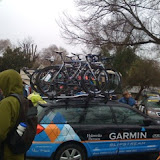
Well, it was really really really wet out there but tons of people were out in Davis nevertheless. I got some pics -- although my phone cam was not working great in the pouring rain. Anyway - here they are, including one of Floyd Landis ..


Tour of California before the start in Davis

Friday, February 13, 2009

Here comes the tour (of California) --- Davis is going big ---


Very excited that the Tour of California is starting in Davis this year (for Stage 1 on Sunday). It should be a good stage --- from Davis to Santa Rosa.

And there are many many big names in the tour this year - even more than last year. In particular of course is Lance Armstrong. I have been a big fan of Lance for many many years -- since I encountered him in Palo Alto when I was a grad. student. He had just won the World Championship and was in town to sing autographs and hang out at Wheelsmith, the best bike shop in the area. I was just getting into cycling and was going to Wheelsmith for some other reason and there was Lance. I got him to sign a few things and then thought, what would be coolest would be if he signed my favorite T-shirt (which I am wearing in the picture here). And he made my day by saying "Cool shirt" and asking where I got it.

Anyway --- it is going to be a big big day in Davis tomorrow with Lance Armstrong, and a whole gaggle of big time cyclists here in the best biking town in the country.

And here are some links related to the race ...

NSF looking OK in revised stimulus bill

Just downloaded what I think is the current bill that the House just passed for the stimulus.  And it looks like the National Science Foundation is coming out OK.  It says


NATIONAL SCIENCE FOUNDATION
NSF is directed to submit to the House and Senate Committees on
Appropriations a spending plan, signed by the Director, detailing its intended
allocation offunds provided in this Act within 60 days of enactment of this Act.
RESEARCH AND RELATED ACTIVITIES

For research and related activities, the conference agreement provides a total
of $2,500,000,000, to remain available until September 30,2010. Within this
amount, $300,000,000 shall be available solely for the major research
instrumentation program and $200,000,000 shall be available for activities
authorized by title II of Public Law 100-570 for academic facilities modernization.
In allocating the resources provided under this heading, the conferees direct that
NSF support all research divisions and support advancements in supercomputing
technology.

EDUCATION AND HUMAN RESOURCES
The conference agreement includes $100,000,000 for education and human
resources, to remain available until September 30, 2010. These funds shall be
allocated as follows:
Robert Noyce Scholarship Program .......................... .
Math and Science Partnerships ................................. .
Professional Science Master's Programs .................. .
$60,000,000
25,000,000
15,000,000
MAJOR RESEARCH EQUIPMENT AND FACILITIES CONSTRUCTION
The conference agreement includes $400,000,000 for major research
equipment and facilities construction, to remain available until September 30,
2010.
OFFICE OF INSPECTOR GENERAL
The conference agreement includes $2,000,000 for the Office of Inspector
General, to remain available until SeptemberJO, 2013.


"

Thursday, February 12, 2009

Google LOVES Darwin


Love that image on Google in honor of Darwin's 200th.  You go google. 

Wednesday, February 11, 2009

Charles Darwin relic hidden in the chimp and human genomes

So - in honor of Charles Darwin and as a follow up to my analysis of Sarah Palin's name (which amazingly showed as a best hit a fungus called B. fuckeliana) I decided today to do some blast searches with old Charlie D.'s name. You see CHARLES DARWIN includes letters that all are abbreviations of amino acids that make up proteins, so you can compare his name, pretending it is a protein, to proteins from other organisms.

So I went to the NCBI blast page and did a BLASTP search. Blastp searches a peptide against a database of peptides and identifies in the database sequences if one or more have similar amino-acid sequences to the one used to search (which is known as the query) . To make this work, I had to adjust some of the default parameters to make it possible to better detect short matches (I raised the # of expected matches to 10000).

Alas, no good matches convincing matches to known or predicted proteins came up. So I was sad. Then I said, what if Darwin was hiden in the genome of some organism? So I did a "translational" blast search called tblastn which takes a peptide and searches it against a DNA database and translates the DNA into all possible peptides it could encode. When one does this, one can possibly find "hidden" proteins or relics of proteins in the DNA that may not have been labelled as proteins by whomever analzyed the DNA data.

And what did I find by this Tblastn search? A jackpot to make evolutionary biologists VERY happy. The best matches for CHARLESDARWIN the peptide? Pan troglodytes. AKA Chimps. And humans (the matches were equally strong).

So - hidden in the human and Chimp genomes is a relic of one Charles Darwin. Happy Birthday Charlie.

----------------------------------------------
See search results below:

Score E
Sequences producing significant alignments: (Bits) Value


gb|AC199643.3| Pan troglodytes BAC clone CH251-444E8 from chr... 25.8 1930
gb|AC093749.3| Homo sapiens BAC clone RP11-30B7 from 4, compl... 25.8 1930
gb|AF250324.1|AF250324 Homo sapiens chromosome 4q35 BAC clone... 25.8 1930
gb|AC217674.3| Pan troglodytes BAC clone CH251-398H5 from chr... 25.0 3549
gb|AC195095.2| Pan troglodytes BAC clone CH251-577A14 from ch... 25.0 3549
gb|AC188794.3| Pan troglodytes BAC clone CH251-69H24 from chr... 25.0 3549
gb|AC183104.3| Pan troglodytes BAC clone CH251-567E15 from ch... 25.0 3549
gb|AF105153.3| Homo sapiens alpha-satellite centromere border... 25.0 3549
emb|AL353763.14| Human DNA sequence from clone RP11-87H9 on c... 25.0 3549
gb|AC116618.4| Homo sapiens BAC clone RP11-98L17 from 4, comp... 25.0 3549
emb|CR786580.6| Human DNA sequence from clone RP11-764K9 on c... 25.0 3549
emb|AL591385.7| Human DNA sequence from clone RP11-391M20 on ... 25.0 3549
emb|AL445925.19| Human DNA sequence from clone RP11-403A15 on... 25.0 3549
emb|AL592183.10| Human DNA sequence from clone RP11-297D8 on ... 25.0 3549
ref|XM_787798.2| PREDICTED: Strongylocentrotus purpuratus sim... 24.3 6861
ref|XM_001201471.1| PREDICTED: Strongylocentrotus purpuratus ... 24.3 6861
gb|AC195625.1| Pan troglodytes BAC clone CH251-895L14 from ch... 23.9 7711
gb|AC175749.2| Pan troglodytes BAC clone CH251-1124N9 from ch... 23.9 7711


Download subject sequence spanning the                                    HSP Pan troglodytes BAC clone CH251-444E8 from chromosome 7, complete sequence Length=155150
Score = 25.8 bits (55), Expect = 1930, Method: Composition-based stats. Identities = 8/13 (61%), Positives = 11/13 (84%), Gaps = 0/13 (0%) Frame = -2

Query 1 ____ CHARLESDARWIN 13
_____________CH RLE D+++IN
Sbjct 145762 CHVRLEQDSKYIN 145724


gb|AC093749.3| Download subject sequence spanning the                                    HSP Homo sapiens BAC clone RP11-30B7 from 4, complete sequence Length=163102 Score = 25.8 bits (55), Expect = 1930, Method: Composition-based stats.
Identities = 8/13 (61%), Positives = 11/13 (84%), Gaps = 0/13 (0%) Frame = -3

Query 1 ___ CHARLESDARWIN 13
____________CH RLE D+++IN
Sbjct 31925 CHVRLEQDSKYIN 31887

Tuesday, February 10, 2009

10 simple ways to honor Charlie D (aka Darwin)

If you do not know, Thursday is a big day - Darwin Day 2009. A global celebration in honor of the 200th anniversary of Charles Darwin's birth. Today I am making a suggestion of 10 simple things you can do to honor Darwin:
  1. Read one of his books OTHER than Origin of Species (see Darwin online for some there). My favorite is the Voyage of the Beagle but there are many others.
  2. Stop using the terms Darwinism and Darwinian evolution (see Safina for more on this - I thought this article was a bit of overkill but still has some important points).
  3. Vote against anyone who says Intelligent Design should be taught in science class or that you should "teach the controversy." Or at least endorse right thinking candidates.
  4. Contribute to evolution education in some way - teaching, writing a book, releasing teaching materials, donate to a museum (e.g., California Academy) or other organization (e.g., NCSE) or even the cool HMS Beagle Project. Just help educate the world about the science of evolution.
  5. Attend some Darwin Day celebration(s).
  6. Get a cool evolution tattoo (see Zimmer for more) or display your support in some outward way.
  7. Support the National Science Foundation (if you are in the US) as they are the strongest supporters of Evolution related research.
  8. Name your kid or pet or boat or city after him.
  9. Visit the Galapagos or at least check out the Darwin Station online.(see pics below ...)
  10. Insert your own here .....

Saturday, February 07, 2009

Open Evolution: Kudos to SMBE for creating a new Open Access publication - Genome Biology and Evolution

Another sign that Open Access is spreading.  SMBE, which publishes the journal MBE (Molecular Biology and Evolution) is announcing the creation of a new journal - Genome Biology and Evolution (GBE).  And happily it will be an Open Access journal being published by Oxford under the Oxford Open system (not quite a full creative commons license like PLoS journals, but pretty good).  I am VERY pleased to see this, especially since I quit the Editorial Board at MBE mostly because they were not moving fast enough to Open Access for me.  Kudos to SMBE, Bill Martin (the new Editor in Chief of GBE) and all the folks at Oxford for doing a good thing.

Monday, February 02, 2009

Please - bash my latest paper - for the benefit of humanity


My lab has a new paper that just came out on the sequencing and analysis of the genome of a pretty cool (or hot actually) bacterium, Thermomicrobium roseum, which was isolated from a Toadstool Spring, an alkaline siliceous hotspring in Yellowstone National Park. This paper is from a grant we had when I was at TIGR as part of the "Assembling the Tree of Life" program at NSF. Our grant was focused on generating genome sequences from phyla of bacteria for which no genomes were available.

At the time this species was a representative of a phylum that had no genomes. After we started sequencing, the phylum was dissolved, but never mind that for now. We report what I think are some very interesting things in the paper. Among them:
  • We report the first example of a plasmid that encodes all the genes needed for chemotaxis including all the genes for making a flagellum. Given that they are on a plasmid this suggests that motility could be easily transfered between species.
  • We report experimental work and genome analysis that helps understand the novel membrane and cell wall structure in this species.
  • This is the first thermophile known to oxidize carbon monoxide
But I am not writing per se about the things I like about our paper. I am instead asking people out there to find things wrong with our paper. Why am I doing this? Because this paper is part of a broader experiment in publishing in that it is in PLoS One. And one of the main benefits of PLoS One is the features that allows commenting on publications. I personally believe such features are part of the future of scientific publication. But it is currently unclear just how effectively such commenting features are used (note Euan Addie is doing a survey about comments on PLoS One papers here).

So I am offering up my paper as a case study. If you comment and ask questions or make critiques, I will try to respond. And if you think something in our paper is wrong or weird, please say so. If you think something in our paper is supported by other work we do not cite, please say this too. If you have anything useful to say, please make comments.

How do you do this?
  • Go to the paper at the PLoS One Web Site.
  • In the upper right click on "Login" if you have an account or "Create account" if you do not.
  • Return to the paper once you are logged in
  • Find some part of the text you want to comment on
  • Highlight that text and click over on the right "Add a note" or "Make a comment"
  • Fire away.

Harold Varmus on Science Friday

There was a very interesting interview on Science Friday last week.  The discussion was with Harold Varmus (see Science Friday Archives: Harold Varmus).
In the interview, Varmus discussed his new book, his role as an advisor to Obama, and some issues relating to Open Access.  I found his comments to be very interesting and insightful and it is worth listening to.  

Sunday, February 01, 2009

Pictures from Yolo Basin - Bitterns, Night Herons, Owl

Yolo Basin

An ever more famous science blogger

Just a little one here. Pam Ronald, a professor and blogger here at Davis is featured on the home page of CNN.COM in a story about "Fighting Hunger with Flood-Tolerant Rice." You can read about it at CNN or learn more about what Pam has been doing with rice from her blog or her book "Tomorrow's Table" that she wrote with her husband.

Thursday, January 29, 2009

Nice little PLoS reference by Nicholas Kristof in the Times ...

Just a quick one here. In an article in today's Times, Nicholas Kristof writes about "Putting Torture Behind Us" and he has a little PLoS reference there ...
"Granted, returning the base to Cuba may not be politically realistic. So here’s a fallback alternative: turn the base into a research center for tropical diseases.

This was proposed in a medical journal, PLoS Neglected Tropical Diseases, a year ago, and it makes more sense now than ever

In Latin America and the Caribbean, there are still more than half-a-million cases annually of dengue fever (which causes excruciating pain and sometimes death), nearly 50,000 new cases of leprosy and more than 700,000 cases of elephantiasis (which causes grotesque deformities). In addition, 50 million Latin Americans have hookworms inside them, often causing anemia and making it more difficult for children to concentrate in school.

Peter Hotez, the president of the Sabin Vaccine Institute at George Washington University and the editor of PLoS Neglected Tropical Diseases, says that an international center on Guantánamo could become a symbol of United States cooperation in the region.

Imagine if people around the world came to think of Guantánamo as a place where America led a battle against hookworms and leprosy. That would help us fight terrorism far more effectively than the prison at Guantánamo ever did.."

Hat tip to Chris Schelleng for pointing this out. The original PLoS NTD article by Peter Hotez is here.

Wednesday, January 28, 2009

What's better than brain doping? Cello Scrotum is what.

OK I have a lot to learn. I was (and still am) pretty proud of the April 1 prank I pulled off this year with many other bloggers announcing a fake crackdown on brain doping. But my joke is not even close to this one. A letter in a recent issue of BMJ has announced that the malady known as Cello Scrotum was in fact made up. Why did they make this up? In response to a publication about guitar nipple (for more on this see CNN and the Times Online). And now they have confessed only 35 years later.

And I must say - God Bless Pubmed Central. Because here is the original very brief letter which I am posting below:

Tuesday, January 27, 2009

Benefits of Open Access: enabling musical interpretations of human genomics ...

Not this is one of the most creative uses of open access science publications I have seen in a while. The video is from a paper by Dan Falush and colleagues that was in PLoS Genetics. Listen/see how the music changes with the genetics/migration of humans.


So I guess given some of my recent posts, we must ask what should we call this? Musicomics (which has a following but most of the use of the term seems to refer to music and comics together, although I did find one site with a reference that is about genomics) or genomusic (most of which seems to refer to people named Geno making music). Maybe, maybe, we just should say it is "nameless" but nice.

Anyway --- a nice use of open access --- the material from the PLoS Genetics paper is under a broad Creative Commons license and thus this type of use is allowed (and the source is attributed in the YouTube notes). Not sure about the exact details of the origins of the music for the video, but Dan Falush has hinted to me that it was some spontaneous contribution by a band in LA.

Wednesday, January 21, 2009

Obama's Science Team Big on Evolution

Much has been written and will be written about how Obama is taking science seriously.  To me, one great sign of this is that not only is evolution OK to talk about now, but - gasp - many of his science team actually have worked on evolution.   For example:
  • Eric Lander, part of Obama's council of advisors on science and technology, has written many papers either directly or indirectly about evolution. 
  • Harold Varmus also on this Council, has written about evolution of viruses (e.g. here),
  •  Jane Lubchenco is an ecologist who in much of her work has an evolutionary ecology angle
Even John Holdren, who is more of a physicist and as far as I can tell has not written explicitly about evolution recently certainly discussed it in some of his earlier publications with Paul Ehrlich.  

So - not only is science in general and life science in particular on the upswing.  But evolution is too.  Maybe this is why Darwin endorsed Obama so many months back. 

Tuesday, January 20, 2009

The Bush Administration IS NOT and WAS NOT anti-science

So much has been written about the supposed anti-science stance of the Bush administration (see for example Chris Mooney, AFP, many Nobel laureates, etc  and even me).  But I have been obsessing about this in my head for some time now.  And I think it misses the point.  Bush and his administration have not really been anti-science.  There I said it.  Ready to smack me over the head?

Before you do that.  Wait.  What I think Bush is is even more insidious.  He is anti-evidence.  Or, in other words, he does not believe science should be used to discover things but instead simply as a means to an end.  Sound familiar?  This was his approach to weapons, torture, Guantanamo, gathering intelligence about US citizens, and so on.   All these things were justified because evidence and objectively testing multiple possibilities was not really needed - we knew the answer and just had to back it up with something consistent with the theory.  In essence, everything he did titled against evidence in all sorts of areas.  

So - even though he was not anti-science per se.  The anti-evidence attitude hit scientists really hard.  Science is NOT about just trying to get to an end.  It is also about discovery.  And thus I look forward to a president who believes science is a way to discover things about the world that we do not already know.

Monday, January 19, 2009

You could call it symbiomics (but please do not)... but whatever name you use, this is $^@#&* so cool.

Once again, Nancy Moran's lab has knocked the scientific wind out of me with a cool paper. This seems to happen every 6 months or so (and I hope my paper with her lab a few years ago knocked the wind out of some others). And this new one, even though it is in a non OA journal which I usually avoid writing about here, is so cool, I just had to say something. So, if you are interested in a brilliant study of "The Dynamics and Time Scale of Ongoing Genomic Erosion in Symbiotic Bacteria" see the recent Science paper by Moran, Heather McLaughlin and Rotem Sorek. Here are some key lines that summarize some of what they did:
We documented the dynamics of symbiont genome evolution by sequencing seven strains of Buchnera aphidicola from pea aphid hosts....
....A. pisum is native to Eurasia, but has been introduced worldwide. It was first detected in North America in the 1870s (11). We sequenced the genomes of seven Buchnera-Ap strains descended from two colonizers of North America (and hence diverging up to 135 years ago), including two strains diverging in the laboratory for 7.5 years. Solexa sequencing was combined with verification by Sanger sequencing (12), to determine genomic sequences of these seven strains (Table 1)....
...Our estimated mutation rate for base changes was unexpectedly high: more than 10 times the previous estimates of mutation rate calculated on the basis of silent site divergences in both Buchnera and free-living bacteria...
...Our model predicts that the initial step leading to genome reduction is a shift in nucleotide composition toward higher A+T content....

Alas, I am really busy right now finishing some grants and papers or I would try to write more, especially since some may not be able to get this paper.  Note for you conflict of interest aficionados -  much of the sequencing for this project was done at the Joint Genome Institute where I have an Adjunct appointment.

Saturday, January 17, 2009

Thursday, January 15, 2009

Worst New Omics Word Award: Museomics

OK.  So I coined my my omics word many years ago (phylogenomics).  Fine.  Sue me.  But the spread of omics words is getting really icky.  And a new one really seems lame.  The word is "museomics"which I saw for the first time in a press release today from Cold Spring Harbor Press about a paper in Genome Research. 

I mean, the study of the Tasmanian Tiger seems like it could be interesting (have not read the paper) and there is some really fun stuff happening these days using Roche/454 sequencing. 

But meseomics?  Not to disparage museums which are critical to all of biology in my opinion.  But to me the term in a way treats museums as simply a place we store organisms before we get DNA out of them.  For this, the team at Penn St. that led this project and apparently coined the term museomics (see here where they define the term) is getting my new "Worst New Omics Word Award." 

In addition I am proposing my favorite new Omics words using their model:
  1. Roadkillomics (to go along with roadside field guides)
  2. Backyardomics (e.g., could be some sort of native plant thing)
  3. Hospitalomics (e.g., MRSA)
  4. Backoftheenvelopomics (for the anthrax case)
  5. Stuffinmypocketomics (hey, I have found some $&%$ stuff there)
  6. Restaurantomics (e.g., O157H7)
  7. Footballomics (there have been studies of MRSA transmission in games, why not omics)
  8. Slowfoodomics (genomics of things you get within 50 miles of your neighborhood)
  9. Ebayomics (genomics of things you get off Ebay)
  10. Stuffthecatdraggedinomics (my cats would like this)
  11. Wherethesundontshinomics (human microbiome?)
Any others suggestions?

Tuesday, January 13, 2009

Calling all phylogeneticists - we need your help with metagenomic data

I have decided to post a question here to my blog requesting help from phylogeneticists everywhere in doing phylogenetic analysis of data from metagenomic projects. Here I will try to describe the problem and then hopefully people out there can chime in on what they think we/others should do to handle this type of data.

So here is the deal. We would like to perform a variety of phylogenetic analyses of data from "environmental shotgun sequencing (ESS)" projects in which one isolates DNA from an environmental sample (e.g., soil, water) and then randomly sequences fragments of that DNA. ESS is in essence a subset of "metagenomics" which is basically the study of the genomes of organisms from environmental samples. (I wrote a brief piece on ESS in PLoS Biology last year which can be found here).

Though there are lots of things we would like to do with phylogenetic analysis of this type of data, I am going to focus here on one specific thing. We would like to take sequence reads that contain matches to specific gene/gene family (e.g., RecA, my favorite gene), build a multple sequence alignment that includes these reads as well as all members of this gene family from known organisms, and then build phylogenetic trees from these alignments. (And by we here I mean like totally lots of people, incliding in particular a Gordon and Betty Moore Foundation funded project called iSEEM I am working on with the labs of Katie Pollard and Jessica Green)

The challenge with this is really two things. First, we want to analyze just the reads themselves (i.e., we do not want to use assemblies you can make from this type of data). Second, and more importantly, we want to include in our analysis sequence reads that only cover small, not necessarily overlapping regions of the "full length" sequence alignments for the family.
The alignment would look something like
    sequence 1 XXXXXXXXXXXXXXXXXXXXXXXXXXXXXXXXXX
    fragment 1 XXXXXXXXX-------------------------
    sequence 2 XXXXXXXXXXXXXXXXXXXXXXXXXXXXXXXXXX
    fragment 2 ---------XXXXXXXXXXXX-------------
    fragment 3 ---------------------XXXXXXXXXXXXX
    fragment 4 ----XXXXXXXXXXXXXXXXXX------------
    sequence 3 XXXXXXXXXXXXXXXXXXXXXXXXXXXXXXXXXX
    sequence 4 XXXXXXXXXXXXXXXXXXXXXXXXXXXXXXXXXX
    sequence 5 XXXXXXXXXXXXXXXXXXXXXXXXXXXXXXXXXX
    fragment 5 -----------------------XXXXXXXXXXX- 
    where Xs are the regions covered by the sequences/fragments (could be DNA or amino acids)

We want to build trees from these alignments with the hope of using them to learn lots of cool things about the evolution of the fragments and the species from which they come. I can provide more information but really the key part for the phylogenetics here is the nature of the alignment.

In the past, I have decided to constrain my analyses to NOT deal with this type of alignments. I have either analyzed each fragment on its own or we have built a multiple alignment but only inlcuded fragments that cover more than 3/4 of the full length sequence and thus the matrix is much more filled out. Such an alignment would look like this


    sequence 1 XXXXXXXXXXXXXXXXXXXXXXXXXXXXXXXXXX
    fragment 1 XXXXXXXXXXXXXXXXXXXXXXXXXXX-------
    sequence 2 XXXXXXXXXXXXXXXXXXXXXXXXXXXXXXXXXX
    fragment 2 --XXXXXXXXXXXXXXXXXXXXXXXX--------
    fragment 3 -----XXXXXXXXXXXXXXXXXXXXXXXXXXXXX
    fragment 4 ----XXXXXXXXXXXXXXXXXXXXXXXXXXXX--
    sequence 3 XXXXXXXXXXXXXXXXXXXXXXXXXXXXXXXXXX
    sequence 4 XXXXXXXXXXXXXXXXXXXXXXXXXXXXXXXXXX
    sequence 5 XXXXXXXXXXXXXXXXXXXXXXXXXXXXXXXXXX
    fragment 5 --XXXXXXXXXXXXXXXXXXXXXXXXXXXXXXX- 
But we really want to include the smaller fragments in our analysis. And we are just not certain how to best do this. We know LOTs of people out there think of similar problems in terms of sparse matrices, supermatrices, supertrees, EST data, etc. And we have ideas about how to do this and are asking around by email some phylogenetics gurus we know. But I thought it might be fun to have the discussion on a blog rather than by email.

So again, how might one best build phylogenetic trees from data that looks like this?

    sequence 1 XXXXXXXXXXXXXXXXXXXXXXXXXXXXXXXXXX
    fragment 1 XXXXXXXXX-------------------------
    sequence 2 XXXXXXXXXXXXXXXXXXXXXXXXXXXXXXXXXX
    fragment 2 ---------XXXXXXXXXXXX-------------
    fragment 3 ---------------------XXXXXXXXXXXXX
    fragment 4 ----XXXXXXXXXXXXXXXXXX------------
    sequence 3 XXXXXXXXXXXXXXXXXXXXXXXXXXXXXXXXXX
    sequence 4 XXXXXXXXXXXXXXXXXXXXXXXXXXXXXXXXXX
    sequence 5 XXXXXXXXXXXXXXXXXXXXXXXXXXXXXXXXXX
    fragment 5 -----------------------XXXXXXXXXXX- 

And from these trees we want to place each fragment relative to (1) the full length sequences and (2) to each other if possible. We also, of course, want branch lengths to reflect some sort of amount of evolution and thus do not just want a cladogram.

Any suggestions would be appreciated. Fire away with questions too ...

Monday, January 12, 2009

Computational Biologists bring together some of the "best jobs" in the US

Check out the WSJ article on "The Best and Worst Jobs in the U.S. - WSJ.com"

The top 5 are
1. Mathematician
2. Actuary
3. Statistician
4. Biologist
5. Software Engineer

Seems like I know a fair # of people who combine #1, #3, #4 and #5 although rarely in equal amounts. I am not sure if anyone out there combines all of the top 5 but there must be some scientist/actuaries doing this computational biology right? Seems like a pretty strange list to me in some ways, but I must say, being a mathematically inclined computational biologist is pretty fun. Now if I only knew statistics ...

Hat tip to Lior Pachter for posting this to Facebook where I found it.

Acid Rock Bacteria Genome ...

Just a little plug for a new paper of which I am a co-author. This is a report on the analysis of the genome sequence of Acidithiobacillus ferrooxidans which was just published in BMC Genomics (an open access journal, by the way). This paper was a long long time coming - the genome was sequenced when I was at TIGR many years ago (Herve Tettelin coordinated most of the work). Since I was interested in the biology of this bug I volunteered to help turn the sequence into a paper, but was pretty lame about doing that. Thankfully David Holmes and Jorge Valdes in Chile helped make a paper from the data and much additional analyses. Here is the abstract:
Background
Acidithiobacillus ferrooxidans is a major participant in consortia of microorganisms used for the industrial recovery of copper (bioleaching or biomining). It is a chemolithoautrophic, γ-proteobacterium using energy from the oxidation of iron- and sulfur-containing minerals for growth. It thrives at extremely low pH (pH 1–2) and fixes both carbon and nitrogen from the atmosphere. It solubilizes copper and other metals from rocks and plays an important role in nutrient and metal biogeochemical cycling in acid environments. The lack of a well-developed system for genetic manipulation has prevented thorough exploration of its physiology. Also, confusion has been caused by prior metabolic models constructed based upon the examination of multiple, and sometimes distantly related, strains of the microorganism.

Results
The genome of the type strain A. ferrooxidans ATCC 23270 was sequenced and annotated to identify general features and provide a framework for in silico metabolic reconstruction. Earlier models of iron and sulfur oxidation, biofilm formation, quorum sensing, inorganic ion uptake, and amino acid metabolism are confirmed and extended. Initial models are presented for central carbon metabolism, anaerobic metabolism (including sulfur reduction, hydrogen metabolism and nitrogen fixation), stress responses, DNA repair, and metal and toxic compound fluxes.

Conclusion
Bioinformatics analysis provides a valuable platform for gene discovery and functional prediction that helps explain the activity of A. ferrooxidans in industrial bioleaching and its role as a primary producer in acidic environments. An analysis of the genome of the type strain provides a coherent view of its gene content and metabolic potential.

Stan Falkow, only 74 and getting more famous by the day

Nice article in USA Today about Stan Falkow focusing in part on his Lasker Award. Good to see him continue to get some props as he, well, rocks. Note - I wrote about him getting a Lasker Award four months ago here but maybe I was too early?

Saturday, January 10, 2009

Thanks "The Open Lab"

Very happy to get this email:

Many congratulations that your post (check http://scienceblogs.com/clock/2009/01/the_open_laboratory_2008_and_t.php for which one) was selected to be part of this year's print anthology of the best science blogging on the web.

Check out the collection at the link. There is some fun stuff there. I was selected for what else, my April Fools prank about brain doping. On the one hand, I wish something I wrote about science or policy was picked. On the other hand, I consider this April 1 joke of the best things I have done on the web ...

Tuesday, January 06, 2009

Ad for Genomics Faculty Position at UC Davis

Still getting back into things after being out sick ... here is an Ad for a job everyone should want ...

The UC Davis Genome Center integrates experimental and computational approaches to address key problems at the forefront of genomics. The Center is housed in a new research building with state-of-the-art computational and laboratory facilities and currently comprises 14 experimental and computational faculty. These faculty are developing an internationally recognized program in genomics and computational biology at Davis, building on and enhancing the unique strengths and unmatched breadth of the life sciences on the UC Davis campus.

The Genome Center invites applications for tenure-track faculty positions in all areas of genomics with emphasis on next-generation proteomics and statistical genomics involving animal, plant or microbial systems. Applicants interested in genomic approaches to human diseases and investigators employing large-scale, technology-driven approaches that complement existing strengths at UC Davis are particularly encouraged to apply. Candidates should be strongly motivated by the biological importance of their research and should value the opportunity to work in close collaboration with other groups and disciplines.

Candidates may be at any academic level. At the senior level, we invite applications from prominent scientists with distinguished records of research, teaching, and leadership in genomics. At the junior level, we invite applications from candidates whose accomplishments in innovative research and commitments to teaching demonstrate their potential to develop into the future leaders in these fields.

These positions require a Ph.D. or equivalent. Appointments will be at the Assistant, Associate or Full Professor level in an appropriate academic department in any of six schools, or colleges. The position will remain open until filled. For fullest consideration, applicants should submit a letter of application, a curriculum vitae, statements of research and teaching interests, and the names of at least five references to the Genome Center Web site www.genomecenter.ucdavis.edu by January 15, 2009.

The University of California is an affirmative action/equal opportunity employer

Tuesday, December 30, 2008

What to do when your sick? Sickblogging (and a little bit about Adm. Dennis Blair)

Well, I have had some unpleasant winter bug that on top of everything my kids seems to have or at least have something similar.  It has been fun at night here to say the least.  I was hoping to get some work done over winter break especially since I was overwhelmed with teaching in the fall quarter.  That is not happening.  But in the few moments of peace here, I have looked for something to do --- and hey there is one thing I could do with only a little time.  Blogging.  And of course I am not alone in this.  So here are some links to others on sickblogging:
And what have I to say today?  Not much but here is a preview of things to come.  I have a feeling that Obama is stalking me scientifically.  Why?  Well, I am one or two steps removed from a huge number of his appointees and I plan to write about them in the next few weeks once I get better.  One things the science bloggers might not have heard about is the passion Adm. Dennis Blair has for science.  Dennis Blair is Obama's pick for DNI (Director of National Intelligence) and I know him through a program called the Defense Science Studies Group (DSSG).  I will write more about this later, but what I can say here is I think Blair is a brilliant pick by Obama.  Not only does he have a strong military and intelligence background, but more importantly to me, he believes in evidence, and is a strong supporter of science.  And below is a little pic of me getting my certificate from Adm. Blair.  

Tuesday, December 16, 2008

Open Evolution Highlights - the Population Genetics of dN/dS

An interesting new paper in PLoS Genetics (PLoS Genetics: The Population Genetics of dN/dS) by Sergey Kryazhimskiy and Josh Plotkin that discusses the use of the widely used parameter dN/dS (in essence a measure of the ratio of non synonymous to synonymous substitutions in protein coding genes). This parameter is commonly used to estimate the type of selection that has occurred in a protein coding gene.

Here is their summary of their article:
Since the time of Darwin, biologists have worked to identify instances of evolutionary adaptation. At the molecular scale, it is understood that adaptation should induce more genetic changes at amino acid altering sites in the genome, compared to amino acid–preserving sites. The ratio of substitution rates at such sites, denoted dN/dS, is therefore commonly used to detect proteins undergoing adaptation. This test was originally developed for application to distantly diverged genetic sequences, the differences among which represent substitutions along independent evolutionary lineages. Nonetheless, the dN/dS statistics are also frequently applied to genetic sequences sampled from a single population, the differences among which represent transient polymorphisms, not substitutions. Here, we show that the behavior of the dN/dS statistic is very different in these two cases. In particular, when applied to sequences from a single population, the dN/dS ratio is relatively insensitive to the strength of natural selection, and the anticipated signature of adaptive evolution, dN/dS>1, is violated. These results have implications for the interpretation of genetic variation sampled from a population. In particular, these results suggest that microbes may experience substantially stronger selective forces than previously thought.
The key to me is that it seems that many may have been using dN/dS ratios inappropriately when comparing samples within a species. For more, well, see the paper.

Monday, December 15, 2008

Obama indicates his clear support for science with Chu as Secretary of Energy

Well, say what you will about Steve Chu, but the fact that Obama has nominated him to be the Secretary of Energy is only a good sign for science and society as far as I am concerned.

It is a good sign for science because it shows explicitly Obama's respect and support for science. Most recent Secretaries of Energy have been non scientists (the #s depends on whether you count an engineer as a scientist - I do - but some don't) and Bush (who I want to say is out previous president but we still have him for another month) does not believe in evidence in any way, let alone science.

It is a good sign for society because it is important for the president to understand and respect science. So - some may criticize Chu for some issues - but none of the criticisms I have seen really hit home with me. Sure, I would like a Biologist in their in the Cabinet, but Chu seems to actually understand that the biological diversity of the planet is under threat from global change and he wants to do something about it. I cannot really ask for much more from a Physicist/Administrator. For full disclosure - I have an Adjunct position at LAwrence Berkeley Lab where Chu just happens to be the Director. So maybe I am not completely objective, but anyway, I think this is a good day all around.

Saturday, December 13, 2008

Creative Commons- New Video and Fundraising Campaign


Everyone interested in Open Access and the open spread of information should check out the new video from the Creative Commons folks. This is being released as part of a fundraising campaign for Creative Commons  and I recommend that people consider donating to this great organization.  As a side note, the video was directed by Jesse Dylan, the director of the Emmy- award winning "Yes We Can" Barack Obama campaign video and features musical artist will.i.am from the Black Eyed Peas. 

Friday, December 12, 2008

Outdoor Art at Robbins Hall

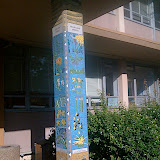
There is some relatively outdoor art at Robbins Hall at UC Davis. The art features plants, evolution and DNA -- things I dig. Here are some pics.

Robbins Hall Outdoor Art


The only issue I have is that they did not highlight the bacteria that should be present on the bean roots (legumes fix nitrogen via nitrogen fixing bacteria that hang out in nodules in the roots). But if we take an artistic interpretation of the bean roots, some of the little black triangles there can be considered root nodules.

Anyway, just thought I would share the pics. The art is worth checking out if you are in the area.

Tuesday, December 09, 2008

New Dope on "Cognitive Enhancement"

Well, the world works in mysterious ways. April 1 this year, I coordinated a blogosphere hoax regarding the NIH cracking down on brain doping. See Confessions of an April Fool and the Dope on Brain Doping for more detail. And then Nature and many other publications wrote about brain doping when Nature published the results of a survey suggesting many academics take cognitive enhancing drugs. And now, perhpas most interestingly, a group has written a letter to Nature has published a commentary arguing for more research into " responsible use of cognitive-enhancing drugs by the healthy"

From their conclusion:
Like all new technologies, cognitive enhancement can be used well or poorly. We should welcome new methods of improving our brain function. In a world in which human workspans and lifespans are increasing, cognitive enhancement tools — including the pharmacological — will be increasingly useful for improved quality of life and extended work productivity, as well as to stave off normal and pathological age-related cognitive declines. Safe and effective cognitive enhancers will benefit both the individual and society.

But it would also be foolish to ignore problems that such use of drugs could create or exacerbate. With this, as with other technologies, we need to think and work hard to maximize its benefits and minimize its harms

On the one hand I agree that more work in this area is good. On the other hand, people compete all the time based upon cognitive performance. The article discusses thesae and other issues and is worth looking at. As I am on Campus right now I am not sure if the letter is Open Access or not, but I hope it is.

See also
Hat tip to Bora for pointing this out.

Monday, December 08, 2008

Aphid-bacterial symbiosis in more detail, and in the New York Times

Nice little bit in the New York Times tomorrow about aphids and their symbionts. Henry Fountain writes (Observatory - How Tiny Insects, With a Little Help, Survive on Plant Sap - NYTimes.com) about a new article by Angela Douglas, one of the true pioneers of endosymbiont research. In her study she dissects in fine scale detail which essential amino acids are missing from the aphid sap only diet and which ones are made by the symbionts. Interestingly, the research apparently shows that the aphids may have figured out how to make methionine by themselves. I say apparently since I have been unable to track down the paper which I assume is coming out soon.

I should note, in one of the symbioses like this that I have studied with Nancy Moran we found that there were two symbionts contributing to the nutrition of the host. We found that one of the symbionts was likely making amino acids for the host (an insect called the glassy winged sharpshooter which eats only xylem sap) and the other symbiont was likley making vitamins. Nancy showed later with John McCutcheon that the symbiont that was making vitamins also was predicted to be making methionine for the host. So it seems possible there might be a missing symbiont in the aphid study? Although it would be cool if the aphid has figured out how to make an amino acid most animals are not able to make.

Hat tip to Max Lambert for pointing this out.

Tree of Life Gift Recommendation - Climate Kits

Just a quick recommendations for a gift for this holiday seasons that seems cool (metaphorically and literally). It is the climate kit. It comes from a friend of mine from college, Kathy Washienko and this is some of their text:
Kits are convenient collections of tools and tips that will help your family and friends reduce your environmental impact. By grouping what you need in one handy package, a kit makes it easy and fun to take energy-saving steps. Each kit is ultimately a gift to our environment, but will also save you money in reduced energy costs.* And every kit comes with our innovative "rebate." Check them out!
Sounds good to me. And given that I am trying here to promote trees (albeit phylogenetic ones, not real ones) I like that they are planting a tree and trying to be green.

Congrats to Pamela Ronald et al. for Award for Flood Resistant Rice

Congrats to Pam Ronald, colleague, Davis faculty member, and fellow science blogger for receiving a USDA Discovery Award for helping develop a flood resistant rice variety. For more on this see

Thursday, December 04, 2008

"Free" large scale sequencing for Department of Energy related projects ...

Interested in Department of Energy-related missions such as global carbon cycling, alternative energy production, and biogeochemistry? And want some genomes, metagenomes, or other things sequenced that are relevant to these topic areas? All you have to do is write a proposal to the Joint Genome Institute (JGI) Community Sequencing Program, get it selected by the review committee, and then the JGI will do the sequencing and some analysis for you.

Go to this web site to learn more ....JGI - CSP Overview.

Monday, December 01, 2008

UC Davis giving further props to blogs (mine that is)


Hey - thanks UC Davis.  Thanks for promoting blogs on your front page (under the Blogs, iTunes and Facebook section) and thanks for promoting my "Things Scientists should be thankful for"posting.  

Most recent post

A ton to be thankful for -- here is one part of that - all the acknowledgement sections from my scholarly papers

So - it is another Thanksgiving Day and in addition to thinking about family, and football, and Alice's Restaurant, I also think a lot a...