Thursday, February 20, 2014

Crosspost: Studying - not wantonly killing - the microbes around us and the rise of the "microbiology of the built environment"


Image by Thomas Fuchs - from article about the work of the BioBE Center in Scientific American "What's in Your Bacterial Aura?" by Peter Andrey Smith
Note - Crosspost from microBEnet. 
Imagine you have a camera with a special "anti-macro" lens.  This lens scrubs from any image all plants and animals and other "macro" organisms.  And this lens also highlights  the remaining living things - the microorganisms - anywhere in the frame (including those that were in or on the macro organisms removed from the image).  Maybe you get a pixel or two of some color depending on what microbes are there.  If you took pictures with this lens wherever you travelled, you would see that on every surface - in and on every macro organism - in the air -  in the water - in the soil - everywhere - there would be a teeming cloud of microbes.  Microbial ecosystems everywhere you look.
For many years, the cloud of microbes in our surroundings was overlooked.  And then, as science and technology advanced, we were able to "see" this world better.  One critical tool in seeing the hidden world of microbes has been DNA sequencing - which allows one to read the string (or sequence) of chemicals (abbreviated A, T, C and G) that make up the genomes of organisms.  By applying DNA sequencing methods to DNA isolated directly from environmental samples, researchers can infer what kinds of microbes where there - and make some predictions about what they could be doing.

Tree of Life from the Pace Lab website.
Such environmental DNA sequencing was pioneered by Norm Pace and colleagues in the 1980s.  And their work, and then the work of hundreds of other scientists, began to serve as a DNA-based lens to study the hidden world of microbes (for more information on this see the microBEnet guide Fact Sheet: rRNA in Evolutionary Studies and Environmental Sampling).
Though much was learned in those "early years" the work was slow and expensive - especially when one considers that there are thousands upon thousands of different kinds of microbes in most nooks and crannies of the planet. Then, in the 1990s, the cost and difficulty of DNA sequencing began to decrease at a faster than exponential rate. Driven in part by goals associated with human medicine, the improvements in DNA sequencing also allowed improved exploration of the microbial world.  For more information on the sequencing revolution and how it applies to microbes see the video of a talk I gave on the topic.
Some parts of the world attracted the most attention of the CSI-microbiology crews.  First came the oceans.  And then the soil.  And more recently - the "human microbiome" - the collection of microbes that live in and on people - has been a major area of focus.  All the while the technology got better - faster - cheaper - and easier.
And yet, despite all the advances, one part of our world still somehow was left a bit in the dark.  This was the "built environment" - the buildings - the cars - the planes - the water systems - and the other "unnatural" places that humans have created.  Perhaps because such environments are "unnatural" they did not attract as much attention of the microbial ecologists.  But now - finally - they have.  The rise of the "microbiology of the built environment" - as this area of work has become known - is seen in the existence of an Alfred P. Sloan Foundation funded program in this area.  Now - I should confess here that I am not an impartial observer.  I am funded by this Sloan Foundation program to run the "microbiology of the built environment network" (aka microBEnet).
The microbiology of the Built Environment network (microBEnet)
But you do not have to take my word that studies of the microbiology of the built environment are spreading.  You can instead see the growing number of scientific papers on the topic as well as news stories and other "chatter that we cover on our "microBEnet" blog.
But just a collection of papers and news stories and other information does not really do justice to the field.  I think the rise of the "microbiology of the built environment" field is highlighted perhaps best by two scientific studies published in the last two days that show the direction of the field and the enormous potential that it has.  I note - both studies were funded by grants from the Sloan Foundation as part of the microbiology of the built environment program. I describe these studies in more detail below.
The first of these papers was published yesterday in the journal Microbiome on January 28, 2014.  The paper is entitled "Microbes in the neonatal intensive care unit resemble those found in the gut of premature infants" and the authors are Brandon Brooks, Brian Firek, Christopher Miller, Itai Sharon, Brian Thomas, Robyn Baker, Michael Morowitz and Jillian Banfield.  I note - for full disclosure  - I have collaborated with Jill Banfield's lab on a recent study but was not involved in any way in this NICU work. (Also - see the recent blog post on microBEnet by Brandon Brooks about his work on this project).
Now - NICUs are really interesting places in terms of microbial ecology.  First, this is where many premature babies end up and such babies are known to have some challenges in terms of microbial colonization (not the least of which is that they are frequently delivered by C-section and also pumped full of antibiotics to limit infections).  NICUs are also supposed to be very "germ free" - kept that way in order to - again - limit infections.  A key question in terms of microbial ecology is - what microbes are present in NICUs (on surfaces, on people, in the air) and how does that impact the infants and their health.
In January of 2013, I wrote about one such study that was carried out by Krissi Hewitt, Frank Mannino, Antonio Gonzalez, John Chase, J. Gregory Caporaso, Scott Kelley and Rob Knight: New paper on bacterial diversity in NICUs.  And  then I wrote about another NICU study: New paper on microbes in NICUs & how they change w/ cleaning & over time.  This one was done by colleagues of mine at UC Davis (Nicholas Bokulich, David Mills and Mark Underwood).
The new paper is another piece of the story of the microbial ecology of NICUs.  In a press release from
UC Berkeley BioMed Central the work is summarized:
To investigate microbes in NICUs, researchers from the University of California, Berkley, swabbed the most touched surfaces of the unit as well as collecting fecal samples from two premature babies in a small pilot study. The surfaces swabbed included the sink, feeding and breathing tubes, hands of healthcare staff and parents, access knobs on the incubator and electronic devices at the nurses’ station, such as keyboard, mouse and cell phone.
They did extensive characterization of the microbial communities found in the NICU for each of two infants - looking at electronics, hands, incubators, sinks, surfaces, and tubes:

Figure 1 from here. Taxonomic classification of neonatal intensive care unit (NICU) room microbes for infants 1 and 2. Phylum-level (top) and family-level (bottom) classifications were assigned using the Ribosomal Database Project (RDP) classifier on assembled full-length 16S rRNA genes. Day of life (DOL) is plotted on the X axis and relative abundance, generated by ‘expectation maximization iterative reconstruction of genes from the environment’ (EMIRGE), is plotted on the Y axis.
This is basically what one can consider to be the first pass at generating the equivalent of a field guide for the microbial diversity in these NICUs.  The colors in the figure correspond to different taxonomic groups of microbes. The top half of the graph shows microbes grouped by Phylum and the bottom half shows them grouped by Family. Phylum is a higher level grouping - sort of the equivalent to "Animals" vs "Plants" and Family is a lower level grouping - akin to Mammals vs. Reptiles.
Another analysis that they do in this paper is that they try to pinpoint the possible "sources" of the microbes found in the infants.  They do this using a software tool called "SourceTracker."  The figure below shows the results for two infants (from left to right shows the progression of days).

The most probable source of gut colonizing microbes. This was generated using the source-sink characterization software, SourceTracker. Neonatal intensive care unit room sequences were designated as putative sources and fecal sequences sinks. Brooks et al. Microbiome 2014 2:1 doi:10.1186/2049-2618-2-1
They conducted a variety of other analyses of the microbes in the NICU and in and on the infants.  From the press release the researchers state:
When looking at the two infants fecal samples, to identify microbes living in their guts, they found that there was similarity with microbes identified from the NICU surfaces, with the most abundant similar to that those found on tubes.
They also state:
Some of the bacteria contained resistance genes, known as efflux pumps, for pumping out the disinfectant used to clean the unit, which gives clues as to why they are present in the NICU despite being subject to regular cleaning and sterilization. The microbes in the guts of premature babies also had these resistance genes.
Now I find this to be very intriguing.  If the infants are acquiring microbes from the NICU that are resistant to disinfectants, they might (key word here being might) also be acquiring microbes that are resistant to various antibiotics in the environment.  Certainly, the paper not only adds to our understanding of NICUs - it leaves one thinking of many new questions to ask.
The second of these papers was published today, January 29, 2014 in the journal PLOS One.  The paper is entitled Architectural Design Drives the Biogeography of Indoor Bacterial Communities and it comes from the "Biology of the Built Environment (BioBE) Center" at the University of Oregon.  The authors of the paper are Steven Kembel, James Meadow, Timothy O'Connor, Gwynne Mhuireach,  Maxwell Moriyama, Dale Northcutt, Jeff Kline, G.Z. Brown, Brendan Bohannan and Jessica Green. In the interest of full disclosure -the director of the BioBE Center and senior author on the paper - Jessica Green - is a colleague, collaborator, and friend.
The press release from the University of Oregon summarizes the project:
Researchers used specially filtered vacuum cleaners to collect dust in offices, classrooms, hallways, bathrooms and storage closets to develop a microbial snapshot of the building, based on where people congregated, how people used indoor spaces, and how these spaces were connected to allow human movement between them.
The samples were collected from the complex's centerpiece, Lillis Hall -- an airy, 136,000-square-foot facility, which has mechanical air ventilation throughout most of the building, except for a wing of offices where occupants wanted window ventilation. Lillis Hall was the first building in the Eugene-Springfield area to achieve LEED silver certification for its sustainability features. The building was chosen for the study because of its variety of different uses and its flexible operation. For example, Lillis Hall was designed to accommodate both mechanical and natural air ventilation, allowing researchers to observe whether ventilation influences indoor bacterial communities.
Screen Shot 2014-01-29 at 8.26.43 AM

The Building Studied
The paper claimed to show some interesting findings.  For example, they reported that "soil- and plant-associated bacteria were most common in unoccupied spaces, such as mechanical rooms and storage closets," and that "several different human-gut-associated bacteria, including lactobacillus, staphylococcus and clostridium, were most common in bathroom dust." Not overly surprising perhaps but interesting that they were able to detect such patterns.

Deinococcus radiodurans. From Wikipedia. TEM acquired in the laboratory of Michael Daly.
They also reported that bacteria in the Deinococcus group were "some of the most common bacteria in the building."  This is of direct interest to me since I have worked on some of the microbes in this group on and off over the years.  In particular I worked on Deinococcus radiodurans one of the most radiation and desiccation resistant organisms known (as an aside - this has led to this bug getting all sorts of press - and even being called "Conan the Bacterium").  I started working on this bug during graduate school (where I studied the evolution of radiation resistance, among many things) and then moved in 1998 to The Institute for Genomic Research, and played a key role in the project to sequence and analyze its genome (PDF here) (note - back then - sequencing a bacterial genome was difficult and expensive).  In regard to Deinococcus in the current study from the BioBE Center James Meadow stated:
"They were found in all rooms, but more abundant in mechanically ventilated -- versus naturally ventilated -- rooms. That might suggest that they are accumulating over time while other bacteria dry out and die in buildings."
I find it refreshing and pleasing that these papers are published in "Open Access" journals wherein the papers are freely and openly available to all.  This to me highlights another aspect of microbiology of the built environment which is its growing connection to the public.

From "Ecosystem, sweet ecosystem" in the Boston Globe 8/2011

And it is pretty clear that there is a growing appreciation of microbiology of the built environment not just in the world of scientists and engineers but also to other fields (e.g., the BioBE Center is co-directed by an architect) but also in the general public.  This can be seen by the growing number of news stories discussing microbes in our buildings and other built environment locales.  And most importantly, many of these stories are focusing on the need to understand the full ecology of these microbial systems (e.g., more nuanced with discussion of ecosystems and ecology and such (see for example this piece in the Boston Globe by Courtney Humphries: Ecosystem, sweet ecosystem).
Consider also Jessica Green's TED talks about the microbiology of the built environment, with hundreds of thousands of views:


Why is such an ecological focus important?  Well, first, that is what is needed to understand the microbiology of the built environment.  But more importantly, there is a detrimental story line about the microbes in our environment that is spreading like an infection.  This story line involves fear mongering about microbes and general germophobia.  According to many in the news media - when one hears that we are surrounded by a cloud of microbes - the immediate reaction is the desire to kill the germs and to clean and sterilize the world around us.  Put antibiotics into kitchen counters.  Use hand sanitizers 100 times a day.  Swab a surface and count the germs and run a news story about how disgusting everything is.  Filter out everything.  Sterilize the air, the floors, the walls, the children.  Kill the germs.  Kill the germs.  Kill the germs.
Such fear mongering may generate web hits an sell magazines and newspapers and improve Nielsen ratings.  But it is  very dangerous.  For the microbes in the world around us are mostly innocuous.  Sure - some are bad - causing disease.  But some are beneficial too.  And simply trying to kill or clean all places where we live and breathe is just not a good idea.  Overuse of antimicrobial and antibiotics will breed resistant strains which then could lead to problems if those strains infect organisms or if their genes spread to others.  And destroying an ecosystem to kill a few bad players has potentially disastrous consequences.  We know, for example, that antibiotic use in humans - though obviously useful in treating some infections - can lead to "dysbiosis" where the microbial community is messed up.  This in turn possibly may lead to various problems in the immune system (especially if the antibiotics were used early in childhood) and can also lead to being overrun by pathogens after antibiotics (ironic, to be overrun by a pathogen after using antibiotics to try to kill another pathogen).
Does such "dysbiosis" happen in our buildings and other parts of our built environment when we focus on killing or removing all the germs in any way we can?  Possibly.  And that is in part what the two labs who have published the papers I am focusing on here are working on.  What is the ecology of a NICU and does trying to keep everything completely sterile help or hurt?  What is the ecology of a high tech building and does all the air filtering and people traffic have an impact on the microbial ecosystem and in turn on the "health" of the building or the people in it?
This is what we need to know.  And we desperately need to turn the publics attention away from the "War Metaphor" focused on killing all microbes to a more nuanced ecological driven approach where people think about them microbial world much the way they are starting to think about National Parks and tropical rain forests.  Just as we would not argue for killing all mammals simply because one might be annoying us, we need to stop trying to kill all germs just because some do us harm.
How can we stop the germophobia and spread the message that not all microbes need to be killed?  Certainly more science and communication of science that focuses on the ecology of the built environment will help.  Another way is something we also see spreading which is through "citizen science" projects.  Engaging the public in studying the microbial ecology of the built environment is a great way to get them to think about the topic more deeply and to (hopefully) not subscribe to the obsessive germophobia going around.  Citizen science projects have been around for some time now and have been spreading rapidly in the last few years.  Examples include bird counts and surveys, protein folding analysis, comet discovery and star watching, and many many more.  A few years ago there were few, if any citizen science projects that focused on microbes.

Citizen Microbiology session at ASM 2013
That however has changed - largely in conjunction with the decrease in sequencing costs discussed above. Two years ago we (the microBEnet team) organized what I think was the first "Citizen Microbiology" meeting  and it was a great success.  This led us (myself and David Coil in my group) to organize an entire session focused on Citizen Microbiology at the annual "American Society for Microbiology" meeting last summer (for more detail see The Tree of Life: Thoughts on Citizen Microbiology and upcoming session at #ASM2013).  It too seemed to be a great success and it is relevant to note that there are now many citizen microbiology projects focusing on the built environment.  Examples include "Project MERCCURI" (which is coordinated by microBEnet and Darlene Cavalier of SciStarter), the Wildlife of Your Homes project (run by Rob Dunn and Holly Menninger), and The Home Microbiome Project run by Jack Gilbert and even an Aquarium project (run by Josh Neufeld).  These and other projects are engaging the public to participate in microbial diversity research and at the same time helping educate people about the hidden world of microbes found in the places we spend most of our lives.  And many of them are getting some good press too (e.g., see the Time Magazine article here).  The more people find out about such projects the better.
Overall, I see much good happening in regard to "microbiology of the built environment".  There is more funding - a growing number of papers - the papers cover interesting and important topics - there is increased good coverage in the scientific and popular press - and growing coverage in social media.  Each thing on its own might not be much to care about.  But all of it together suggests to me that we are seeing a transformation into an era where microbiology of the built environment - and the ecology of the microbial communities around us -  will be a standard topic when considering the world in which we live.  Sure - we have a long way to go and we are really just scratching the surface of understanding the microbiology of the built environment.  But I am hopeful that we will begin to not only better understand what microbes are out there and what they might be doing in our buildings and cars and water supplies and such, but also how we can design and engineer our built environment with microbes in mind.  Such "bio-informed design" as Jessica Green calls it would be a much much better thing than the "kill all the germs" we see as a pervasive sentiment today.
UPDATE Feb 2, 2014
Posted the article as a PDF to Figshare and have obtained the following DOI: 10.6084/m9.figshare.923520

UPDATE 2: Feb 4, 2013 - some additional notes and press coverage
I love that the last paragraph in the Kembel et al. paper starts with "Churchill famously stated that ‘‘[w]e shape our buildings, and afterwards our buildings shape us.’’"
Some press coverage of the two papers:

My personal best SPAM conference invite yet ...

Wow -- just got an email invitation to one of those SPAMMY conferences.  I quote the beginning below with the key part highlighted.  There really is nothing else to say.

Dear Dr. Jonathan Eisen ,
 
On behalf of the organizing committee, we cordially invite you to propose a Speech as the Session Chair on your recent drug discovery project in the field of Benjamin Franklin Award Presentation for the Session 803: Database, Data Integration, Knowledge Management and Informatics Platform for Drug R & D of the Stream 8: Bio-IT and Data Management in Drug Discovery at the 12th Annual Congress of International Drug Discovery Science & Technology (IDDST-2014) with the theme “Shaping the Bright Future of Drug Discovery”, which will be held during November 21-23, 2014, Suzhou, China. Your prompt reply with a speech proposal will be highly appreciated! With your support, we hope to make this year event different from any others.


Human stool as a tissue not a drug .. great idea from Smith, Kelly, Alm

Just got done reading this: Policy: How to regulate faecal transplants : Nature News & Comment by Mark Smith, Colleen Kelly and Eric Alm.  I was pointed to it by a Tweet from Marc Pallen


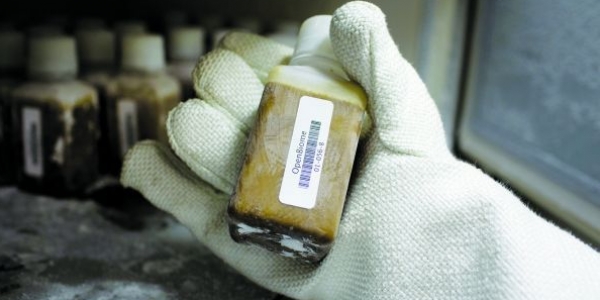
And, well, I rarely says this, but it kind of blew my mind. First, i should note that the authors (who include the cofounders of OpenBiome which I wrote about a few weeks ago.  Anyway, they argue that - especially in light of the use of stool transplants for various purposes - human stool should be considered as a tissue not a drug.  I have written and talked about the FDA getting involved in regulating fecal transplants quite a bit and confess this idea had never occurred to me.  Now - I don't work directly on fecal transplants, but I have been promoting the idea on and off that the human microbiome is in some ways akin to an organ and Smith et al. reference a similar argument in their article.  And it follows in a way that one could view the microbiome / stool as a tissue.  But I am not aware of anyone promoting this idea to the FDA in terms of regulation until this article (correct me if anyone knows any differently).


Anyway - just wanted to make people aware of this essay and add in my 1st impressions.

Monday, February 17, 2014

A kickstarter campaign to make a children's book about evolution

Cool. A kickstarter campaign to make a children's book about evolution. ...


Must read of the month: Show Me the Policy (on diversity at conferences)

Quick post here:

As many know I am a bit obsessed with the issue of gender balance at conferences.  And thus I was so happy to read the following post: show me the policy | cubist crystal.  It details how one can help improve diversity at meetings by making sure meeting organizers have a diversity policy in place.  It even gives suggested wording to answer invitations.  It has links to sites with information about diversity at meetings and links to other sites trying to collate information about meetings and their diversity.  The post is by Jenny Martin - a structural biologist and it should be required reading for all academics.

Hat tip to Karen James for pointing me to this.


Sunday, February 16, 2014

STEM Women: How Men Can Help, w/ Professor Jonathan Eisen (hey, that's me)

Just got done with an interview "STEM Women: How Men Can Help, with Professor Jonathan Eisen" done via Google Hangout with Buddhini Samarasinghe and Zuleyka Zavallos.

Video of the chat has been posted to Youtube.


And there is a Google Plus Event Page here.

The story behind “Programmable removal of bacterial strains by use of genome-targeting CRISPR-Cas systems”

Below is another in the "Story Behind the Paper" series.  This one is by Chase Beisel from NC State.

In this guest post, I tell the story behind the paper my colleagues and I recently published in mBio. This post briefly recounts the trials and travails of my research group's first publication and describes the remarkable versatility of CRISPR. Before launching into the highs and lows of the idea-to-paper process, I want to thank Jonathan for this unique opportunity to share our story.

CRISPR: an abbreviated tutorial for the uninitiated


Our paper offers a novel application of the CRISPR-Cas adaptive immune systems. Unlike humans'  adaptive immune systems, CRISPR-Cas systems use RNA to recognize foreign invaders. Recognition occurs through simple base pairing between the RNA (called CRISPR RNAs) and complementary foreign nucleic acids, leading to target cleavage and degradation. Through a poorly understood mechanism, these systems can acquire new CRISPR RNA-encoding sequences, providing immunity against future infections.

Overview of DNA-targeting CRISPR-Cas systems.
One of the remarkable aspects of CRISPR-Cas systems is that synthetic CRISPR RNAs can be designed to guide cleavage of almost any DNA sequence. This ability in turn has opened a remarkably broad set of applications, including genome editing, transcriptional activation and repression, phage defense, genotyping, synthetic restriction enzymes, and curing of latent viruses. I have no doubt that (1) I neglected to mention a few and (2) others will be reported in the oncoming months.

An idea is born

The story begins when I was a postdoc in the Storz lab at the National Institutes of Health. I was characterizing Hfq-binding small RNAs in E. coli and was interested in understanding and exploiting regulatory RNAs. It was during this time I learned about CRISPR-Cas systems. I was intrigued about the parallels between these systems and RNA interference--the focus of my PhD thesis--where the principal difference was that CRISPR-Cas systems seemed to go after DNA whereas RNA interference went after RNA. Note that this was also at a time (2010) when little was known about the system, let alone its biotechnological potential. At the time, the system had been shown to go after the DNA of foreign invaders, although one of the initial questions was why it didn't go after its own DNA. While excellent work by Luciano Marraffini and others showed that a few safeguards were in place to prevent self-targeting, other work by Rotem Sorek and Udi Qimron suggested or demonstrated that CRISPR could target the genome and (most importantly) that this was a bad thing.

The idea.
During a trip to the University of Washington to visit my colleague Georg Seelig, we concocted the idea of targeting the microbial genome with CRISPR on purpose. What was so appealing about the idea was that (1) we were inducing the equivalent of an autoimmune response, (2) targeting would be sequence-specific, and (3) the mechanism of attack was independent of how antibiotics act. For these two reasons, we saw genome-targeting CRISPR RNAs as a "smart" antibiotic that could selectively kill bacteria and circumvent antibiotic resistance. Suffice to say, we were excited.

Obtaining funding (or not)

Our first step was to obtain funding for this idea. We first tried the Gates Foundation and the USAMRMC, although neither organization funded the work. Later, I submitted the idea to ARO, NSF, and the Pew Research Foundation. Still no funding. Fortunately, an internal funding source at NC State University provided a small grant to pursue the idea. This grant and my start-up funds were sufficient to carry the project to completion.

The long research path

While Georg focused on other pursuits, I began my faculty position at NC State and made this idea one of my lab's first projects. My initial goal was to evaluate how plasmids encoding genome-targeting CRISPR RNAs affect transformation efficiency, an imperfect but reasonable proxy of killing. Heidi Klumpe, a talented undergraduate student who joined my fledgling lab, cloned most of our initial constructs. Unfortunately, we had to go through a few design rounds before finding a construct in which we could easily and cheaply clone in new CRISPR RNAs. During this time, one of my first graduate students, Ahmed Abdelshafy Gomaa, joined the group and began working with Heidi. The two made great progress and, after ample troubleshooting and optimization, settled on a system that showed large reductions in the transformation efficiency (~105) when targeting the genome. Anticipating the potential to be scooped (a common experience in the CRISPR field), I convinced Michelle Luo, a more recent graduate student in the group, to help advance the experiments. In the end, the three students were doing endless transformations and dilution plating, then counting colonies over and over again. I am grateful that they never complained.

What was intriguing about these experiments was that only two "design rules" needed to be followed: (1) find a protospacer-adjacent motif or PAM--a short sequence recognized by some Cas proteins--and (2) incorporate the adjacent sequence into a CRISPR RNA. It didn't matter which sequences we targeted, whether the sequences were in coding regions, non-coding regions, top strands, bottom strands. As long as we followed these rules, there was a tremendous reduction in the transformation efficiency.

Targeted removal. Credit: C. Beisel/mBio.
We next wanted to prove that the sequence specificity of killing could differentiate even closely related strains. After much debate about which strains to test, we chose our K-12 strain of E. coli and a B strain, one of its cousins. We needed to find unique sequences between the two genomes, and, although there are likely simple bioinformatics tools to do this, Ahmed manually went through the genomes to find unique sequences. Fortunately, he didn't have to work too hard despite the fact that the bacteria share 99% of the genomic content. The resulting tests confirmed our predictions: target one strain and only that strain transforms extremely poorly. We incorporated Salmonella to differentiate commensals and pathogens (and to increase the attractiveness of this work to publishers), although these experiments were delayed as we sought BSL2 approval.

A fruitful collaboration

During this time, I met Rodolphe Barrangou, a giant of the CRISPR field who was still working in industry. We struck up a friendship that later led to an ongoing collaboration once he decided to join NC State's faculty. Rodolphe has been working with Streptococcus thermophilus, which encodes four different CRISPR-Cas systems. Through our interactions, we decided that demonstrating genome targeting through two of its endogenous CRISPR-Cas systems would further strengthen the story. Fortunately, the data quickly came thanks to the efforts of Rodolphe's first lab member, Kurt Selle. With these data, we felt that we had a sufficient story to submit for publication.

The publication process

Based on the novelty of the idea, general interest in all things CRISPR, our data, and (to a certain degree) my own naivety, we shot high. Unfortunately, we didn't make it past the editors at Nature Biotechnology, so we next tried submitting a Brief Communication to Nature Chemical Biology. The editors were kind enough to send it out for review, although the reviewers were not so kind, questioning the novelty of the idea and its downstream potential. However, the reviews were extremely helpful as we repackaged the work and performed additional experiments demonstrating selective removal in mixed cultures and the selective titration of individual strains.

Encouraged by the new version of the paper, we next tried PNAS. However, we didn't make it past the Editorial Board, so we moved on to Nucleic Acids Research. Again, the editors said "no"--in this case, because our paper fell outside of the scope of the journal. Not sure where to go next, we chose mBio, an up-and-coming Open Access journal that publishes broadly across the field of microbiology. Half expecting another rejection before review, we were pleasantly surprised that the paper went out and received positive reviews. After a month of additional experiments, we were able to resubmit the final version that was accepted shortly thereafter. I received the acceptance email on December 20th--a wonderful Christmas present.

The aftermath

Matt Shipman in the the News Services Office at NC State prepared a press release for the article--a collaboration I would recommend to researchers who have not interacted with their institution's news office. That said, inaccurately written releases can promise too much, creating false impressions of the work's potential and (if nothing else) annoy your fellow colleagues.

Thankfully, our press release was picked up by a number of science websites. Nature also highlighted this work in its most recent issue, though I'm not sure whether their interest had anything to do with the press release. Most importantly, through the press release, Matt putt me in touch with Jonathan, and the rest is history.

Thursday, February 13, 2014

Publish or Perish: The Future of Scholarly Communications and Academic Careers #PublishPerish14

Meeting about to start and thought I would post announcement here too.  Follow on Twitter at #PublishPerish14 


Scholarly publishing is in a bit of turmoil.  This upheaval impacts not only the dissemination of knowledge but also the assessment of scholars (and thus their careers).  For two days in February 2014 at UC Davis we will cover some of the key changes in scholarly publishing with a focus on how they impact the careers of academics.  Some key details of the meeting are summarized below:
  • Sessions topics will focus on changes occurring in scholarly publishing (in journal publishing, other forms of digital publishing, peer review, and economics of publishing) and on changes in assessment (alt metrics, assessment by institutions, and new models for evaluating scholars).
  • Each session of the meeting will include a mix of a keynote talk, short talks, and a panel discussion by leading experts in the field.  Ample time will be provided for discussions and networking as well.
  • In addition, at the end of Day 1 there will be a special Keynote talk by Yochai Benkler from Harvard University on ”Open Access, Cooperation, and Commons: The (Uncertain) Retreat of Possessive Individualism in Networked Society“ followed by a reception.
  • This meeting is organized by the UC Davis Innovating Communication in Scholarship (ICIS) Project (icis.ucdavis.edu), which is a collaboration between Mario Biagioli (UC Davis School of Law), Mackenzie Smith (UC Davis University Library) and Jonathan Eisen (UC Davis Genome Center).

Session Topics and Confirmed Speakers/Panel Participants
DAY 1: Thursday, Feb 13th
  • 8 – 8:30 am | Registration
  • 8:30 – 9 am | Welcoming Remarks
  • 9 – 10:30 am | Session 1 | The Changing Nature of the Journal
    • Heather Joseph, Scholarly Publishing and Academic Resources Coalition
    • John Inglis, Cold Spring Harbor Laboratory & BioRxiv
    • Chris Kelty, UCLA
    • Gregg Gordon, Social Science Research Network
  • 10:30 – 11 am | Coffee
  • 11 am – 12:30 pm | Session 2 | Beyond Journals & New Forms of Digital Publishing
    • Carly Strasser, California Digital Library
    • Carl Boettiger, ROpenSci
    • Erik Kansa, Alexandria Archive Institute & Open Context
    • Kaitlin Thaney, Mozilla Science Lab
  • 12:30 – 2 pm | Lunch
  • 2 – 3:30 pm | Session 3 | Innovations in Peer Review
    • Victoria Stodden, Columbia University
    • Emily Ford, Portland State University
    • Ivan Oransky, Retraction Watch & New York University
    • Cesar A. Berrios-Otero, Faculty of 1000
    • Jonathan Dugan, Public Library Of Science
  • 3:30 – 4 pm | Venue Shift & Coffee
    • Note venue shift to Buehler Alumni Center, AGR Room for keynote address
  • 4 – 6 pm | Buehler Alumni Center, AGR Room | Keynote Address*
    • Yochai Benkler, Harvard University on “Open Access, Cooperation, and Commons: The (Uncertain) Retreat of Possessive Individualism in Networked Society”
  • 6 – 7 pm | Reception*
* Hosted jointly with the Mellon Initiative on Digital Cultures & the Provost’s Forums on the Future of the Public University and the Social Good

DAY 2: Friday, Feb 14th
  • 9 – 9:45 am | Opening Talk
    • Diane Harley, Center for Studies in Higher Education & UC Berkeley, “Predicting the future of scholarly communication: faculty values, disciplinary cultures, and advancing careers”
  • 9:45 – 11:15 am | Session 4 | Changing the Value Proposition of Publishing
    • Greg Tananbaum, ScholarNext
    • Peter Binfield, PeerJ
    • Allison Fish, UC Davis
    • Todd Vision, Dryad & UNC Chapel Hill
  • 11:15 – 11:30 am | Coffee
  • 11:30 – 1 pm | Session 5 | Altmetrics: Do They Measure Anything Useful?
    • Molly McCarthy, UC Davis
    • Nettie Lagace, National Information Standards Organization
    • Anurag Acharya, Google Scholar
    • Jennifer Lin, Public Library Of Science
  • 1:00 – 2:30 pm | Lunch
  • 2:30 – 4:00 pm | Session 6 | Assessment
    • Linda Katehi, Chancellor, UC Davis
    • Sarah Greene, Rapid Science
    • Margie Ferguson, Modern Language Association & UC Davis
    • Kerry Ann O’ Meara, University of Maryland
    • Josh Rosenbloom,  STAR METRICS
  • 4 – 4:15 pm | Coffee Break
  • 4:15 – 5 pm | Closing Discussion | What we have learned, where we are now, & what we need to do next
    • Discussants: Yochai Benkler (Harvard), Mario Biagioli (UC Davis), Jonathan Eisen (UC Davis), Josh Greenberg (Sloan Foundation), Heather Joseph (SPARC), and MacKenzie Smith (UC Davis).
  • 5 – 6 pm | Bonus Session | Lightning Talks

Wednesday, February 12, 2014

The Life Sciences Podcast on #OpenAccess

Quick post here.  There is a new podcast that may be of interest Episode 8: The open access debate | The Life Sciences Podcast.  From the Faculty of Life Science of the University of Manchester - they interviewed me, Alicia Wise from Elsevier, two librarians - Jan Wilkinson and Simon Bains and Andrea Baier from the British Ecological Survey and discuss multiple issues associated with open access publishing.

Tuesday, February 11, 2014

Nice collection in IJSEM on Integrating genomics into Microbial Systematics


Nice collection in IJSEM worth looking at.  The overview is particularly useful

Overview:
Other papers 

Monday, February 10, 2014

Are you a knitter? Interested in microbes? Well this is for you: knit a microbe for a Glasgow school

This is the first time in my life I wish I knew how to knit; Calling all knitters: we need germs! - The Glasgow South and Eastwood Extra.  Yup - there is an attempt to break a world record for the most hands washed in a single session - and the place doing this is calling for help in making knitted microbes.  They have even posted patterns for making knitted microbes including ones for Penicillium, Common cold, Swine Flu, TB, Cholera, and more.

From Pinterest.

And what could be better than this?  They have a Pinterest Board with pics of the ones they have received:


See below

Follow Glasgow CityOfScience's board Knitted Microbes on Pinterest.

Wednesday, February 05, 2014

Yes, it is a music video about missing bad germs after being sick (I'm cured by Aimee Mann)

Do you miss your bad germs after you were sick? If you do, this is for you ...


 Nice outfit too.  Found out about this from Laist.

Tuesday, February 04, 2014

"Phylogeny driven approaches to genomics and metagenomics": slides w/ audio from my talk at #UCDavis 1/29

Gave a talk here at UC Davis last week. Alas, not my best talk - too rushed. But, anyway, here is a video of the slideshow w/ audio. Title "Phylogeny driven approaches to genomics and metagenomics"


Monday, February 03, 2014

Simple but important paper on the personal microbiome

Figure 1.
Quick post.  Just saw this paper:

PLOS ONE: The Personal Human Oral Microbiome Obscures the Effects of Treatment on Periodontal Disease:

Schwarzberg K, Le R, Bharti B, Lindsay S, Casaburi G, et al. (2014) The Personal Human Oral Microbiome Obscures the Effects of Treatment on Periodontal Disease. PLoS ONE 9(1): e86708. doi:10.1371/journal.pone.0086708

It has multiple things of interest (certainly to me - as we are doing some work on the oral microbiome). But I do not have time right now to dig through all of it.  I want to just point out one very important line in it:
Our results highlight how understanding interpersonal variability among microbiomes is necessary for determining how polymicrobial diseases respond to treatment and disturbance
This is consistent with what has been a gut feeling of mine (and something I say in lots of interviews and talks) but for which I did not have any obvious citation in mind.  Now I do.

Sunday, February 02, 2014

A Torrents Site for Academics - Good idea - Wish We Had Thought of That (Oh wait ...)

Just saw a Tweet from Jeff Ross-Ibarra at UC Davis
It refers to this: Academics Launch Torrent Site to Share Papers and Datasets | TorrentFreak.  Nice idea.  And I hope it finds some uses.  Though I wish they had mentioned that Morgan Langille who was a post doc in my lab at the time launched a version of exactly such a site in 2010.  See for example
Now, Biotorrents has kind of wilted a bit over the years so I can see why they might not want to mention it.  But still, I think they should have.  In fact, perhaps they could have talked to Morgan Langille about some of his experiences with trying to run Biotorrents over the years ...

If anyone out there wants to track him down - Morgan is now an Assistant Professor at Dalhausie University.  See his Web site here.  Follow him on Twitter here.

UPDATE 1:15 PM 2/2/14

Just discovered that a few days ago Morgan Langille and others discussed this exact issue


Quick post - Outbreaker and the "Bayesian Reconstruction of Disease Outbreaks by Combining Epidemiologic and Genomic Data"

Interesting new paper out: PLOS Computational Biology: Bayesian Reconstruction of Disease Outbreaks by Combining Epidemiologic and Genomic Data.

Full Citation:  Jombart T, Cori A, Didelot X, Cauchemez S, Fraser C, et al. (2014) Bayesian Reconstruction of Disease Outbreaks by Combining Epidemiologic and Genomic Data. PLoS Comput Biol 10(1): e1003457. doi:10.1371/journal.pcbi.1003457

Abstract:
Recent years have seen progress in the development of statistically rigorous frameworks to infer outbreak transmission trees (“who infected whom”) from epidemiological and genetic data. Making use of pathogen genome sequences in such analyses remains a challenge, however, with a variety of heuristic approaches having been explored to date. We introduce a statistical method exploiting both pathogen sequences and collection dates to unravel the dynamics of densely sampled outbreaks. Our approach identifies likely transmission events and infers dates of infections, unobserved cases and separate introductions of the disease. It also proves useful for inferring numbers of secondary infections and identifying heterogeneous infectivity and super-spreaders. After testing our approach using simulations, we illustrate the method with the analysis of the beginning of the 2003 Singaporean outbreak of Severe Acute Respiratory Syndrome (SARS), providing new insights into the early stage of this epidemic. Our approach is the first tool for disease outbreak reconstruction from genetic data widely available as free software, the R package outbreaker. It is applicable to various densely sampled epidemics, and improves previous approaches by detecting unobserved and imported cases, as well as allowing multiple introductions of the pathogen. Because of its generality, we believe this method will become a tool of choice for the analysis of densely sampled disease outbreaks, and will form a rigorous framework for subsequent methodological developments.
Check out the nice figure on a SARS outbreak:

Figure 5. Results of the analysis of the SARS data using outbreaker. This figure summarizes the reconstruction of the outbreak, showing putative transmissions (arrows) amongst individuals (rows). Arrows represent ancestries with a least 5% of support in the posterior distributions, while boxes correspond to the posterior distributions of the infection dates. Arrows are annotated by number of mutations and posterior support of the ancestries, and colored by numbers of mutations, with lighter shades of grey for larger genetic distances. The actual sequence collection dates are plotted as plain black dots. Bubbles are used to represent the generation time distribution, with larger disks used for greater infectivity. Shades of blue indicate the degree of certainty for inferring the origin of different cases, as measured by the entropy of ancestries (see methods and equation 12): blue represents conclusive identification of the ancestor of the case (low entropy), while grey shades are uncertain (high entropy).

And then the consensus transmission tree

Figure 6. Consensus transmission tree reconstruction of the SARS outbreak. This figure indicates the most supported transmission tree reconstructed by outbreaker. Cases are represented by spheres colored according to their collection dates. Edges are colored according to the corresponding numbers of mutations, with lighter shades of grey for larger numbers. Edge annotations indicate numbers of mutations and frequencies of the ancestries in the posterior samples.
Outbreaker is available here: http://cran.r-project.org/web/packages/outbreaker/index.html

I also like the 1st line of their Acknowledgements:
We are thankful to Sourceforge (http://sourceforge.net/) and CRAN (http://cran.r-project.org/) for providing great resources for developing and hosting outbreaker.
Definitely worth checking out.

Saturday, February 01, 2014

The Quest for a Field Guide to the Microbes: talk at "Science in the River City"

I got invited a while back to give a talk at a "Science in the River City" workshop for 3rd - 12th grade science teachers.  I proposed (and they said yes) to the idea of talking about my "Quest for A Field Guide to the Microbes."  I recorded the screen (slides) and audio from my talk using Camtasia and have now posted the slideshow and slides.  Here they are:

Talk slideshow with Audio on Youtube:


 Slides on Slideshare


"Scientific Pride and Prejudice" in the @nytimes makes claims about sciences not using evidence correctly; alas no evidence presented

Well, I guess I can say I was not pleased to see this tweet from Carl Zimmer.
It is not that I have a problem with what Carl wrote. It is just that, then I went and read the article he referred to: Scientific Pride and Prejudice in the New York Times By Michael Suk-Young Chwe. And it just did not make me happy. I reread it. Again and again. And I was still unhappy.

What bugs me about this article? Well, alas, a lot. The general gist of the article is that "natural" scientists are not aware enough of how their own preconceptions might bias their work. And furthermore that literary criticism is the place to look for such self-awareness. Well, interesting idea I guess but alas, the irony is, this essay presents no evidence that literary criticism does better with evidence than natural science. Below are some of the lines / comments in the article that I am skeptical of:
  • "Scientists now worry that many published scientific results are simply not true."
  • "Scientists, eager to make striking new claims, focus only on evidence that supports their preconceptions. Psychologists call this “confirmation bias. We seek out information that confirms what we already believe. ”
    • This statement is misleading. Confirmation bias according to all definitions I could find is something more subtle. For example Oxford Dictionaries defines it as "the tendency to interpret new evidence as confirmation of one’s existing beliefs or theories." That is, it is a tendency - a leaning - a bias of sorts.
    • I would very much like to see evidence behind the much more extreme claim of this author that scientists focus "only on evidence that supports their preconceptions". 
    • In my readings of actual research on confirmation bias I can find no evidence to this claim. For example see the following paper Confirmation bias: a ubiquitous phenomenon in many guises. which states:


    • As the term is used in this article and, I believe, generally by psychologists, confirmation bias connotes a less explicit, less consciously one-sided case-building process. It refers usually to unwitting selectivity in the acquisition and use of evidence. The line between deliberate selectivity in the use of evidence and unwitting molding of facts to fit hypotheses or beliefs is a difficult one to draw in practice, but the distinction is meaningful conceptually, and confirmation bias has more to do with the latter than with the former.

  • "Despite the popular belief that anything goes in literary criticism, the field has real standards of scholarly validity"
    • This is a red herring to me. I can find no evidence that their there is a popular belief that "anything goes" in literary criticism. So the author here sets a very low bar and then basically any presentation of standards is supposed to impress us.
  • "Rather, “the important thing is to be aware of one’s own bias."
    • The author then goes on to discuss how those in the humanities are aware of the issues of confirmation bias and rather than trying to get rid of it, they just deal with it, as implied in the quote.
    • The author then writes "To deal with the problem of selective use of data, the scientific community must become self-aware and realize that it has a problem. In literary criticism, the question of how one’s arguments are influenced by one’s prejudgments has been a central methodological issue for decades."
    • Again, this implies that scientists have not been thinking about this at all which is just wrong.
  • And then the author uses the Arsenic-life story as an example of how scientists suffer from "confirmation bias."  If you do not know about the arsenic life story see here.  What is the evidence that this was "confirmation bias"?.  I think more likely this was a case of purposeful misleading, overhyping, and bad science.  
  • Then the author gives as an example of how science actually is prone to confirmation bias by presenting a discussion of Robert Millikan's notebooks in relation to a classic "oil drop" experiment.  Apparently, these notebooks show that the experiments got better and better over time and closer to the truth.  And in the notebooks Millikan annotated them with things like "Best yet - Beauty - Publish".  And then the author concludes this means "In other words, Millikan excluded the data that seemed erroneous and included data that he liked, embracing his own confirmation bias."  I don't see evidence that this is confirmation bias.  I think better examples of confirmation bias would be cases where we have now concluded the research conclusions were wrong.  But instead, Millikan was and still is as far as I know, considered to have been correct.  He won the Nobel Prize in 1923 for his work.  Yes, there has been some criticism of his work but as far as I can tell, there is no evidence that he had confirmation bias. 
  • I am going to skip commenting on the game theory claims in this article.
  • Then the author writes "Perhaps because of its self-awareness about what Austen would call the “whims and caprices” of human reasoning, the field of psychology has been most aggressive in dealing with doubts about the validity of its research."  Again - what is the evidence for this? Is there any evidence that the field of psychology is somehow different?
I could go on and on.  But I won't.  I will just say one thing.  I find it disappointing and incredibly ironic that an article that makes claims about how some fields deal better with evidence and conformation bias than other fields does not present any actual evidence to back up its claims.  And many of the claims pretty clearly run counter to available evidence.

UPDATE 9:20 AM 2/2/2014: Storify of discussions on Twitter


Most recent post

A ton to be thankful for -- here is one part of that - all the acknowledgement sections from my scholarly papers

So - it is another Thanksgiving Day and in addition to thinking about family, and football, and Alice's Restaurant, I also think a lot a...