Friday, June 26, 2015

Cold Spring Harbor presents the men's only view on the evolution of sequencing

On June 5 I posted a guest blog post by an anonymous person writing about the Programming for Biology workshop at Cold Spring Harbor Labs: Guest post on Yet Another Mostly Male Meeting (YAMMM) - Programming for Biology 


And this post generated some responses including yesterday a series of responses from whomever is behind the Cold Spring Harbor Meetings Twitter account.


Sounds great.  And I retweeted all of these.

And then I got an email invite to a new Cold Spring Harbor Meeting: The Evolution of Sequencing Technology: A Half Century of Progress


With a long long list of speakers.  Alas, the gender ratio here of speakers is abyssmal.  I have highlighted men in yellow and women in green (with the caveat that I always try to giver that assigning gender from names or appearance or records is not always accurate)

  1. Mark Adams, J. Craig Venter Institute
  2. Gillian Air, University of Oklahoma
  3. Shankar Balasubramanian, University of Cambridge, UK
  4. Hagan Bayley, Oxford Nanopore Technologies, Ltd.
  5. David Bentley, Illumina Cambridge, Ltd
  6. Sydney Brenner, Salk Institute for Biological Studies
  7. Nigel Brown, University of Edinburgh, UK
  8. George Brownlee, University of Oxford, UK 
  9. Graham Cameron, Bioinformatics Resource, Australia EMBL
  10. Piero Carninci, RIKEN Ctr.for Life Science Technologies, Japan
  11. Norman Dovichi, University of Notre Dame
  12. J. William Efcavitch, Molecular Assemblies, Inc.
  13. Miguel Garcia-Sancho, University of Edinburgh, UK
  14. Mark Gerstein, Yale University 
  15. Jack Gilbert, University of Chicago
  16. Walter Gilbert, Harvard University
  17. Philip Green, University of Washington
  18. Leroy Hood, Institute for Systems Biology
  19. Clyde Hutchison, J. Craig Venter Institute
  20. James Kent, University of California, Santa Cruz
  21. Jonas Korlach, Pacific Biosciences
  22. Victor Ling, BC Cancer Agency, Canada
  23. David Lipman, NCBI/NLM National Instiutes of Health 
  24. James Lupski, Baylor College of Medicine
  25. Thomas Maniatis, Columbia University Medical Center
  26. W. Richard McCombie, Cold Spring Harbor Laboratory
  27. Joachim Messing, Waksman Institute, Rutgers University
  28. Gene Myers, Max Planck Institute of Molecular Cell Biology & Genetics, Germany
  29. Richard Myers, HudsonAlpha Institute for Biotechnology
  30. Debbie Nickerson, University of Washington
  31. James Ostell, NLM/NCBI
  32. Stephen Quake, Stanford University/HHMI
  33. Charles Richardson, Harvard Medical School
  34. Richard Roberts, New England BioLabs
  35. Jane Rogers, The Genome Analysis Centre, UK
  36. Mostafa Ronaghi, Illumina, Inc.
  37. Yoshiyuki Sakaki, University of Tokyo
  38. Jay Shendure, University of Washington
  39. Melvin Simon, Caltech
  40. Hamilton Smith, J. Craig Venter Institute
  41. Lloyd Smith, University of Wisconsin-Madison
  42. J. Craig Venter, J. Craig Venter Institute
  43. Robert Waterston, University of Washington
  44. James Watson, Cold Spring Harbor Laboratory 
  45. Jean Weissenbach, Genoscope, France
  46. Barbara Wold, Caltech
  47. Huanming Yang, Beijing Genomics Institute, China
That is right.  47 speakers.  4 of which are female.  For a whopping 7.8 % female speakers.  This is one of the most extreme skews I have seen for any meeting.  This truly makes me sick to my stomach.   Since there are plenty of women who have had and still have fundamentally important roles in the field of sequencing and sequencing technology I infer that this most likely reflects some type of bias in the meeting organization and planning process.

The meeting page lists the organizers as
  • Mark Adams, J. Craig Venter Institute       
  • Nigel Brown, University of Edinburgh, UK
  • Mila Pollock, Cold Spring Harbor Laboratory     
  • Robert Waterston, University of Washington
And one of the major sponsors as Illumina.

I think they all have some explaining to do.

One last note - the meeting description says "The opening session will include a tribute to Frederick Sanger, the father of DNA sequencing, and will cover the early efforts in protein, RNA and DNA sequencing."  Really?  The father of DNA sequencing?  Seems perfect for this meeting I guess.


UPDATE 6/29/15 7 PM PST

Apparently this meeting is part of a series on the history of molecular biology.  The meeting page says
The CSHL/Genentech Center Conferences on the History of Molecular Biology & Biotechnology (http://library.cshl.edu/hosted-meetings) aim to explore important themes of discovery in the biological sciences, bringing together scientists who made many of the seminal discoveries that began the field with others whose interests may include the current status of the field, the historical progress of the field, and/or the application of these techniques and approaches in biotechnology and medicine. Previous meetings in the series have included:  
Biotechnology: Past, Present & Future (2008)
History of Restriction Enzymes (2013)
Messenger RNA: From Discovery to Synthesis and Regulation in Bacteria and Eukaryotes (2014)
Plasmids: History & Biology (2014)
So I decided to take a peek at these meetings I started with Biotechnology: Past, Present & Future (2008).

Organizers
  1. Mila Pollock 
  2. Jan Witkowski
Advisors
  1. Sydney Brenner
  2. Peter Feinstein
  3. Lee Hood
  4. Tom Maniatis
  5. Richard Roberts 
Speakers are listed below:
  1. Garen Bohlin
  2. Robert Bud 
  3. Don Comb 
  4. Peter Feinstein
  5. Maryann Feldman 
  6. Herbert Heyneker 
  7. John H. Leamon
  8. Yuk-Lam Lo 
  9. Alan McHughen 
  10. Stelios Papadopoulos 
  11. Rich Roberts
  12. Robert Steinbrook
  13. Kenneth Thibodeau 
  14. Marc Van Montagu
  15. Charles Weissmann 
  16. Julie Xing
For speakers that comes to 14:2 male:female or 12.5 % female


Next I went to History of Restriction Enzymes (2013).

Organizers
  1. Herb Boyer, University of California, San Francisco
  2. Stu Linn, University of California, Berkeley
  3. Mila Pollock, Cold Spring Harbor Laboratory
  4. Richard Roberts, New England BioLabs
Speakers are listed below:
  1. Aneel Aggarwal, Mount Sinai School of Medicine
  2. Werner Arber, University of Basel, Switzerland
  3. Tom Bickle, University of Basel, Switzerland
  4. Herb Boyer, University of California, San Francisco
  5. Jack Chirikjian, Georgetown University
  6. Steve Halford, Bristol University, United Kingdom
  7. Ken Horiuchi, The Rockefeller University
  8. Clyde Hutchison, J. Craig Venter Institute
  9. Arvydas Janulaitis, Institute of Biotechnology, Lithuania
  10. Stu Linn, University of Califoria, Berkeley
  11. Bill Linton, Promega
  12. Arvydas Lubys, Institute of Biotechnology, Lithuania
  13. Matthew Meselson, Harvard University
  14. Rick Morgan, New England BioLabs
  15. Andrzej Piekarowicz, Warsaw University, Poland
  16. Alfred Pingoud, Institute of Biochemistry - Giessen, Germany
  17. Mila Pollock, Cold Spring Harbor Laboratory
  18. Rich Roberts, New England BioLabs
  19. John Rosenberg, University of Pittsburgh
  20. Ham Smith, J. Craig Venter Institute
  21. Bruno Strasser, Yale University & University of Geneva
  22. Geoff Wilson, New England BioLabs
OK that is 21:1 or 4.5 % women. Well, I guess this makes the meeting on sequencing look good.


Organizers:
  1. James Darnell, The Rockefeller University
  2. Adrian Krainer, Cold Spring Harbor Laboratory
  3. Mila Pollock, Cold Spring Harbor Laboratory
Speakers
  1. Arnold Berk, University of California, Los Angeles
  2. Douglas Black, HHMI, University of California, Los Angeles
  3. George Brawerman, Tufts University School of Medicine
  4. Sydney Brenner, Janelia Farm Research Campus, HHMI
  5. Stephen Buratowski, Harvard Medical School
  6. Louise Chow, University of Alabama
  7. Juan Pablo Couso, University of Sussex, UK
  8. James Darnell, The Rockefeller University
  9. Gideon Dreyfuss, HHMI, University of Pennsylvania
  10. Grigorii Georgiev, Russian Academy of Sciences, Russia
  11. Adrian Krainer, Cold Spring Harbor Laboratory
  12. Tom Maniatis, Columbia University Medical Center
  13. James Manley, Columbia University
  14. Lynne Maquat, University of Rochester Medical Center
  15. Matthew Meselson, Harvard University
  16. Melissa Moore, University of Massachusetts Medical School
  17. Bernard Moss, National Institute of Allergy & Infectious Diseases
  18. Arthur Pardee, Dana Farber Cancer Institute
  19. Mila Pollock, Cold Spring Harbor Laboratory
  20. Rich Roberts, New England BioLabs
  21. Robert Roeder, The Rockefeller University
  22. Mike Rosbash, Brandeis University
  23. Robert Schleif, John Hopkins University
  24. Robert Singer, Albert Einstein College of Medicine
  25. Nahum Sonenberg, McGill University, Montré, Quéc, Canada
  26. Joan Steitz, Yale University/ HHMI
  27. David Tollervey, Wellcome Center for Cell Biology; University of Edinburgh, UK
  28. Jonathan Warner, Albert Einstein College of Medicine
  29. James Watson, Cold Spring Harbor Laboratory
So so much better no? 24:5 Male: Female or 17% female (for the speakers).


Finally I checked out Plasmids: History & Biology (2014)

Organizers
  1. Dhruba Chattoraj, National Cancer Institute, Bethesda, MD
  2. Stanley N. Cohen, Stanford University
  3. Stanley Falkow, Stanford University
  4. Richard Novick, New York University
  5. Chris Thomas, University of Birmingham, UK
  6. Jan Witkowski, Cold Spring Harbor Laboratory, NY
Speakers
  1. Peter Barth, Helsby, Cheshire UK
  2. Susana Brom, Universidad Nacional Autonóma de México, Cuernavaca, Morelos Mexico
  3. Ananda Chakrabarty, University of Illinois
  4. Mike Chandler, Université Sabatier, Toulouse, France
  5. Dhruba Chattoraj, National Cancer Institute, Bethesda, MD
  6. Don Clewell, University of Michigan, Ann Arbor, MI
  7. Stanley N. Cohen, Stanford University
  8. Fernando de la Cruz, Universidad de Cantabria, Spain
  9. R. Curtiss III, Arizona State University, Tempe, AZ
  10. Julian Davies, University of British Columbia, Canada
  11. Stanley Falkow, Stanford University
  12. Laura Frost, University of Alberta, Edmonton, Alberta, Canada
  13. Barbara Funnell, University of Toronto, Toronto, Ontario, Canada
  14. Mathias Grote, Technische Universität Berlin, Germany
  15. George A. Jacoby, Lahey Clinic, Burlington, MA
  16. Mark Jones, Life Sciences Foundation, San Francisco, CA
  17. Saleem Khan, University of Pittsburgh
  18. Bruce Levin, Emory University, Atlanta, GA
  19. John Mekalanos, Harvard Medical School
  20. Marc van Montagu, Ghent University, Belgium
  21. Richard Novick, New York University
  22. David Sherratt, University of Oxford, UK
  23. David Summers, University of Cambridge, UK
  24. Chris Thomas, University of Birmingham, UK
  25. Eva Top, University of Idaho, Moscow, ID
  26. Gerhart Wagner, Uppsala University, Sweden
  27. Michael Yarmolinsky, National Cancer Institute, Bethesda MD
  28. Peter Young, University of York, UK
That comes to 24:4 for speakers or 14% female.


Notice any patterns?  The totals for these meetings come to 17 women out of 142 speakers.  Or ~12 %.  That is a dismal record for Cold Spring Harbor Labs and certainly does not convince me that they are trying at all to have diversity represented at their meetings.  I note - I truly love many things about CSHL.  This is definitely not one of them.


UPDATE 2 - Some discussion of this post on Twitter


UPDATE 3: Made a Storify w/ some of the discussions

Wednesday, June 17, 2015

Hoss Cartwright from Bonanza rocks the science world by joining many editorial boards

A few years ago I wrote about a brilliant and scary real world satire done by Burkhard Morgenstern:

Scary and funny: fake researcher Peter Uhnemann on OMICS group Editorial Board #JournalSPAM | The Tree of Life


Well he has done it again.  This time he has gotten a Hoss Cartwright, a fictional character from Bonanza onto the editorial board of many journals.


There he is listed as 

Dr. Hoss Cartwright, Senior Research Fellow, Ponderosa Institute for Bovine Research, Nevada, United States.

A little Googling found this blog post with more detail


So funny and painful at the same time.


Wednesday, June 10, 2015

Guest Post on Open Source Hacker Insulin by Anthony Di Franco

Last night I had a minor freak out episode.  My insulin pump alarm sounded at like 1:30 in the morning (I have type 1 diabetes). It was out of insulin (well, the alarm said "No Delivery" which is what it does when it is out of insulin.  So I got up, barely alert, and went to the fridge to get a bottle from my insulin supply.


This is not a usual occurrence.  Usually, I pay attention to the warning alarms saying my pump is running low.  But this time I had ignored them.  I guess I thought it would last through the night.  Oops.  But, in the grand scheme of things, this is not that big a deal.  All I have to do is get a new cartridge for the insulin, fill it, and then rewind the pump and load the new cartridge and prime the pump.  Except, this time, I took out the last bottle I have of insulin for my pump from the fridge, and as I turned around to the kitchen island, my hand carrying the insulin wacked into the fridge door, and the bottle flew out of my hand.  It went up a bit and then headed down to our brutally hard tile floor.  I instinctively reached out with my foot and somehow the bottle landed on my foot, not the floor (this is probably related to the daily soccer I have been doing with my son for the last year or so).  My foot-eye coordination never used to be so good.  And thankfully the bottle did not break.  And I loaded up my pump and primed it and headed back to bed.  But I could not sleep.  I was wondering - what would I do if I ran out of insulin or my last bottle broke.  I guess I would go to a 24 hour pharmacy or an emergency room.  Or I would use the now expired back up insulin I had in the fridge.  And then I wondered, what would I do if I could not get any insulin from a drug store or a hospital.

It seemed to me that the best solution would be to have some sort of freeze dried supply of insulin at home that I could rehydrate in an emergency.  So I started Googling that.  And not much came up that seemed right.   And since I was pretty tired, I onyl spent a few minutes at the computer and then I went back to bed.  But to say this ate at me would be an understatement.

This morning I got up, not as early as normal and took my son to school and then headed off to this workshop that was happening on campus hosted by my ICIS (Innovating Communication in Scholarship) Project on "The Social Life of Medical Data"


And bizarrely and amazingly, the topic of making DIY insulin came up part way through the meeting.


What a coincidence. Although the speaker said he was not going to focus on this, after I posted the Tweet, a response came implying that someone was working on this
Well, wow. I had no idea. It makes sense, but I had no idea. And I wondered, is this anyone I know at the Counter Culture Labs doing this. And a few minutes later the answer came to that when I got an email from Patrik D'haeseleer - a friend, colleague, collaborator, and co-author
Hi Jonathan,  
We're actually trying to get Anthony's piece on Open Source Hacker Insulin guest posted somewhere before our kickstarter for Counter Culture Labs ends tomorrow (under the motto "if it's worth doing, it's worth doing last-minute")  
Would you be interested in hosting it as a guest blog post?

And so I said yes.  And, well, here it is.


Open Source Hacker Insulin

Anthony Di Franco


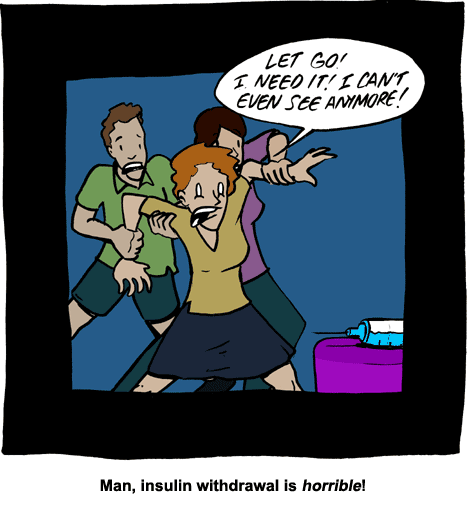
The effects of untreated diabetes include blindness, impotence, nerve damage and necrosis in the extremities, kidney failure, cardiovascular disease, coma, and death—all good reasons to assure the broad and consistent availability of insulin with decentralized production. Illustration by Zach Weiner of "Saturday Morning Breakfast Cereal."

Hi, I'm Anthony Di Franco. I'm a member of Counter Culture Labs, a biohacker collective in Oakland. (We're currently running a Kickstarter campaign to cement the core capabilities we need to pursue research – more on that below!) I also have type I diabetes. My general interest in biohacking is part of my interest in technological STEMI compression: making technology more efficient and effective and making it work at smaller scales, so that it empowers individuals more and more. My more specific interest is in doing this for the technologies that treat diabetes: mainly those for measuring blood glucose levels and making, purifying, and administering insulin. I've written previously about these topics in Biocoder magazine, among several others, where I suggested a variety of possibilities that might be well-suited to decentralized hackerspace development.


Right now I'd like to focus on insulin production and purification, without which measurement is mostly moot. The goal of producing insulin aligns well with the goals of the broader DIYbio movement for two reasons. First, because recombinant insulin was the first major commercial success of synthetic biology at scale, and set an early example of tools and techniques that shaped the future development of biologics. Second, irrespective of the role they happened to play in history, the tools involved are fundamental to biology and medicine and cover the core functions needed for all serious DIYbio research and other community goals: production and purification of biologics.

Open sourcing treatments is also important because pharmaceuticals in general and insulin and insulin pumping specifically suffer from perverse economic incentives that, at least in part, favor keeping people on the treatments with the most disposable or consumable supplies possible, at the highest price relative to the cost of manufacturing. In terms of the famous razor/blade business model, patients are the razors, and the treatments we need are a long stream of blades with a reliable revenue stream attached. Open source efforts could develop incentives more attuned to encouraging innovations that improve patient outcomes and constitute progress toward a definitive cure, in contrast with the current model which encourages corporations to sit on profits harvested by keeping patients addicted to consumable supplies.

With all that in mind, I'm pleased to announce a new collaboration between members of Counter Culture Labs and Arcturus Biocloud to develop generic insulin. Despite there being no formal barriers to its development, there remains no generic insulin on the market, a perplexing puzzlement pondered in context by Jeremy A Greene in his article in the New England Journal of Medicine. Now, we're preparing to address this problematic situation directly. Arcturus biocloud will provide the means to economically produce the insulin, but we'll still need to develop the means to purify it, eventually to the point where we need not fear the catastrophic consequences of injecting it in impure form – fulminant or chronic allergic reaction to insulin, both of which carry fatal risks. Even though we’re producing the insulin for research purposes only, and certainly aren’t intending to inject it into any living beings in the foreseeable future, a main goal is to demonstrate that we can achieve usable levels of purity in a DIY setting, and to document how we do and share the knowledge. To do that, we'll need to equip Counter Culture Labs with the basics for isolating and purifying biologics, and for that we'll need our kickstarter campaign to succeed. Fortunately, we’ve recently met our base goal, which will let us cover the basics of staying in the building and keeping things up to code. But we’ll still need much more to equip ourselves to work on projects like insulin purification, so we hope we can rely on your support as we pursue our stretch goals.

Please also consider becoming a member and donating via our regular website after our kickstarter ends as that is how we fund DIY insulin and projects like it in the long term.


Anthony Di Franco works at the intersections of complex adaptive systems, economics, and computing. He is a board member of the East Bay biology hackerspace, Counter Culture Labs, where he teaches and organizes events on topics at the intersection of computation and biology. He is also the author of the transgressive historical wuxia manhua, Three Sovereigns.

Monday, June 08, 2015

Guest post by Katie Dahlhausen on her project on "The effect of antibiotics for chlamydia on koalas and their microbiomes"

This is a guest post by Katie Dahlhausen, a PhD Student in my lab.


Koala populations across Australia are on a rapid decline due to many culprits including habitat loss, being hit by cars, attacks by dogs, and the Chlamydia infection. Yes, that’s right, Chlamydia. And when koalas are brought into wildlife hospitals, they are treated with antibiotics to cure their Chlamydia infection. Although ridding koalas of Chlamydia, the antibiotics also kill off important gut microbes that are essential to the koala’s life biology. Koalas eat a diet solely of eucalyptus leaves, which would be poisonous to the koalas if it wasn’t for the tannin-protein-complex-degrading enterobacteria that break down the toxic components of the koala’s diet. Brace yourself, because the koala’s biology gets even more interesting! Mother koalas feed their young joeys a substance called pap, a fecal matter more concentrated in nutrients and microbes than normal feces. This form of a natural fecal transplant allows the joeys to colonize the critical gut microbes necessary for them to eat noxious eucaplytus leaves. But what does this mean for joeys whose mothers have been administered antibiotics?

My name is Katie Dahlhausen and I am A PhD student in Jonathan’s lab. I am crowd-funding a project to study this fascinating koala biology, as well as investigate alternative infectious disease treatment where antibiotics are not a viable option. Want to help out these adorable critters? You can support the Indiegogo campaign here, which is live until June 16, 2015. More information about the project is available on the crowdfunding page, and in these recent articles published in Scientific American and the Washington Post.

So how did I get into this project? Well, When I was at the Australia Wildlife Zoo in Australia last September, there was a sign next to the koala exhibit with picture of a joey whose mouth was covered in a brown substance. The sign read something like "It's not chocolate!" and explained the pap part of the koala's biology.


The moment I read this I knew there was some fascinating microbiology questions that were begging to be answered. While researching the microbiology behind this behavior, I found a study the recorded the detrimental effects antibiotics had on a koala's eating habit and inability to maintain weight, but the question of how antibiotics were effecting the microbial composition of koala's guts remained unsolved. That is how this whole project started. Like most people, I think koalas are cute and appreciate how iconic they are to Australia. Otherwise, I'm not very attached to koalas - they are actually quite mean and antisocial! But koalas are a fantastic model system - one food source, plenty of sampling opportunities (in Australia at least), frequently given antibiotics, and clear mechanism of the transfer of microbes from mother to offspring. The implications of the study are vast, but are aimed at the care for animals in captivity and foster changes in how/when we administer antibiotics.

Sunday, June 07, 2015

Guest post from Student Alex Martin on Kittybiome & Animal Shelters

We are nearing the end of our Kitty Kickstarter to fund research on the microbiome of cats (only three days left).  We have received some requests to learn more about our work with animal shelters. Here is a blog post by Alex Martin, a UC Berkeley junior who is working with us to study shelter cats in Berkeley.


The Berkeley Animal Shelter takes in all cats from within Berkeley city limits. Thus, cats who once varied markedly with regards to diet and home environment come to live under a fairly uniform set of conditions. It typically houses between fifteen and forty cats, but has held as many as seventy during the peak of breeding season. Recently we have begun collecting samples from cats at the Berkeley shelter in order to better understand their gut microbiomes.

A major dichotomy in the shelter cat population is the one separating house cats from feral cats. Both are considered domestic cats, members of the species Felis catus. If a kitten during its first few months of life is not exposed to humans, it develops behaviors to facilitate surviving in the wild, and grows up to become a feral cat. Some see feral cats as a nuisance, but the animals also tend to live difficult lives, enduring food shortages and a lack of medical care. Thus, a relatively new effort referred to as “trap-neuter-return” (TNR) aims to spay and neuter feral cats to slowly and humanely diminish the size and number of feral cat colonies. Differences in the gut microbiomes of feral cats versus their tamer counterparts is perhaps expected, as the two groups have vastly different diets and levels of environmental exposure. However, these differences have yet to be characterized.

In addition to the differences between feral and house cats, a small but important FIV (Feline Immunodeficiency Virus) population can potentially serve as an interesting point of comparison. Much like Human Immunodeficiency Virus, FIV attacks the immune system of infected individuals, making them markedly more susceptible to other infections. We think that this virus will affect the microbiome of FIV-positive cats in measurable ways. By identifying any differences, we will gain a better understanding of FIV as a whole and will hopefully be better positioned to one day develop more effective methods of treatment.


Geronimo is one Berkeley shelter cat whose gut microbiome will be analyzed. He was picked up as a stray just a few blocks from the shelter, and is three years old. Geronimo is exceptionally friendly, and loves playing with his wand toy and hiding in his cat tree to nap. He gets along well with other cats and was even introduced to a rabbit without incident. After spending about two weeks in the shelter, Geronimo was adopted into a loving home.

Friday, June 05, 2015

Guest post on Yet Another Mostly Male Meeting (YAMMM) - Programming for Biology

I have posted on Twitter and other places saying that I would be willing to share here anonymous postings about meetings with skewed gender ratios.  I generally am not overly fond on anonymity on the web but realize it has some very important and powerful uses, including protecting people from retribution.  So in the case of meetings with skewed gender ratios, I know from personal experience that posting about them can lead to serious vitriol, threats, and possible repercussions.  I feel confident enough in my status and position to mostly ignore these responses but I know that not everyone is so blessed.

So - here is one such anonymous post I received.
-------------------------------------------------

Last year I was looking around for good workshops to learn programming for biology
(http://programmingforbiology.org/index.html) and
about genome assembly and annotation. I came across the Cold Spring Harbor Laboratory
course called "Programming for Biology" and applied as they have a good reputation.
I was happy to get in and overall really enjoyed the course. I learnt how to program in
Perl (not Python what I regret a bit), a lot of background on downstream genome analysis
and had a mostly pleasant time. An interesting slogan of the meeting was
"It's not only what you learn here, but also who you meet that makes this workshop so special"
(I am paraphrasing here a bit). Great! But wait are all big players in the field of bioinformatics
guys?

Out of the 10 Guest Lectures ALL were male.

  • Scott Cain             Ontario Institute for Cancer Research
  • Brian Haas            Broad Institute
  • Winston Hide        Harvard School of Public Health, South African National Bioinformatics Institute
  • Tomas Marques     Universitat Pompeu Fabra
  • Barry Moore          University of Utah
  • William Pearson    University of Virginia
  • James Robinson     Broad Institute
  • Michael Schatz      CSHL
  • Jason Stajich          University of California, Riverside
  • Paul Thomas          University of Southern California
Only 2 out of the 7 instructors and tutors were female

  • Simon Prochnik DOE - Joint Genome Institute, Walnut Creek, CA
  • Sofia Robb         University of California, Riverside
  • Steven Ahrendt University of California, Riverside
  • Dave Messina Cofactor Genomics
  • Shawn Rynearson University of Utah
  • Deborah Triant University of Virginia
  • Ken Youens-Clark University of Arizona


This means only 2 out of 17 teachers were actual women. This together with the fact that
the meeting was also sold as 'who you meet here is important' was the most disappointing
fact. There are so many talented and great female bioinformatics out there it would be
great to see at least some of them present at this workshop in 2015.

P.S.: Don't get me wrong Simon and Sofia are great and organize a lovely meeting. So this
goes under the category 'even when it hurts'.

Thursday, June 04, 2015

Holly Ganz @hollyhganz on Why She Started the @Kittybiome Cat Microbiome Project

The Story Behind the Launch of the Kittybiome Cat Microbiome Project

Guest Post by Holly Ganz (Project Scientist in the Eisen Lab)


Recently a group of us launched a Kitty Kickstarter campaign where we offer to sequence the bacteria in your cat’s gut microbiome as part of a long term research project to learn more about how microbes may affect cat health, behavior and evolutionary history (and vice-versa). Jonathan has written about the origins story here. This project complements our interests in the microbiology of animal shelters and the evolution of bacterial communities in the Felidae. In addition, we thought that other people like cats too and might be interested in learning more about the hidden life of their cats. We have had an overwhelming response that vastly exceeded our expectations (and we are still welcoming more kitty “pawticipants”).


We have been asked “Why cats?” Personally I think it’s hard not to be fanatical about cats. The diversity of cats is astonishing and most people agree that cheetahs, leopards, lions and tigers are amazing. And when you see a lion in the wild for the first time, it’s hard not to see some of your house cat in there, in the way that it walks, naps, yawns, and even pounces (but not so much the roar). Also it’s really interesting that domestic cats have been associated with people for something like 10,000 years. Several years ago I decided to take what I learned from studying microbial ecology in soil (and how it might affect the transmission of anthrax in zebras) and apply it towards understanding the microbial ecology of the animals themselves. I believe that research in the microbiome of cats (and humans) will eventually lead to useful interventions.

In our kittybiome project, we aim to sequence the gut microbiome of 1,000 cats and by doing so begin to capture the variation in gut bacteria in different populations of cats (both domestic and wild). In domestic cats, we will compare cats living in houses with cats living in shelters and feral cats. We are starting to compare cats with different health conditions and have had some cats with diabetes and IBD join the project. This aspect of the project is really important because these conditions are fairly common and there is a lot of room for improvement in how cats suffering from IBD in particular are treated.


We are also collaborating with Adrian Tordiffe at the University of Pretoria, South Africa and the Africat Foundation on a study on how the diet of captive cheetahs might affect the gut microbiome. Here we hypothesize that the unnatural diet of captive cheetahs produces changes in the gut microbiota that may result in some of chronic diseases common in captive cheetahs.


In addition to being fanatical about cats and passionate about poop, I am especially interested in how social behavior affects the composition and function of microbial communities in cats (in their poop and their anal glands!). (My life was changed by reading about hyena scent gland bacteria.) The evolution of the interaction between cats and their symbiotic scent gland bacteria fascinates me. In the Serengeti, residential territorial cheetahs have been observed scent marking on an hourly basis. Domestic cats are really interesting because feral cats form social colonies. The only other cats that are social are lions (who form prides) and cheetahs (who form coalitions). We are comparing these cats with some social structure with some of their close relatives who are solitary (black-footed cats, leopards, and pumas).

Monday, June 01, 2015

Guest Post: 5 Things You Probably Didn't Know About Jonathan Eisen


5 Things You Probably Didn't Know About Jonathan Eisen 

  1. He doesn't know how to play Minecraft
  2. He mailed grass when he was a little kid
  3. His new phone is "precious" to him
  4. He loves Let it Go and Taylor Swift
  5. He has very ugly pink boots 
by his bored daughter A. I. Eisen

Wednesday, May 27, 2015

Overselling the mcirobiome award: Dr Roizen's Preventative and Integrative Medicine Conference

Just got an email announcement for "Dr. Roizen's Preventative and Integrative Medicine Conference" in Las Vegas in December 2015.

The announcement did not start of well for me with the gender balance of the key speakers

But since I spoke at this meeting in 2013 and since there was a good gender balance at that meeting, I decided to give the benefit of the doubt and keep reading (though I note - not trying to say this 5:0 gender ratio is a good thing).

And this is when it got worse - here are the bullet points for what one should learn from attending this meeting

  • The key concept about optimal aging that Dr. Roizen learned from 56 million people who took the RealAge® test
  • Smart tips about changing you and your patient's microbiomes and what to do for your microbiome to promote weight loss and how it inhibits aging
  • How you can affect the role of the GI tract in chronic disease
  • How to understand the clinical utility of TMAO testing for monitoring cardiometabolic risk
  • The tricks about measuring your microbiome's effects
  • Why some choose a plant based diet and why you might not
  • What supplements do you and your patient's need with a plant based diet to decrease inflammation and improve your microbiome
  • Clarify how a systems-based approach can effectively treat illness and promote wellness
Now - I don't know much about Dr. Roizen or his optimal aging claims in his books (I am skeptical). But the microbiome stuff in here is silly.

Let's start with: "Smart tips about changing you and your patient's microbiomes and what to do for your microbiome to promote weight loss and how it inhibits aging".  I wonder how he will give these smart tips when as far as I know there is nothing actually known about this.  How the microbiome inhibits aging?  Really? Is this going to be a summary of future research not yet done or even imagined?

What about "The tricks about measuring your microbiome's effects."  So - there are 1000s of scientists studying this, they mostly say it is very very very hard to study the effects of the microbiome and Roizen and crew are going to solve this with a few "tricks"?  So is he saying everyone in the field is incompetent since they can't measure these effects but he knows how to with a few tricks?

Dr. Roizen seems like a smart person and some of what I have heard from him sounds reasonable.  These microbiome claims from him here are a clear example of "Overselling the microbiome" and buying into the hype and not staying with the science. Maybe he was not paying attention for my talk for this meeting in 2013 when I discussed overselling the microbiome


I hope he tones down his claims in the future ... but for now he is a winner of a coveted "Overselling the Microbiome Award".  For other "winners" see here.

Tuesday, May 26, 2015

Blind trust in unblinded observation in Ecology, Evolution and Behavior (Guest Post by Melissa Kardish)


This is a guest post from Melissa Kardish - a PhD student at UC Davis - writing about a recent paper from work she did at her prior position.  The citation for the paper she is writing about is below:

Kardish MR, Mueller UG, Amador-Vargas S, Dietrich EI, Ma R, Barrett B and Fang C-C (2015) Blind trust in unblinded observation in Ecology, Evolution, and Behavior. Front. Ecol. Evol. 3:51. doi: 10.3389/fevo.2015.00051

Here is her post.


Blind trust in unblinded observation in Ecology, Evolution and Behavior


We recently published our study in Frontiers in Ecology and Evolution where we found that a remarkable number of studies that could be affected by observer bias didn’t indicate whether or not they blinded their research. In fact only 13.3% of studies reported this:


We tried to make this a very transparent study. In addition to journal level data in the main article, we include in our supplemental material a table with the score for every article we read for this study (a summary of these scores per journal can be found in Figure S2 included here). If anything, our results under-represent the amount of studies that could have been scored blind (the real underreporting/underuse of blind observation is probably less than the 13.3% we report). For instance, we did not assess that there was potential for bias in the scoring of microsatellite markers (scored as unlikely to have observer bias). However, we did identify one study which was based on data from microsatellites which did blindly score their markers and report this scoring in their methods (and was therefore scored as “blind” in our study).  We also considered a study blind in its entirety for the purposes of our scoring if only one aspect is reported even if other experiments could also have been influenced by observer bias (Check out our supplemental methods for more ways we conservatively scored in our study).


We recognize that not all EEB studies can be blinded due to a variety of logistical or hypothesis driven reasons; however, we encourage such studies to accurately report this rationale and consider and attempt to minimize observer bias when designing experiments.

Thus far we have had a great response from the surveyed journals. Many of them have notified their editors about the lack of blind observation that we found reported in their journal. One journal has even notified us of plans already in place to address this issue at their next editorial board meeting.

We’re excited to have this work out there and hope this will inspire people to blind their studies and accurately report the science they are doing. We’re also excited to have the study published in an open-access format where we hope the encouragement for blind observation can reach all levels of science. Finally, as reporting of science in our fields improves in the coming years, we hope this study can serve as a template to address other potential concerns in experimental design and reporting.

Thursday, May 14, 2015

Time to boycott Oxford Global meetings due to blatant sexism

I don't even know what to say or do about this it is so stunningly pathetic.  I saw this Tweet earlier in the day:

I figured even in an era of blatant sexism in science, this must be a mistake right?  How could there be a conference with 38 male speakers and 0 female speakers.  So I went to the site: Who is Speaking – Oxford Global's 13th Pharmaceutical IT Congress, September 2015.  And, well, as far as I can tell Elisabeth Bik has the numbers right.  (See a list at the end of this post).  They even have a running slideshow of the speakers faces.

This is even worse than the 25:1 ratio of the qBio meeting I lost it over a few years ago.  I have never seen anything like this. I note - a 38:0 ratio is nearly impossible by chance in any field and I think pretty clearly an indication of massive bias of some kind.

I note - this is not the first case of a mostly male meeting from Oxford Global.  See for example:
Oxford Global Sequencing Meetings: Where MEN Tell You About Sequencing #YAMMM

I think it is time to just boycott meetings meetings from Oxford Global.  The only way they will change is if people stop speaking at or going to their meetings.  So please - stop going to their meetings.  Stop speaking at their meetings.


Wednesday, May 13, 2015

Koalas, Chlamydia, Antibiotics and Microbiomes - what else do you need?

Katie Dahlhausen, a PhD student in my lab, has become really really interested (perhaps a bit obsessed) with a really interesting case study regarding koalas, Chlamydia, antibiotics, and microbiomes.  Since we do not have funds to work on this in the lab, she has started an Indiegogo campaign to raise funds to work on this.  For more information on this project and how Koalas, Chlamydia, antibiotics and microbiomes are connected see "The Koala Project" page.


Monday, May 11, 2015

9 things PBS Newshour famously gets horrible wrong in story on fast food and microbiomes

Well, this is one of the worst microbiome news stories in a long time: Fast food kills gut bacteria that can keep you slim, book claims.  So many things wrong with it I don't even know where to go.  Here are nine:

1. The original headline: "Fast food kills gut bacteria that can keep you slim, study finds"

Here is the Tweet


2. The correction:


is just completely lame and they should, as the New York Times does when it makes a correction, say what it used to say before they changed it

3. The sentence with the reference to Rob Knight is just bad reporting #1

Here is the quote:
Previous studies made similar findings: Professor Rob Knight of the University of Colorado Boulder, who collaborates with Spector, famously showed that transferring gut bacteria from obese humans to mice could make the rodents gain weight.
First of all - the paper they link to does include Rob Knight as a co-author, but the corresponding and senior author is Jeffrey Gordon and Rob is fourth to last (mind you I love Rob and his work, but in this case, saying this is something Rob showed without mentioning Gordon is just not right).

4 . The sentence with the reference to Rob Knight is just bad reporting #2

What the *$*$# does "famously showed" mean? Really.  What does it mean?

5 . The sentence with the reference to Rob Knight is just bad reporting #3

The statement "Previous studies made similar findings" is just so incredibly misleading.   It seems to be referring back to the previous sentences:
“What is emerging is that changes in our gut microbe community , or microbiome, are likely to be responsible for much of our obesity epidemic, and consequences like diabetes, cancer and heart disease,” he said. “It is clear that the more diverse your diet, the more diverse your microbes and the better your health at any age.”
This is just completely overblown.  The more diverse your diet the better your health at any age?  Oh #FFS that is just not based on any science.  And the "likely responsible for" is silly too.

6 . The sentence with the reference to Rob Knight is just bad reporting #4

Why exactly tell us he is collaborating with Rob Knight?  So some of Rob's good work rubs off?  I mean, Spector may do some fine work (and he has done some really good stuff).  But casually mentioning he collaborates with Knight who famously showed something (when actually it was more Jeff Gordon's work) which did not actually show what the article implies it showed.  Aaaaaaaaaaarg.

7. Good news.
Spector’s book claims that the diversity of microbes in the human body has decreased almost a third over the last century. But there’s also good news: Foods like dark chocolate, garlic, coffee and Belgian beer may help increase gut microbes.
Really?  Thinking about microbes MAY also increase gut microbes.  And so might listening to NPR.  Not something worth reporting here.

8. This sentence
This discovery suggested to his father that many cases of obesity may not simply be due to overeating.
That is right.  Looking at his son's poop and the microbes in it is the key to knowing that obesity might actually be fuc$*@#@ complex and not only caused by overeating.  Oh, that and 100 years of epidemiology and research.

9. This sentence
“Once on the diet I rapidly lost 1,300 species of bacteria and my gut was dominated by a different group called bacteroidetes. The implication is that the McDonald’s diet killed 1,300 of my gut species,” he said.
Sorry but that is NOT the implication.


UPDATE 1: May 11, 2015. 8:00 PM

Thanks to a Tweet from Jennifer Gunter I changed the title of my post from " 9 things horribly wrong with Newshour story on fast food and microbiomes" to "9 things PBS Newshour famously gets horrible wrong in story on fast food and microbiomes"


Cell Symposia have a problem with gender balance of speakers

With apologies I don't have time right now to tease apart all the details on these meetings. But, yuck. Cell Symposia have a big and persistent problem with gender balance of speakers. See the Storify below:


Coming today to a cat near you - microbes

Only three years after first imagined ...

Tuesday, May 05, 2015

Guest post from Rachid Ounit on CLARK: Fast and Accurate Classification of Metagenomic and Genomic Sequences

Recently I received and email from Rachid Ounit pointing me to a new open access paper he had on a metagenomics analysis tool called CLARK.  I asked him if he would be willing to write a guest post about it and, well, he did.  Here is it:


CLARK: Accurate metagenomic analysis of a million reads in 20 seconds or less…

At the University of California, Riverside, we have developed a new lightweight algorithm to classify accurately metagenomic samples while minimizing computational resources better than any other classifiers (e.g., Kraken).  While CLARK and Kraken have comparable accuracy, CLARK is significantly faster (cf. Fig. a) and uses less RAM and disk space (cf. Fig. b-c). In default mode and single-threaded, CLARK’s classification speed is higher than 3 million short reads per minute (cf. Fig. a), and it also scales better in multithreading (cf. Fig. d). Like Kraken, CLARK uses k-mers (short DNA words of length k) to solve the classification problem. However, while Kraken and other k-mers based classifiers consider the whole taxonomy tree and must resolve k-mers that match genomes from different taxa (by using the concept of “lowest common ancestor” from MEGAN), CLARK rather considers taxa defined for a unique taxonomy rank (e.g. species/genus), and, during the preprocessing, discards any k-mers that can be found in any pair of taxon. In other words, CLARK exploits specificities of each taxon (against all others) to populate its light and efficient data structure. It uses a customized dictionary of k-mers, in which each k-mer is associated to at most one taxon and results in fast k-mer queries. Then, the read is assigned to the taxon that has the highest amount of k-mers matches with it. Since these matches are discriminative, CLARK assignments are highly accurate. We also show that the choice of the value of k is critical for the optimal performance, and long k-mers (e.g., 31-mers) are not necessarily the best choice to perform accurate identification.  For example, high confidence assignments using 20-mers from real metagenomes show strong consistency with several published and independent results. 

Finally, CLARK can be used for detecting contamination in draft reference genome or, in genomics, chimera in sequenced BACs. We are currently investigating new techniques for improving the sensitivity and the speed of the tool, and we plan to release a new version later this year. We are also extending the tool for comparative genomics/metagenomics purposes. A “RAM-light” version of CLARK for your 4 GB RAM laptop is also available. CLARK is user-friendly (i.e., easy to use, it does not require strong background in programming/bioinformatics) and self-contained (i.e., does not need depend on any external software tool). The latest version of CLARK (v1.1.2) contains several features to analyze your results and is freely available under the GNU GPL license (for more details, please visit CLARK’s webpage). Experimental results and algorithm details can be found in the BMC genomics manuscript.


Performance of Kraken (v0.10.4-beta) and CLARK (v1.0) for the classification of a metagenome sample of 10,000 reads (average reads length 92bp).  a) The classification speed (in 103 reads per minute) in default mode. b) RAM usage (in GB) for the classification. c) Disk space (in GB) required for the database (bacterial genomes from NCBI/RefSeq). d) Classification speed (in 10^3 reads per minute) using 1, 2, 4 and 8 threads.


Sunday, May 03, 2015

Rob Dunn seeking community participation in suveying & analyzing Duke Forest warming chambers

Just got this email from Rob Dunn from NC State.  He said it was OK to post it ... so I am .. (I note - I just completely love this idea).

Hi folks,

As you might (or might not) know, we have for five years now been running a large-scale warming experiment in which we have warmed twelve 5 meter diameter open-top chambers in forest understory at Duke Forest. We have warmed these chambers in a regression design with the warmest chambers as warm as temperatures are predicted to be in the region in 2100 and the coolest chambers at ambient temperatures (We also have no-chamber controls). These are small worlds each of which mimics aspects of futures we might face. This entire set-up is replicated at Harvard Forest. In these chambers we have been studying the response of insects (with a focus on ants) and plants  over the last five years. When we built them these chambers were the biggest warming experiment in a forest understory in the world. I don't know if it is still true, but it probably is, if only because chambers of this size are so hard to keep going (especially in the early we felt like Fitzcarraldo dragging a ship through the rainforest) that most people have decided against repeating them elsewhere. 

Some basics on the chambers... http://robdunnlab.com/projects/warming-chambers/

I'm writing because on May 25th we are taking the chambers down and doing a final inventory of the response of everything--all the life we can possibly evaluate--to this warming. To varying extents we have considered the phenology of plants in the chambers, many things about ants in the chambers, shifts in composition of invertebrates in the chambers and simple responses of bacterial and fungal assemblages in the chambers. But, we have done all of this delicately, always mindful to not overly disturb the future world we are simulating. Now though that the chambers are coming down we can and will consider roots, plant biomass, the abundance of insect pests, fungal pathogens and much, much, more. 

As we do this intensive survey, we are hoping to train as many different eyes, lenses and perspectives on the chambers as possible. If you are potentially interested in studying some aspect of the response of understory forest life to warming, let us know. If you are interested in studying something that can be extracted from soil or litter samples, we may be able to send you material you can work on. If you have something grander in mind (and we love grand things), then we may need more help from you. If interested, send an email to me, copied to MJ Epps (Mj Epps <mycota@gmail.com>).  This collaboration might be in the form of bringing a new method to the chambers (looking at microbial processes, for instance) or considering a group of organisms we've somewhat ignored (e.g., fly larvae) or it might be something totally off the wall. Feel free to share this email with likable folks that might be interested. 

I'm also delighted to hear creative ideas about visualizing the differences that have emerged over the years of this experiment (hence the inclusion of several artists of various sorts on this email list, if you were wondering why you were copied). 

I hope this email finds you well. 

Best,

Rob

Thursday, April 09, 2015

Today's Spammy journal Editorial Board Offer #1

Just got this - pretty lame given that, well, I do not do anything related to this journal.

Dear Dr.Jonathan A Eisen,   
Hope this mail brings you good health and prosperity 
Fisheries and Aquaculture Journal is successfully publishing quality open access journals with the support from scientists like you. We are aware of your reputation for quality of research and trustworthiness in the field of science and thereby we request you to be an Editorial Board Member of our Fisheries and Aqua culture Journal. It would be our immense pleasure to have you as one of our editorial board member. 
Please follow the below link for more information http://omicsonline.com/open-access/editorialboard-fisheries-and-aquaculture-journal-open-access.phpIf you are interested, you are requested to send 

  • A recent passport size photo (to display at our website) 
  • C.V
  • Biography
  • Research Interests for our records 
Kindly submit your details at editor.faj@omicsonline.net, editor.faj@omicsgroup.biz We look forward to a close and long lasting scientific relationship for the benefit of scientific community.Waiting for a positive response.
With Kind Regards,XXXEditorial Assistant 
Fisheries and aqua culture Journal7 
31 Gull Ave, 
Foster City CA 94404, USA

Wednesday, April 08, 2015

More microbe-themed art - the Eden Project's "Human Biome"

Just got pointed to this Wired article by Katie Collins -- Eden Project's 'Human Biome' is a gross, musical microbe showcase (Wired UK)


Fascinating project that I actually don't think is gross in any way.  From the article


Invisible You: The Human Biome will explore the community of microbes that live in and on each and every one of us. Artistic and interactive displays will show bacteria, fungi and viruses, with 11 artists commissioned to create works for the exhibition.
I want to just quote the entire story but I think that is not allowed so let's just say you really should read the whole thing and look at the gallery.

Sunday, April 05, 2015

Glyphosate, Roundup, GMOs and the microbiome part 1: crowdsourcing literature

For many reasons I have been interested for the last few years in how agricultural practices affect microbiomes.  For example in regard to crops, how do farming practices affect the microbiomes of the plants, the microbiomes of the soil and area around the plants, and the microbiomes of organisms (including humans) who make use of the plants?

I won't go into all the detail right now for why I am interested in this topic but for some examples of my work in this area see The microbes we eat abundance and taxonomy of microbes consumed in a day’s worth of meals for three diet types and Structure, variation, and assembly of the root-associated microbiomes of rice.

Anyway, the reason I am writing this now is that tomorrow I am "testifying" to a NRC Committee about this topic and some related topics.  The presentation will be shown live online (register here).  And I thought, in the interest of openness, I would post some of what I am thinking about here before hand.

One of the key topics for tomorrow is something I have been snooping around at for a few years - how does glyphosate (the key ingredient of RoundUp and a widely used herbicide) affect microbiomes?  I am interested in this from both a scientific point of view (I think it is an interesting topic) and also from a "public policy / education" point of view.  I think this is a really good topic to have a public discussion of "microbiomes" and both the importance of microbial communities and the challenges with studying them.  So a few years ago I started thinking about working on this and developing a "Citizen Science" project around it.  And, well, I am still working on that idea and probably will be trying to launch something in the near future.  As a first start I thought it would be good to start to engage the community (researchers, teachers, the public, etc) in a discussion of this topic.  So .. this is the beginning of that I guess.

Some questions I think are interesting:

  • Does glyphosate affect plant microbiomes?
  • Does glyphosate affect soil microbiomes?
  • Does consumption of plants treated with glyphosate affect the microbiomes of the consumer? 
    • Directly (e.g., by glyphosate itself being in the food and directly affecting microbomes"
    • Indirectly (by glyphosate affecting the microbiome of the food which in turn affects the microbiome of the consumer)
  • If glyphosate affects any of these microbiomes above, are these significant affects (e.g., in terms of health)?
Now I am not the only person who is interested in this topic.  In fact, there have been many people looking into these and related topics for years.  Some of the things I have seen on this topic in the popular press and the scientific literature are, well, not good science.  And some of the things I have seen are fascinating and well done. 

So as a first step in looking into this, I scoured the literature for papers of interest.  And that is really why I am writing this.  I created an open collection of the papers I have found with the Zotero reference collection system.  See this link for the collection.  And if you know of any other papers truly related to this topic, please add them to the collection (learn more about Zotero here).  I do not profess to know everything about this topic.  But I think it is interesting and possibly important.  

Wednesday, April 01, 2015

Four simple tools to promote gender balance at conferences - guest post from Julie Pfeiffer @jkpfeiff

Guest post from Julie Pfeiffer.

Julie Pfeiffer
Associate Professor of Microbiology
University of Texas Southwestern Medical Center
https://twitter.com/jkpfeiff
http://www4.utsouthwestern.edu/pfeifferlab/Index/Home.html


Four simple tools to promote gender balance at conferences 


1. Know that you are biased. Identify your biases.

We all have biases and many of them are unconscious. You can discover your own biases using online social attitude tests developed by Project Implicit, a non-profit organization affiliated with Harvard University. The Gender-Science Implicit Association Test is particularly relevant here. It turns out that I have moderate bias linking science with males, as well as other biases. Knowing this fact has been extremely important. It is very difficult to alter unconscious bias, but it is easy to understand that you are biased and edit your actions accordingly. For example, if I need to make a list of potential speakers or authors quickly, the list will be of senior men from the United States. The key is to spend time EDITING the list to ensure diversity.

2. Keep track of numbers.

Most individuals in leadership positions are not seeking to exclude women or other groups from plenary talks, career opportunities, etc. Instead, they simply forget to count. They forget to keep track of gender ratio and other types of diversity. They forget to edit. When leaders/organizers have diversity in mind, diversity is relatively easy to achieve. Two examples illustrate this point:

1) Vincent Racaniello is President of the American Society for Virology and his goal was to put together an outstanding and diverse group of plenary speakers for the annual meeting in 2015. He asked for speaker suggestions via emails and Twitter (https://twitter.com/profvrr). He made a list and he edited it. The result? The best representation of female scientists at a conference I have ever seen--- 50% of the plenary speakers at ASV this year are female.

Most recent post

A ton to be thankful for -- here is one part of that - all the acknowledgement sections from my scholarly papers

So - it is another Thanksgiving Day and in addition to thinking about family, and football, and Alice's Restaurant, I also think a lot a...