I am pleased to have a guest post in my "
Story behind the paper" series. This one is from Jeremy Barr in Forest Rohwer's lab about a new PNAS paper.
Bacteriophage and mucus. Two unlikely entities, or an exceptional symbiosis?
By Jeremy J. Barr
Our recent research at
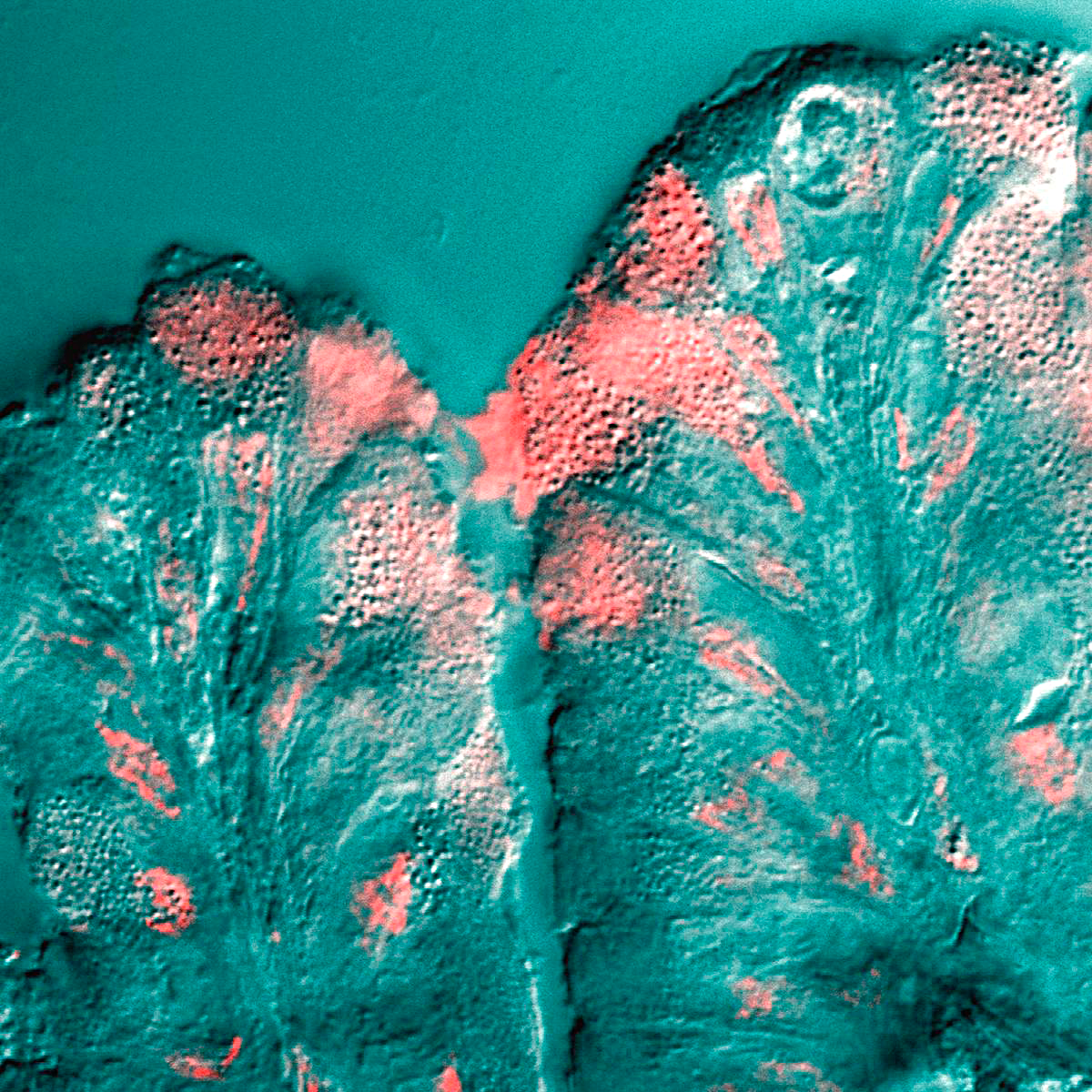
The Rohwer Lab at San Diego State University investigates a new symbiosis formed between bacteriophage, viruses that only infect and kill bacteria, and mucus, that slimy stuff coating your mouth, nose, lungs and gut.
Bacteriophage, or phage for short are ubiquitous throughout nature. They are found everywhere. So it shouldn’t surprise you to learn that these phage are also found within mucus. In fact, if you actually sat down and thought about the best place you would look for phage, you might have picked mucus as a great starting point. Mucus is loaded with bacteria, and like phage, is found everywhere. Almost every animal uses mucus, or a mucus-like substance, to protect its environmentally exposed epithelium from the surrounding environment. Phage in mucus is nothing novel.
But what if there were more phage in mucus? What if the phage, immotile though they may be, were actually sticking within it?
It turns out that there are more phage in mucus, over four times more phage, and this appears true across extremely divergent animal mucosa. But this apparent increase in phage could very simply be explained by increased replication due to access to increased bacterial hosts residing within mucus layers. But this assumption alone doesn’t hold up. Applying phage T4 to sterile tissue culture cells resulted in significantly more phage sticking to the cell lines that produced a mucus layer, compared to those that did not. There were no bacterial hosts for phage replication in these experiments. Yet still, more phage accumulated in mucus.
Surely the law of mass-action could explain this apparent accumulation. The more phage we apply to an aqueous external environment, the more phage will diffuse into and enter the mucus layer, being slowed in the process due to the gel-like properties, and eventually resulting in an apparent accumulation of phage in mucus. But when we removed mass-action from the equation, and simply coated mucus-macromolecules onto a surface, still more phage stuck. Our assumptions were too simple.
Phage are ingenious. They have evolved, traded, and disseminated biological solutions to almost every biological problem, whether we are aware of it or not. So in order to solve the phage-mucus quandary, we needed to look to one of the most ubiquitous and populous families of proteins found in nature: the immunoglobulin superfamily. This protein fold is so ubiquitous that it appears in almost every form of life. Within our own bodies, it is the protein that affords us immunological protection. Bacteria utilize the protein fold to adhere to each other, to surfaces, and as a form of communication. And as it would turn out, phage make an innovative use of the same protein fold to stick to mucus.
Immunoglobulin, phage and mucus, are all pervasive throughout environments. The interaction between these three entities forms a new symbiosis between phage and their animal hosts. This symbiosis contributes a previously unrecognized immune system that reduces bacterial numbers in mucus, and protects the animal host from attack. We call this symbiosis/immunity, Bacteriophage Adherence to Mucus, or BAM for short.
Our work is open access and available through
PNAS .
If you would like to read further about BAM and its implications see these two commentaries by
Carl Zimmer at National Geographic and by
Ed Yong at Nature News